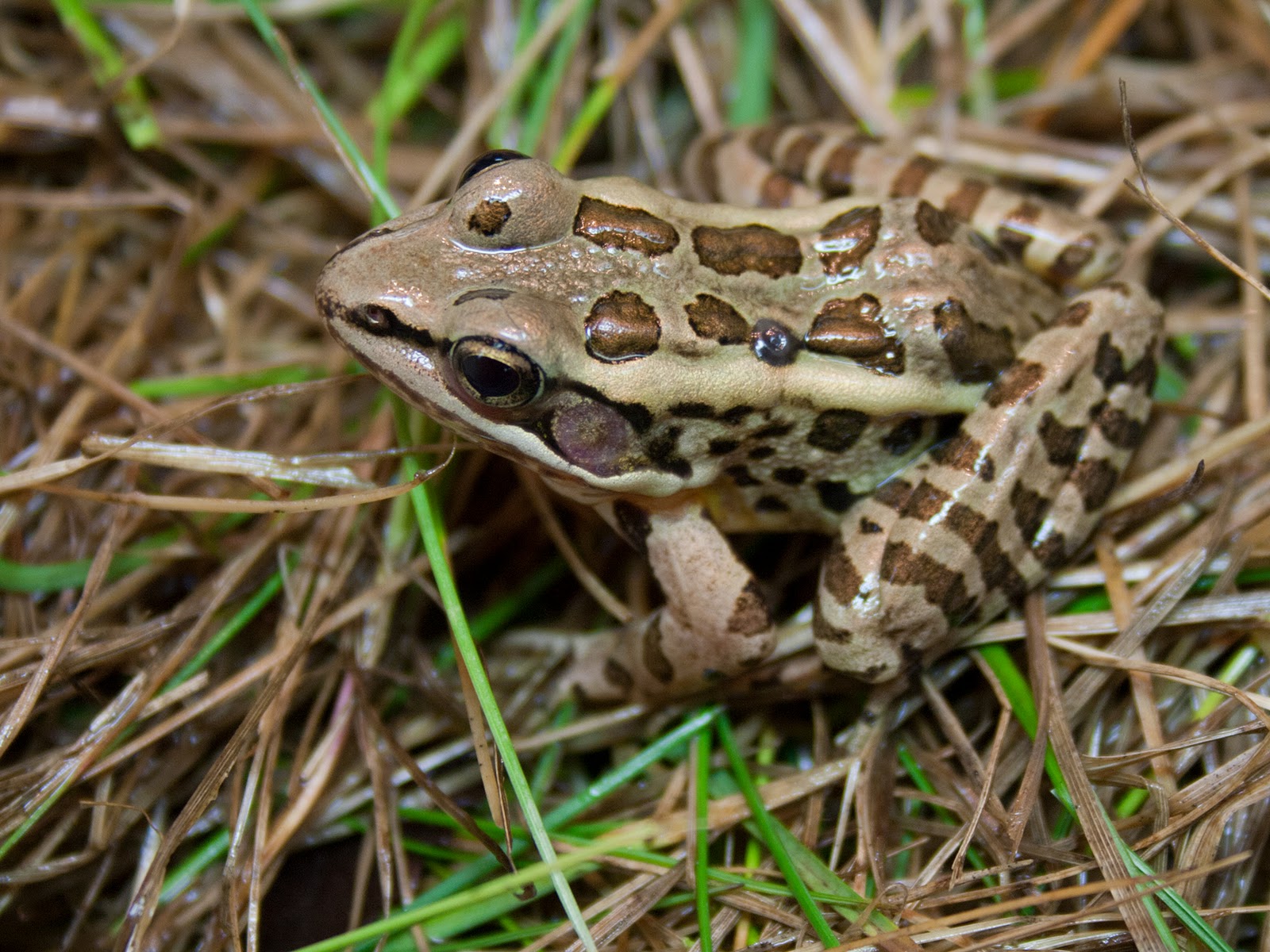
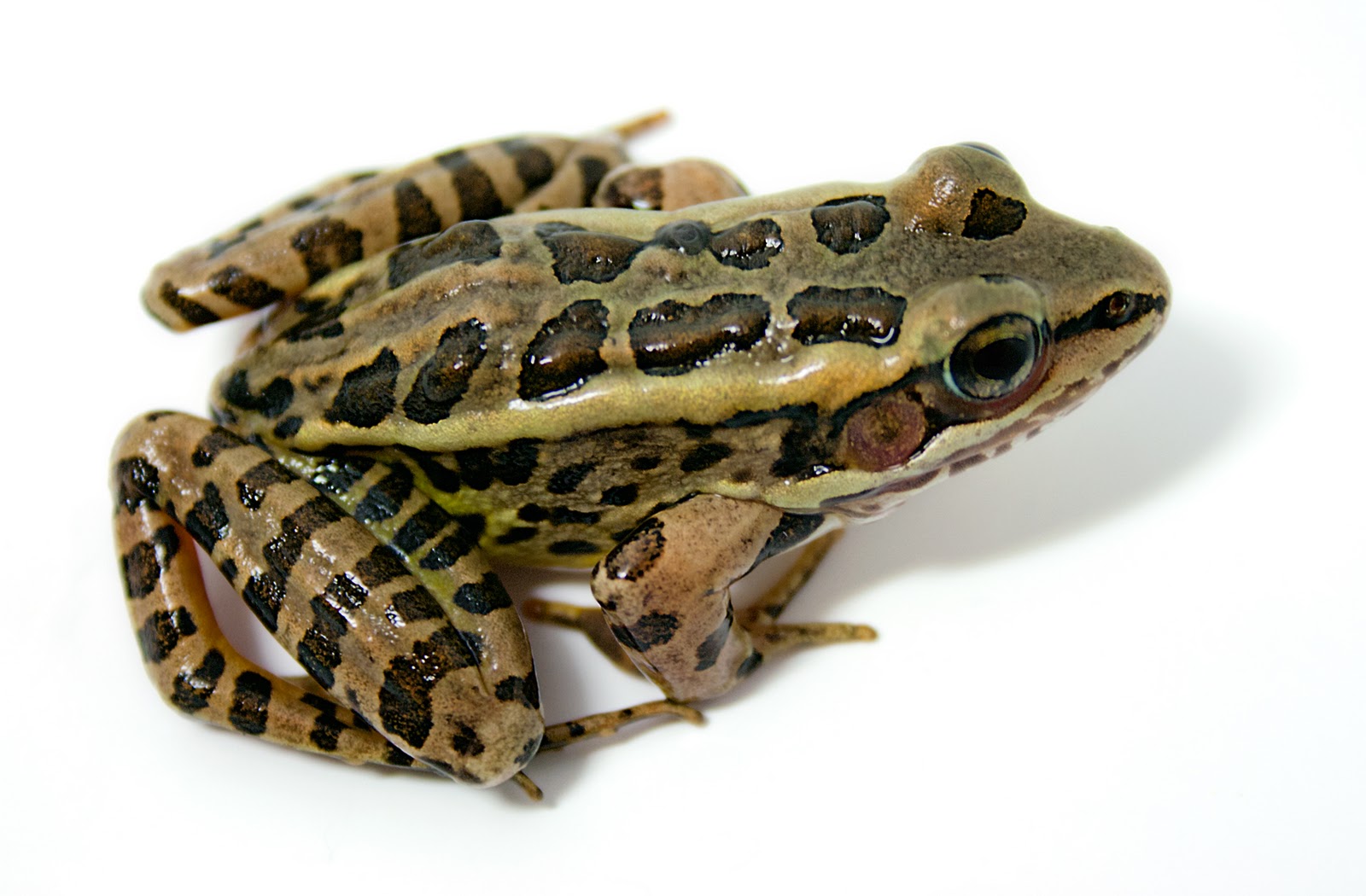
Pickerel Frog (Rana palustris) migrating, not chorusing yet

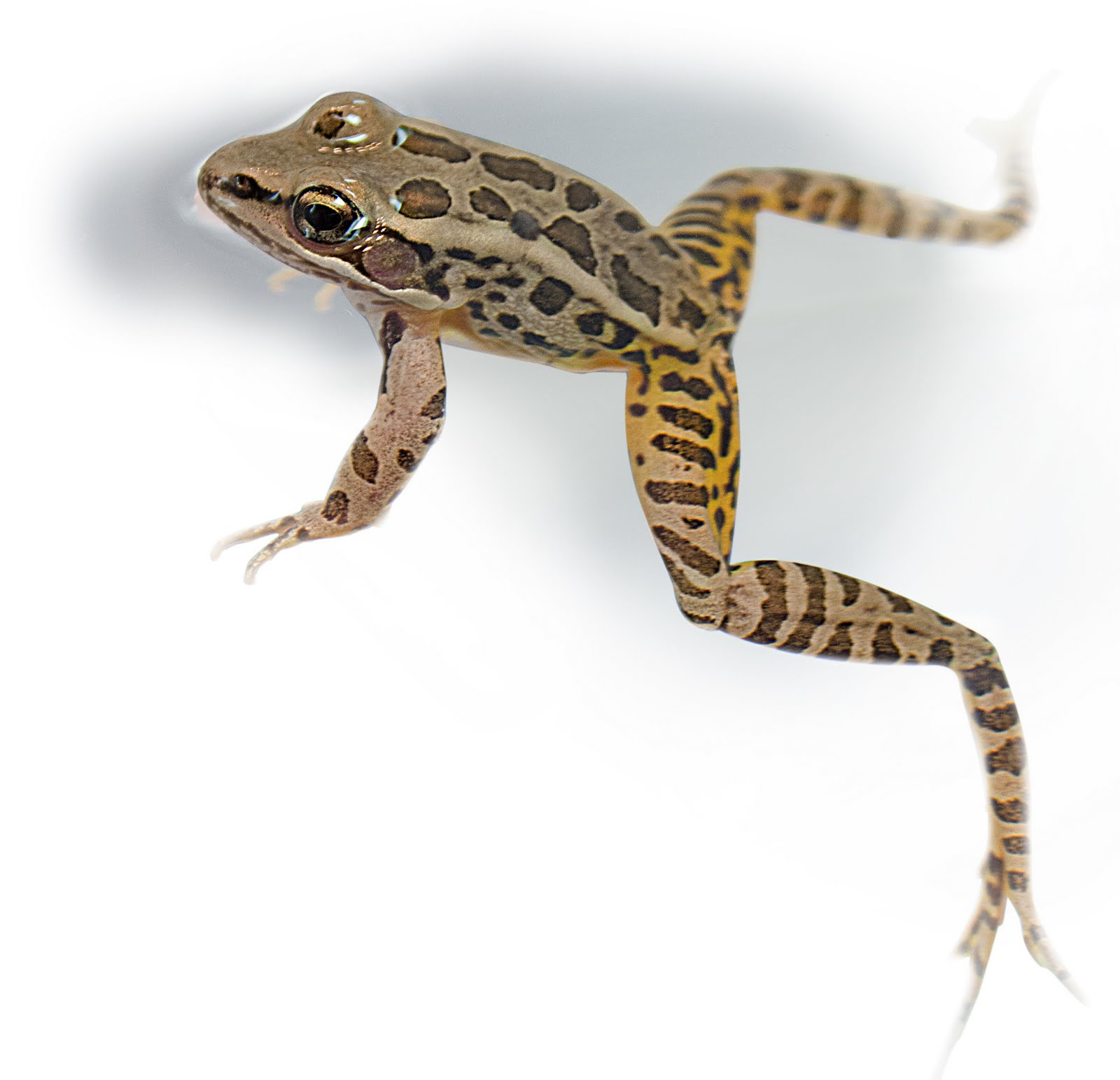
Dorsal view showing leg banding, dorsal fold and unfortunately a tumor.

This isolated view shows a hint of the yellow in groin along with the parallel squarish spots.

Thumb pads are visable in this submerged view.

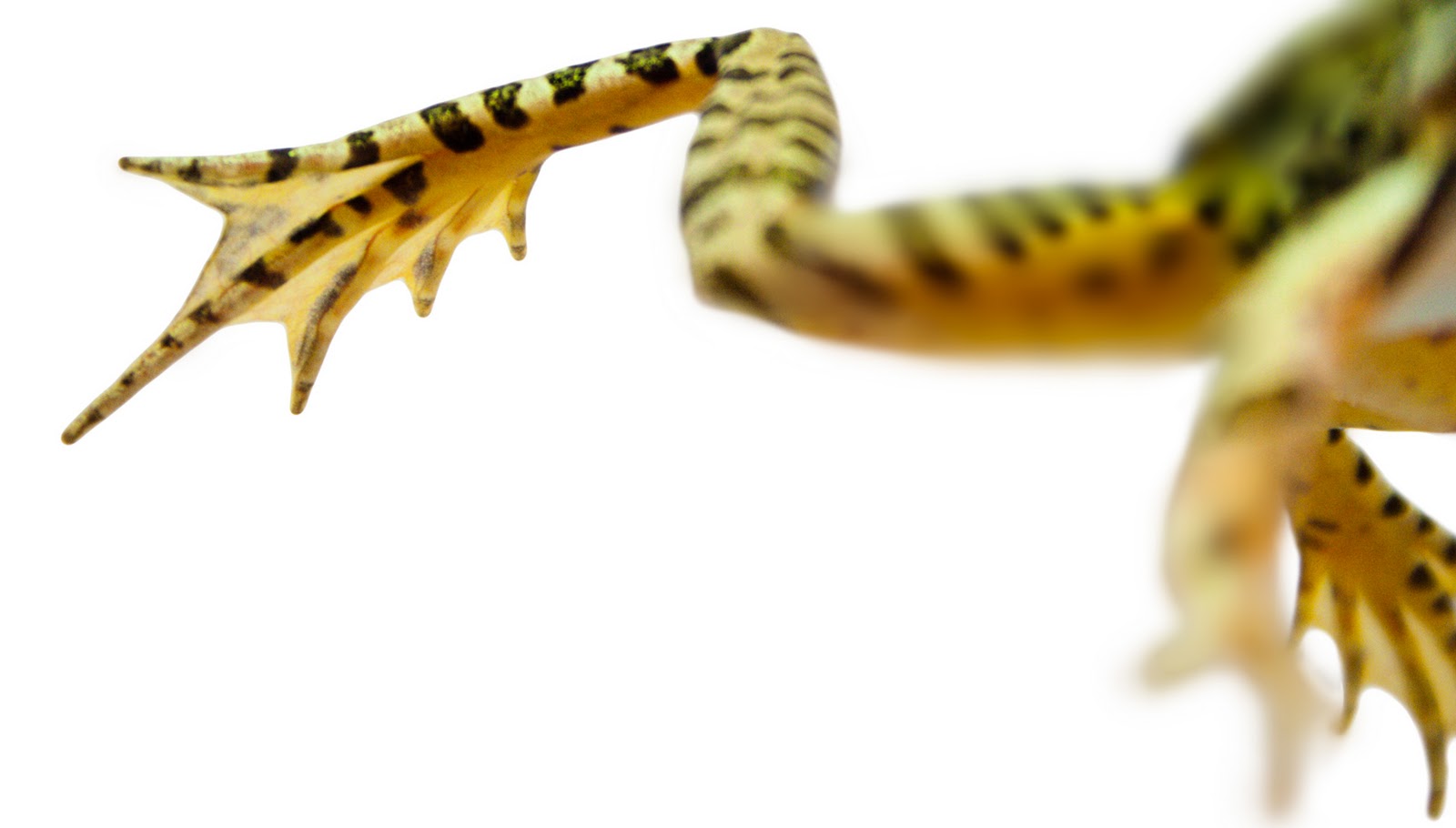
Webbing on hind legs along with yellow color splashes on legs.

Dorsal view with distinctive yellow coloration unique to this species.

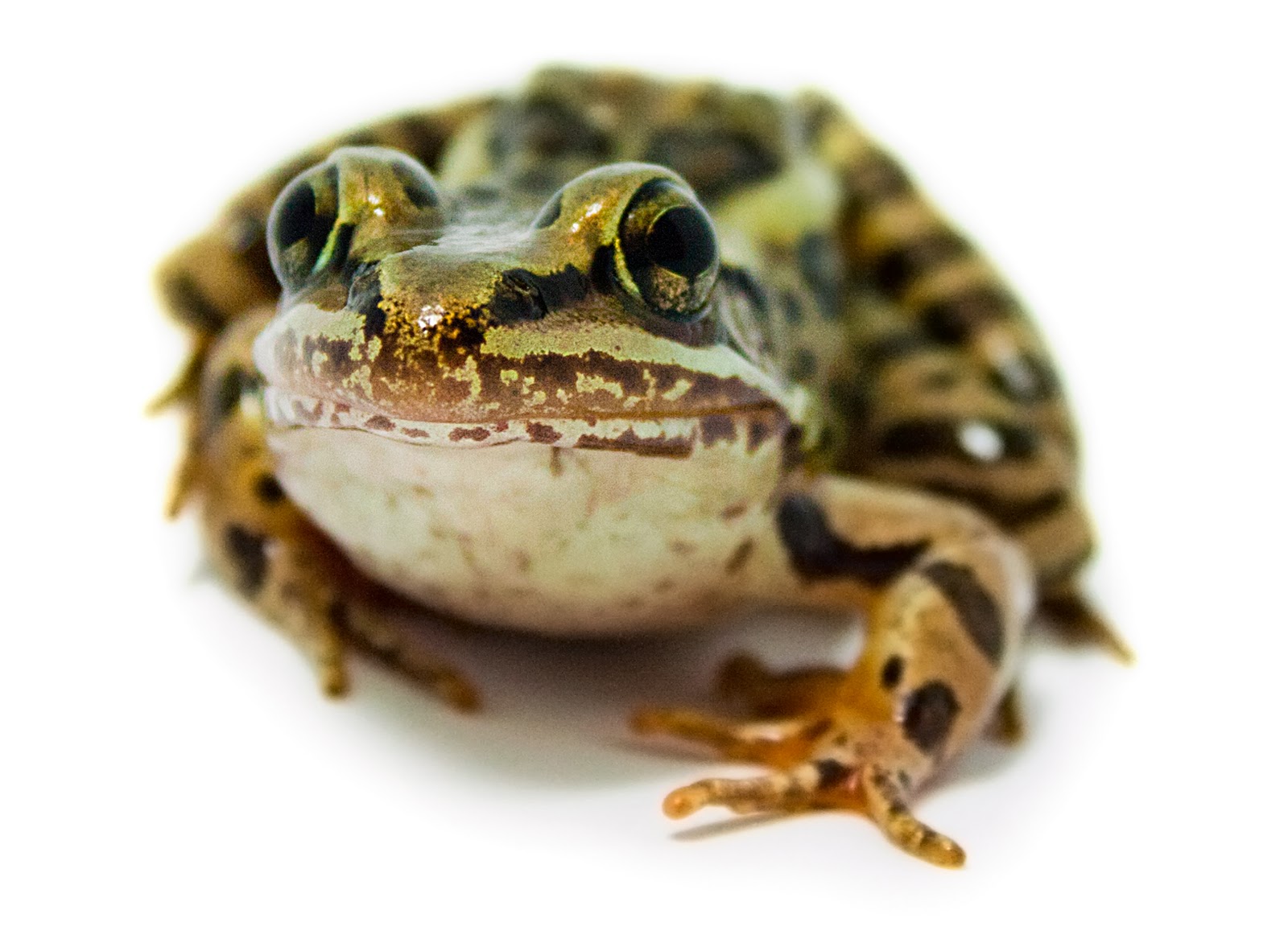
Banding pattern on upper lip prevelant.
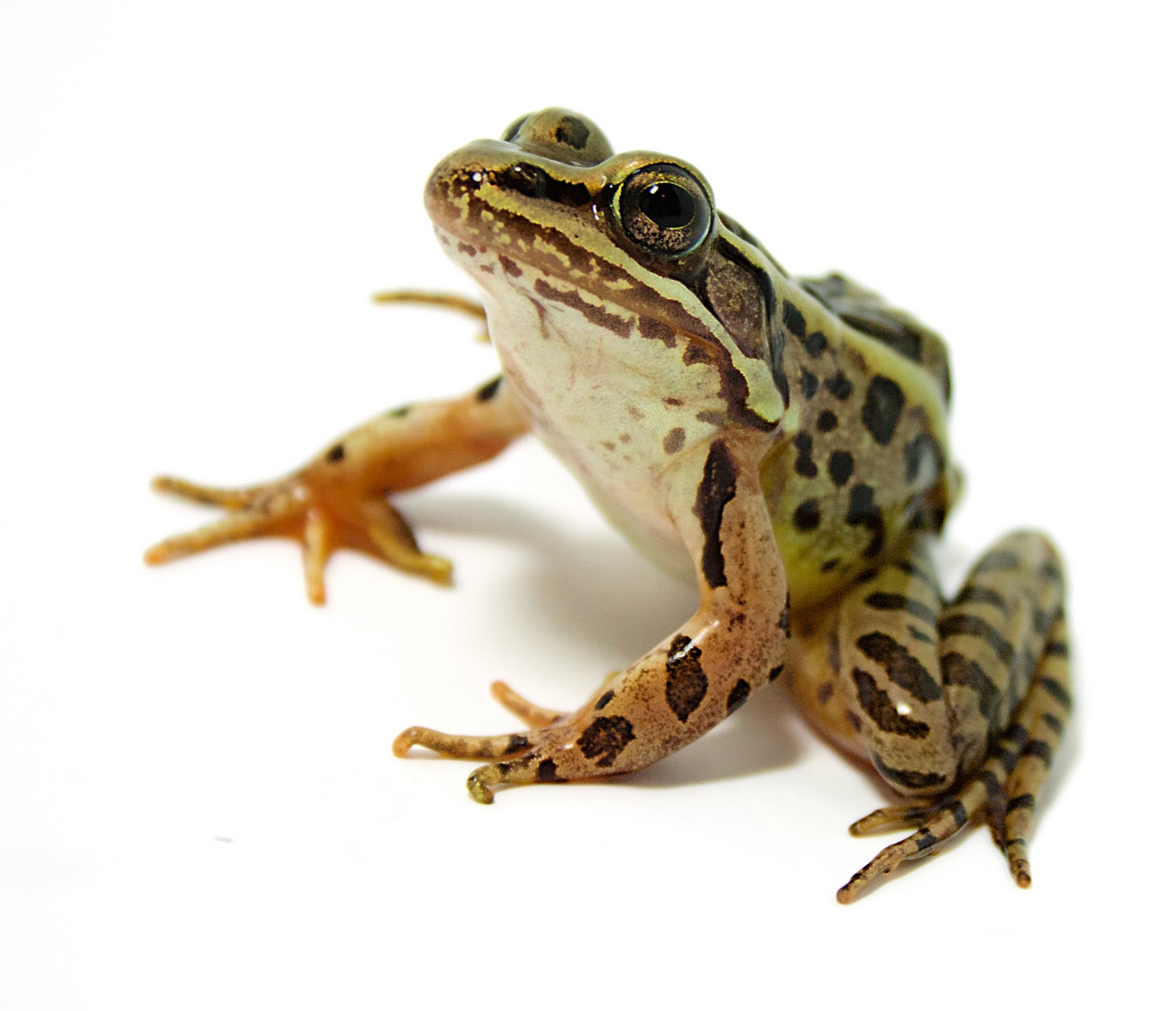
Another view showing thumb pads and hint of distinctive thigh color.

Notice solid ear (tympanic membrane) coloring and very distinct dorsal fold

I caught this one about a week ago and have been feeding him crickets until the temperature climbs up into the mid 40s. He was captured crossing Riverview Road across from the maintenance facility. Unfortunately there is a tumor on the dorsal surface. What distinguishes the Pickerel from the Leopard frog are the arrangement and shape of the spots, the shape of the snout and coloration of the upper thigh and abdomen. The spots on a Pickerel have a more distinct corner to them and are generally arranged in parallel rows down the dorsal surface. Base body coloration is more of a tan, camouflaging it within the grasses of environment where is is found. The dorsal fold is thicker and prominent resembling a blade of grass. The eardrum is a more or less solid brown where as the Leopard frog has a white spot in the center. The snout is more rounded with the Leopard being more pointed. The thigh has a bright yellow color that is hidden when the legs are in their resting position, along with bright yellow webbing on the rear feet. A pattern of bronze, dark brown and cream followed by a molted pattern above the mouth is different from the Leopards which has a solid strip before the mouth, though many color and pattern variations do occur. The legs have banding which helps break up the silhouette. This is a male showing the distinguishing thumb pads which are used in maintaining the clasp on the female during amplexus.

This posting was added on 4-3-2011 but depicts a Pickerel frog captured 3-20-2011.

Excellent side view showing skin texture and variation of spots along with leg banding.

Great conditions last night

Went to several locations last night starting at Hinckly by Rout 94 and Whipps Ledges. There is a Wood frog population at this location that I’ve recorded for many years, this being on of the most enjoyable. After sunset, the frogs are less skittish, and since conditions were perfect (if your a frog) they were loud! Males would swim across the water surface, at the edge of the pond bumping into each other, seemingly at random. Chorusing didn’t stop when the flashlight illuminated the area. Under the surface I saw a spotted salamander, the first I’ve ever seen. Peepers were abundant and almost deafening.: www.voicesinthevalley.com/sound_snapshots/wood_frogs_chorus.mp3. Afterwords, I went to Brecksville station to see what was calling in that area. To my surprise, I found 3 colony’s of Wood frogs calling, some with Chorus frogs, some with Peepers. After showers move through, migrations across the road become more frequent. I saw a dozen or so American toads, all medium sized adults, no smaller ones. Several Leopard frogs, many Peepers, 3 Green frogs, including one adult. At the vernal pools, I finally was able to spot many Chorus frogs, they’ve eluded me until now!
Last nights calls

Last night held several surprises. First, I hear a Leopard frog calling from a dry meadow nearby. The call is very subdued, and it isn’t the full mating call. The call was primarily the introduction and missing the several grunts that follow the full call. Second was the pack of coyotes that called during a recording of Chorus frogs. The Chorus frogs and Peepers are in full swing, and I suspect if it rains tonight, the choruses will be even stronger. These recordings are taken between Rout 82 and Vaughn road on the Towpath.

1. Coyote: www.voicesinthevalley.com/sound_snapshots/coyotes.mp3
2. Leopard frog: www.voicesinthevalley.com/sound_snapshots/leopard_frog.mp3

Spring Peeper

Just a few calls

This was an interesting evening. I heard the first chorus for the season by Brandywine and they were Chorus frogs. Their call has always reminded me of a finger drawn across a comb. As I recall, this area has had a good population of these frogs for some time. Back when the beaver dam next to the Cuyahoga line just north of Vaughn road was filled with water, these were the first to call. Another strong area is in Hinkley, OH at the Whipps ledges and State road intersection. The next chorus was a small population of Spring peepers, about a mile south. The most interesting call, however, was the call of several Night hawks (Chordeiles minor). I have never heard them so early in the year. I didn’t think there was enough bugs flying around to eat. (Edit 4-10-2011) Was just informed that they are actually Woodcock calls! Now it makes sense!
: www.voicesinthevalley.com/sound_snapshots/nighthawk.wav

Western Chorus Frog

Another winter blast!

I have been recording environmental sounds for many years, and one memory that sticks out, is a recording session that followed a weather pattern similar to we are having today. Only the forecast didn’t call for a foot of snow! I was monitoring a pond in Hinkley, OH that had a full Wood frog and Spring peeper chorus by night fall. The day temp hit around 50 degrees and had one of those miserable all day drizzles. As the evening progressed, the temp fell pretty quick. To my surprise snow began to fall. The frogs chorus diminished as the temp continued to drop and was all but silent by the time I wrapped it up. Now, I don’t go around stalking the frogs during their daily routines, but my guess is that they burrow under the leaf liter and do just fine.Their liver converts glycogen into glucose as soon as ice begins to form around them. This process aids the cells from dehydrating, and is circulated through the cells until the heart stops beating. Urea is also involved in the cell protection mechanism along with an elevated blood clotting response. Any damage done after they thaw is minimized and the loss of blood is reduced. Wood frogs, Spring peepers and Grey tree frogs have this ability. Toads survival strategy is to burrow below the freezing line and other frogs can submerge under water absorbing oxygen through their skins. I have witnessed many Green frogs alive and hopping in temps below 32 degrees when breaking up beaver dams in the Cuyahoga Valley. They would start jumping around as soon as a log was moved disrupting their muddy resting place. It is all part of natures design!

http://www.naturenorth.com/winter/frozen/frozen3.html
http://www.lifeslittlemysteries.com/can-frogs-survive-being-frozen-0326

Migration is in gear

The annual spring migration is underway. Last post had 2-3″ snow, today there was a full day of drizzle. With temps in the 40s during the day and a nice moist atmosphere, I saw a nice range of the early spring amphibians. Several Wood Frog (Rana sylvatica): http://en.wikipedia.org/wiki/Wood_Frog, one Green frog (Rana clamitans): http://en.wikipedia.org/wiki/Rana_clamitans, one Spring Peeper (Pseudacris crucifer): http://en.wikipedia.org/wiki/Spring_peeper, several Jefferson salamander (Ambystoma jeffersonianum):http://en.wikipedia.org/wiki/Jefferson_Salamander and several Northern Two-lined Salamander (Eurycea b. bislineata): http://en.wikipedia.org/wiki/Northern_two-lined_salamander and a Crayfish wandering around the road. I didn’t hear any calling, but I imagine the Wood frogs will be calling first. Typically the Wood frogs, Spring peepers and Chorus frogs are very close when they begin to call. The Wood frogs will only call for several days and they have a unique vocalization that sounds similar to a duck quacking. The males also give a warning call when they  are in close proximity to another, or have been mistaken for a female.I was able to get a good recording of the call, and will attach it to this post later.

2 inches of snow on ground last night

2 inches of fresh snow fell last night. With temps falling and a good amount of rain, I suspected this may happen. In early spring, this is not uncommon. What I have observed is that the durations of a species mating season may be impacted. For example, the Wood Frog, Rana sylvatica will only do a strong chorus for 2-4 days if conditions are good. If their season is interrupted during that strong chorusing time, they never seem to build up to that level again. There may be stragglers, but the season in effect is cut short.

Checked if anything was hopping

Went to Brecksville Station via the Metroparks and found that a part was closed off due to the annual salamander migration. When I spoke to the attendants, I was told that they spotted one unidentified salamander, a spring peeper and a wood frog. I continued to Brecksville Station and saw that it was closed due to the flooding of the Cuyahoga River: http://www.nps.gov/cuva/parknews/ohio-and-erie-canal-towpath-trail-closed-due-to-flooding.htm. So, I went to take a look cause that is what i do. I didn’t see any anura, but did come across several drowned Wollybears. Wollybears cannot swim, and resuscitation would have been futile. I can see why it was closed, the river overflowed it’s banks in two areas and was flowing over the towpath several inches deep. I stopped when I couldn’t see the path under the silty water. I am going to venture out tomorrow so see if I can find any anura to photograph for my site, www.voicesinthevalley.com, which will be up soon. I’m looking to use only photos that I’ve taken for visuals. It was raining and about 35 degrees with the temperature dropping between 9-10pm. Sleet started to fall in some areas. Climbing out of the valley, the ambient temp was warmer so there was only rain at the time.