I wasn’t as attentive to this blog as I envisioned. Mainly because this one is more of a test to see what works with my schedules and availability to monitor sites for activity. One of the things I found most interesting, was how sporadic the end of the season frogs and toads are. Tthe toads stopped calling en-mass a while back, but there are several that were calling in Peninsula, OH last week. I missed out this season on my hope to get a Spadefoot toad on tape. I had heard them calling last year around April 17th and was pretty diligent about getting out after heavy rains and low/high pressure variations in the atmosphere, but to no avail. Their nature is to remain buried and only come out after heavy rains or at night to feed, so I would check out the site at night on foot and see if I would get lucky. What I found interesting is how much frogs respond to temperature later in the year. I have heard deafening choruses by the Grey treefrog on a 65 degree night, but have it drop to 55 and they are all but silent. Even over the course of an hour, the calls can be overwhelming, and then mostly silent after a couple of degree temp drop. In the early spring, I have heard sporadic peepers calling with 3-4 inches of FRESH snow FALLING and around 30 degrees out! Over all it was a great season and I have MANY pictures to post and recordings to link to.

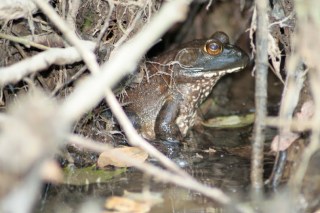
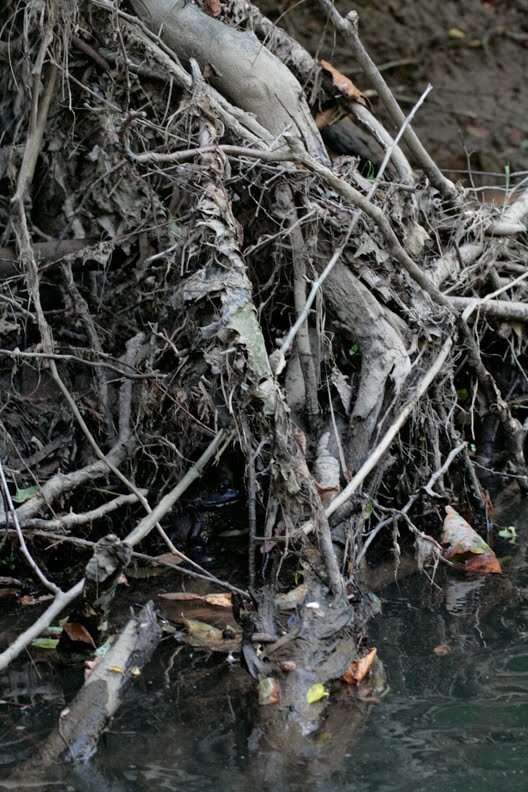
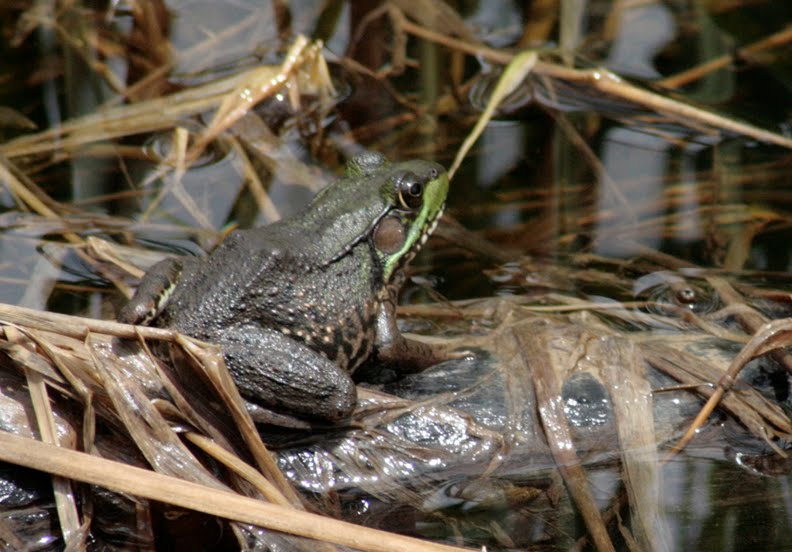
Here is a female bullfrog on the Hocking River. Bullfrogs are one of three still calling at this point. I was trying to catch a watersnake at the time, and she was big enough to eat it! The snake was maybe 18-20 inches, so I may have saved it from becoming lunch that day!
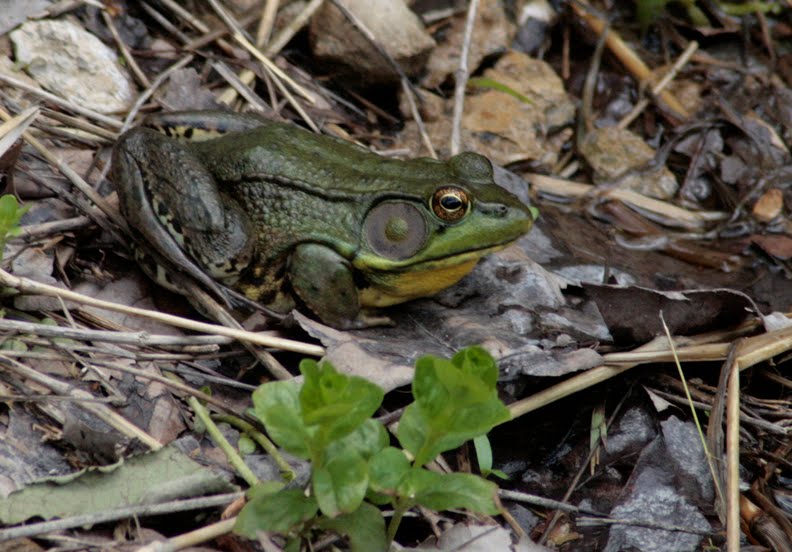
These two are Green frogs (Rana clamitans) the males can be distinguished by their bright yellow throats and their ear drums are at least 2x the size of their eyes. They make a sound that is similar to a plucked banjo string. The lateral fold running down their sides is one feature that helps distinguish the Green frog from the Bull frog (Rana catesbeiana) which shares their habitat.




 Ohio Frog Blog