No Surveys Tonight…

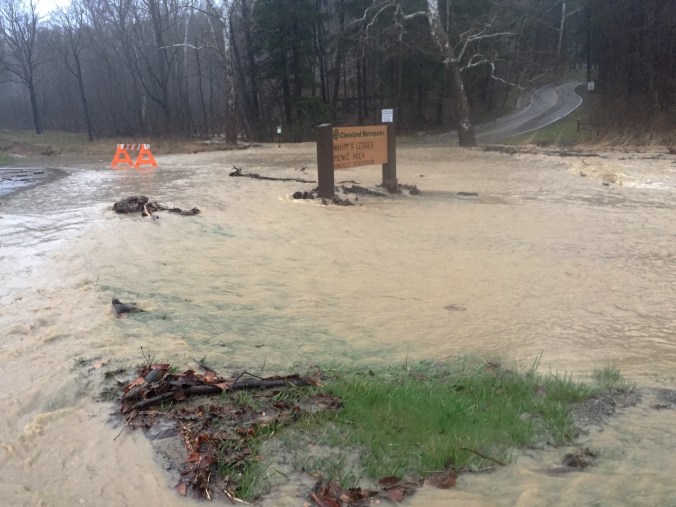
Hinckley flooding

Feeder creeks overflowing their banks

I headed out a little early tonight because of the heavy rains, and was meet with this at my first FrogWatch site. Needless to say, crossing this would bring a heavy fine, and with my luck, I would be bobbing down the Ohio River somehow my morning… None of this is even connected to the Ohio River watershed. So… I called off the remaining surveys because I’m sure the 2 National Park locations I like to visit are probably experiencing the same.

I have visited sites with full chorusing frogs after heavy rains and flooding, and it is always very quiet. Whether or not some get swept away, move to higher ground or what, I’m sure the overflowing ponds, vernal pools and standing water are impacted pretty severely by these events.

Water erosion can free up pollutants from neighboring fields and roads and then they are directed into the waterways which feed these bodies of water, thus contaminating them. One way developments manage this is to construct basins to catch runoff from parking lots and roads. They hold the water and release it at a rate as to reduce the strain on our sewer system. Often these basins contain plants that help filter the water, thereby reducing the impact of pollution from the runoff.

Maybe I’ll go out tomorrow night and see what is moving about.

Salamanders are still on the move!

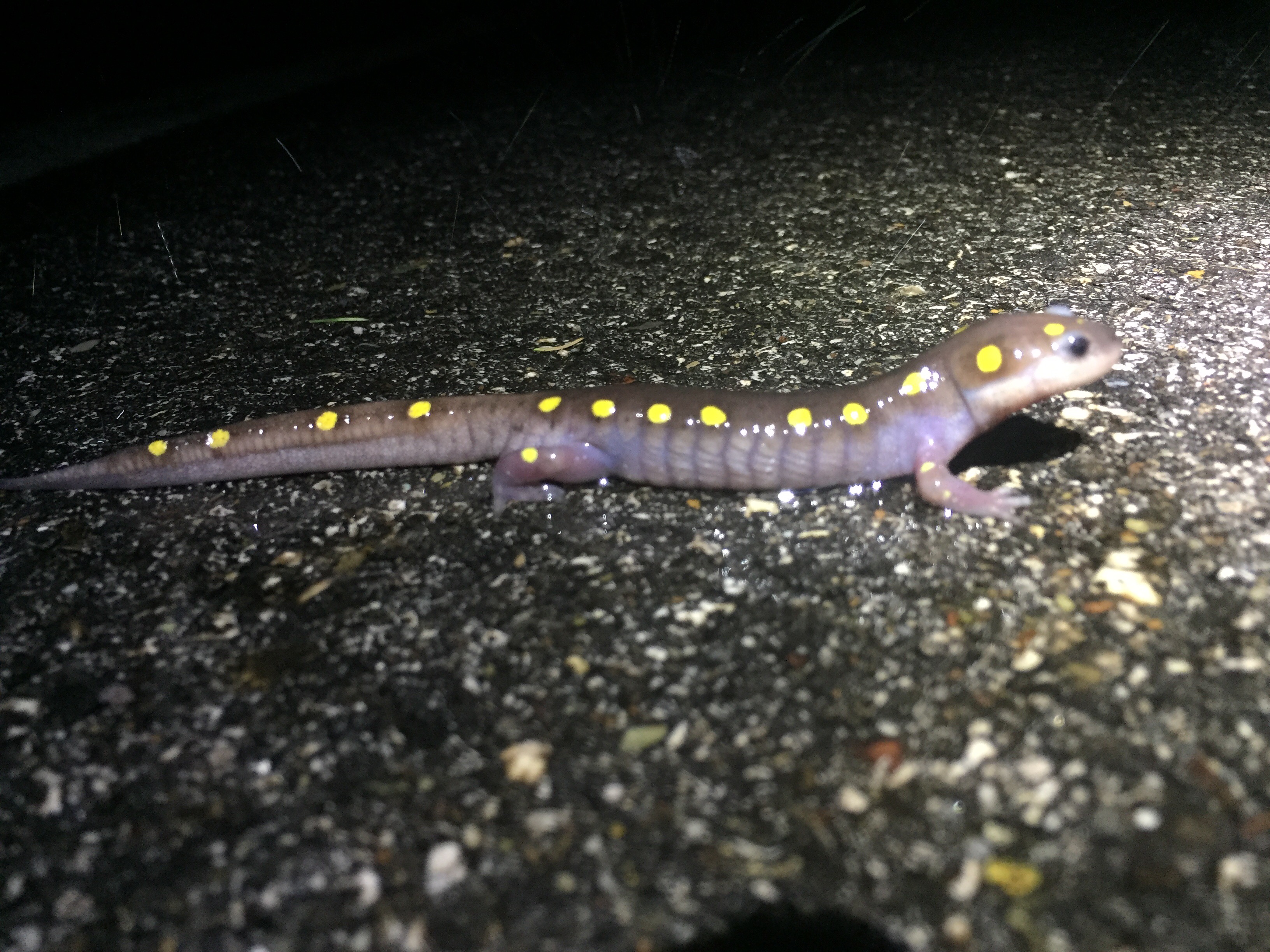
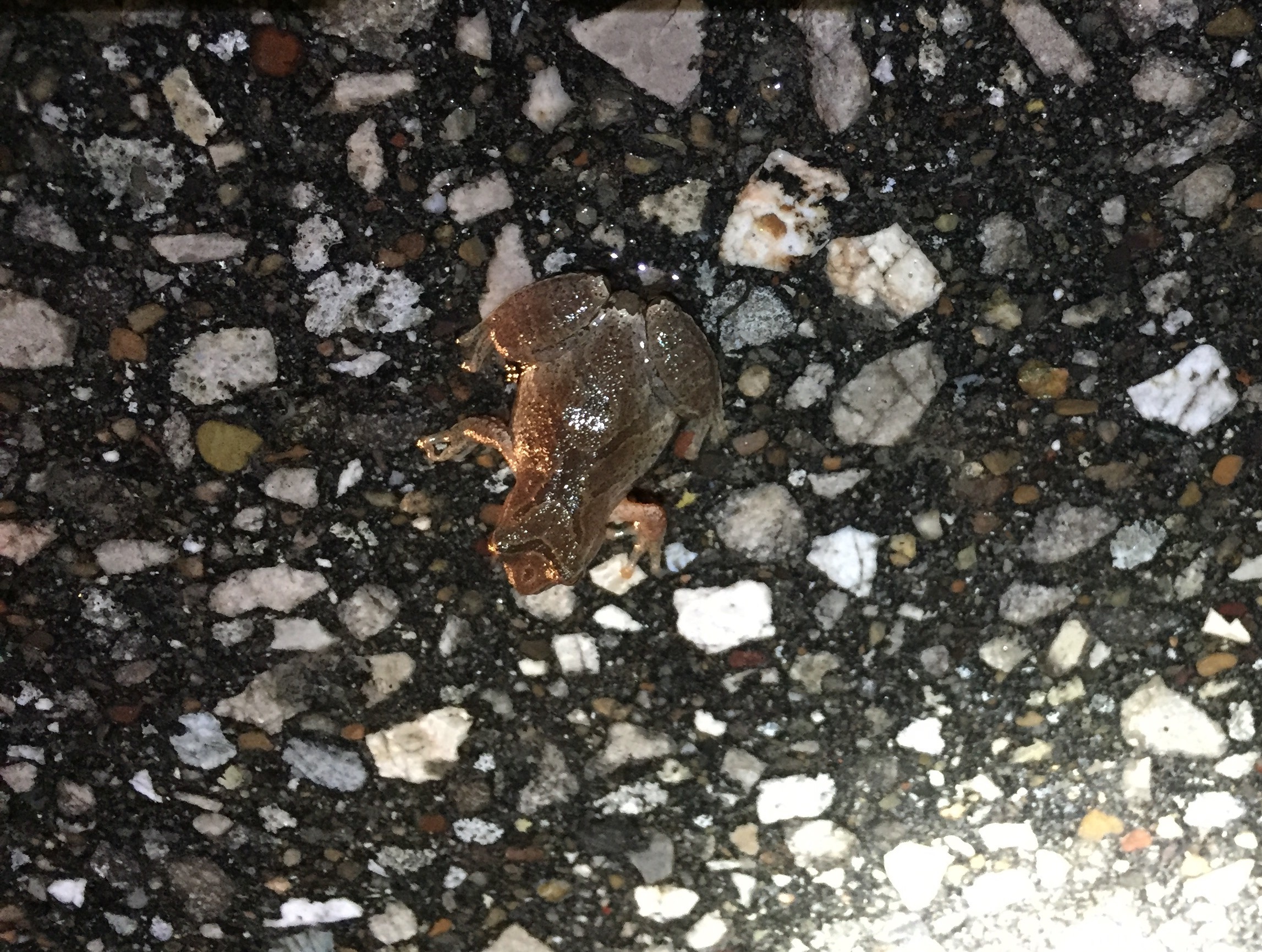
Spotted salamanders are still on the move! It is always a pleasure to see them because they are so hard to find at any other time of the year. This one was found moving across the Buckeye trail in an area flooded by the recent rains. One can hear Wood frogs calling in the background, their season is winding down. I also saw a 2 Lined and Redback salamander making their way across the road at the FrogWatch site in Hinckley, OH. No Western Chorus frogs as I have heard in past years…

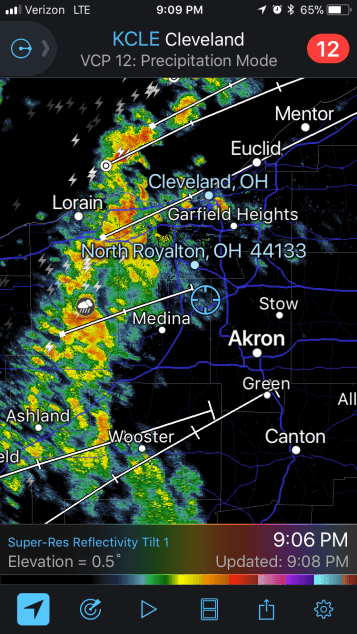
What the radar looked like during my visit! Lots O’ Rain!

RadarScope

Strong showers moving through with the warm front.

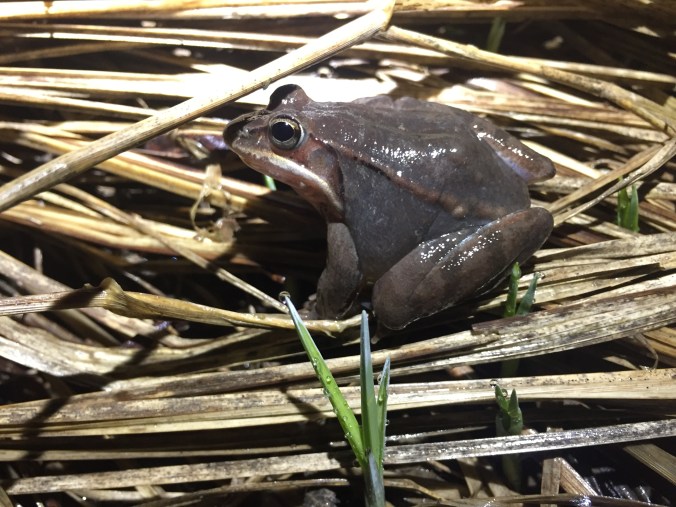
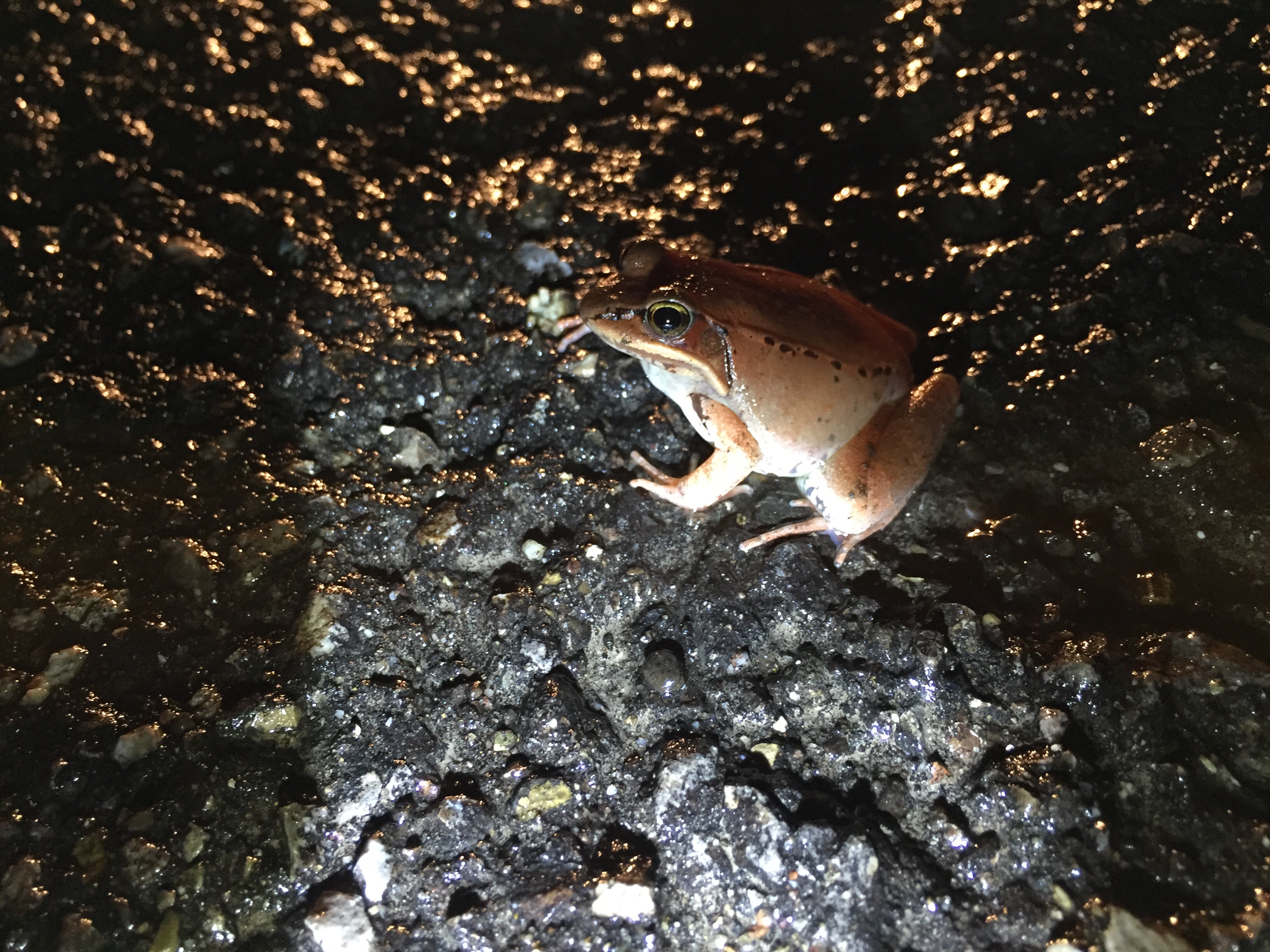
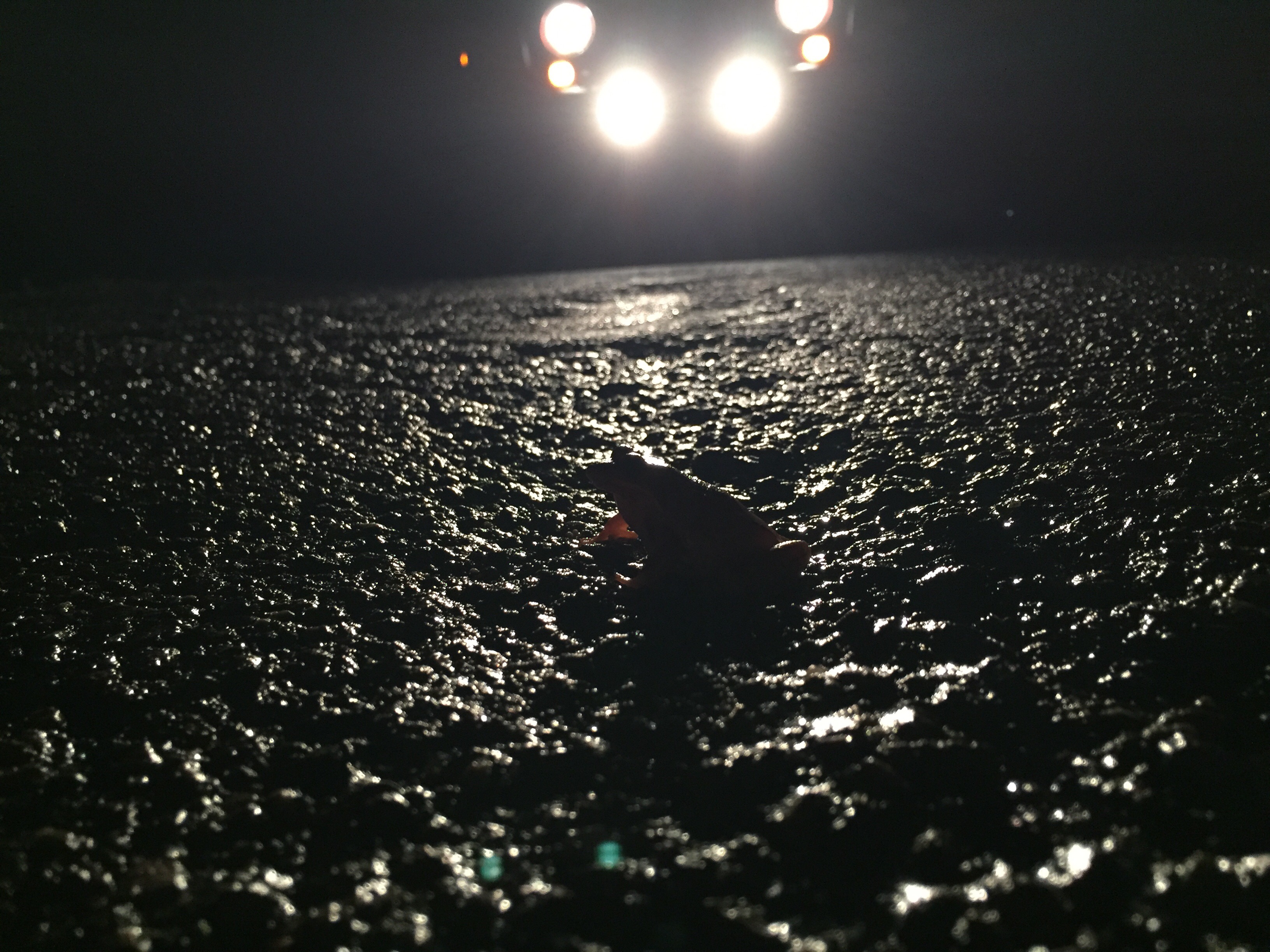
Wood frogs have a much shorter season then the Spring Peeper, lasting only a week or 2 depending on conditions. The visit Tuesday showed that the numbers are reduced from last Thursday, though like any frog, some are ahead and some are behind the curve. Here is a gravid female Wood frog heading to the Hinkley pond.

Female Wood frog

This gravid female was making her way to the Hinckley FrogWatch site, males are still calling strong.

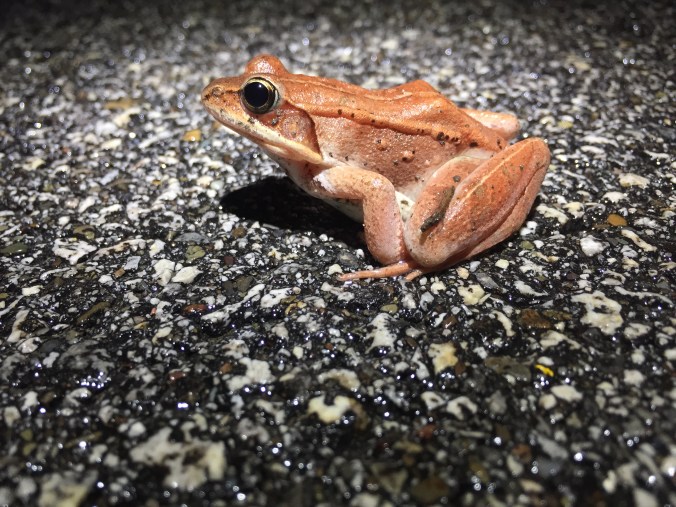
Wood frog

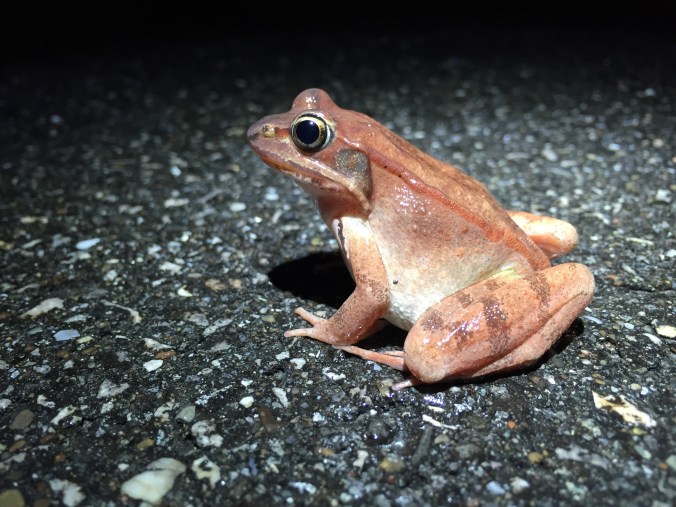
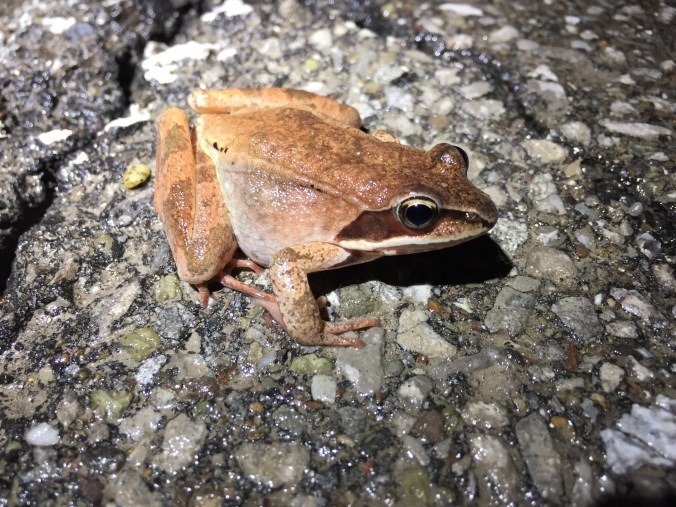
Wood frogs have a nice range of coloration, the mask isn’t as pronounced in this reddish one compared to some of the other brown ones.

Some of the other aunuras migrating but not yet calling.

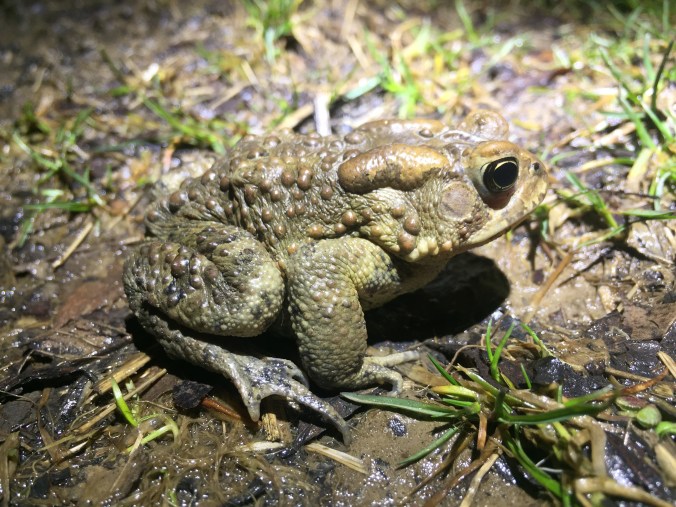
American toad

American toad’s will not be calling for a while.

Green frog

Juvenile Green frog

Here’s a male Spring Peeper that was calling along the Buckeye Trail.

Wood Frog chorus!

Wood frog

Wood frog

Wood frog

The “mask” under the eyes are a good spotting feature

The recording starts off with the pond in relative silence, just some individual peeps from the ubiquitous Spring Peeper. Then the Wood Frogs begin to call. There were dozens floating at the surface about 3-5 feet from the edge of the pond. Chorusing Wood Frogs are fun to watch as the males scoot across the surface like pinballs calling and investigating anything that is moving in the area!

Lots of rain means lots of activity

Temps in the 50’s and a good amount of rain made Tuesday evening a great time to do some Frog Watch surveys. I chose 4 locations to visit that amounted to a big loop in the Southern survey locations.

Hinckley

Consistent rain brought out good numbers of Spotted salamanders, Spring Peepers, Wood Frogs and even an American Toad. The chorusing activity of Spring Peepers and Wood Frogs was just getting started. They were intermittent and any movement, traffic or out of place sound would quiet the pond. This type of sensitivity usually lessens as the season progresses. Pretty soon, only the ones in close proximity will go silent upon ones approach and the rest will keep the party going.
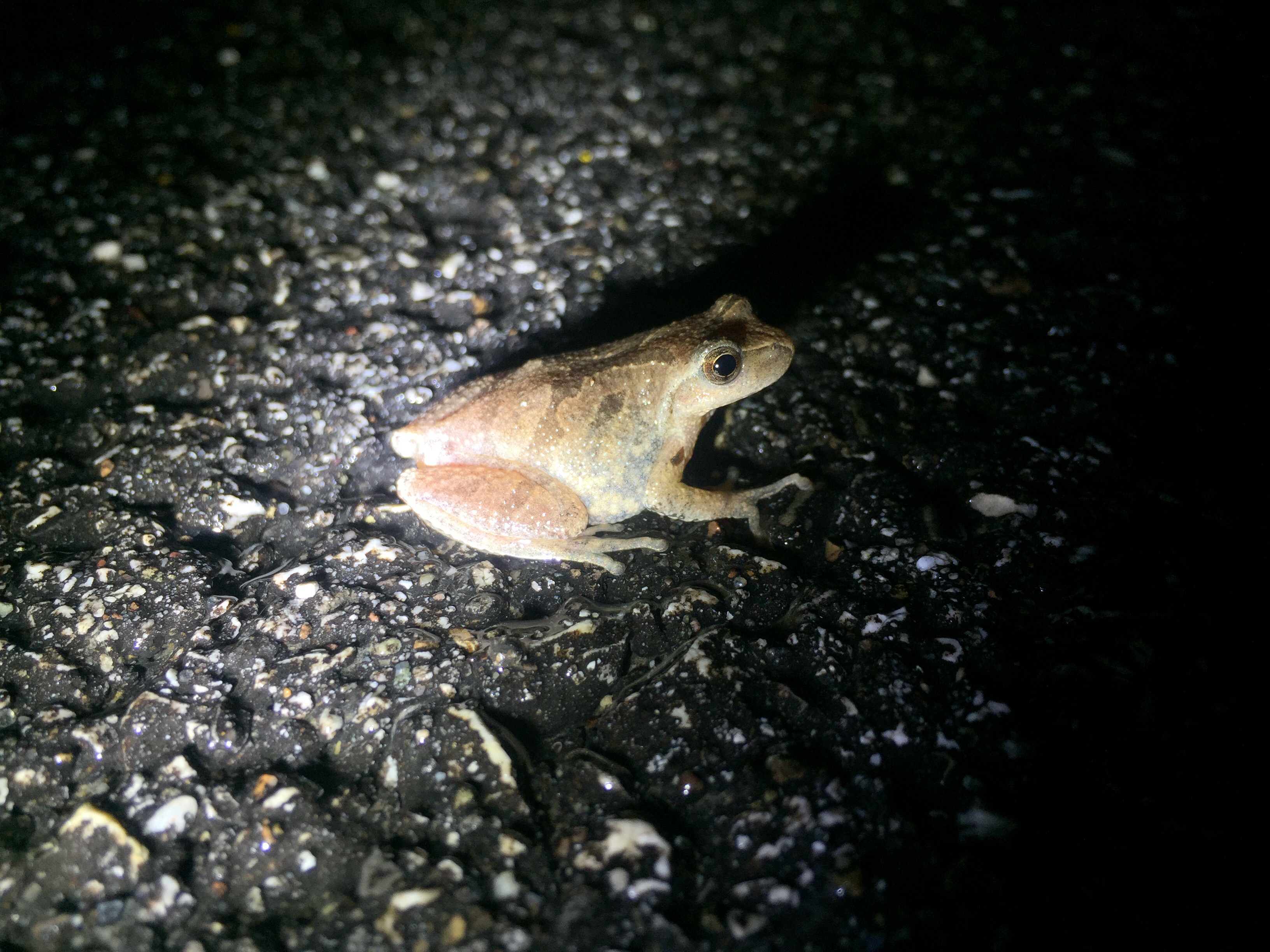
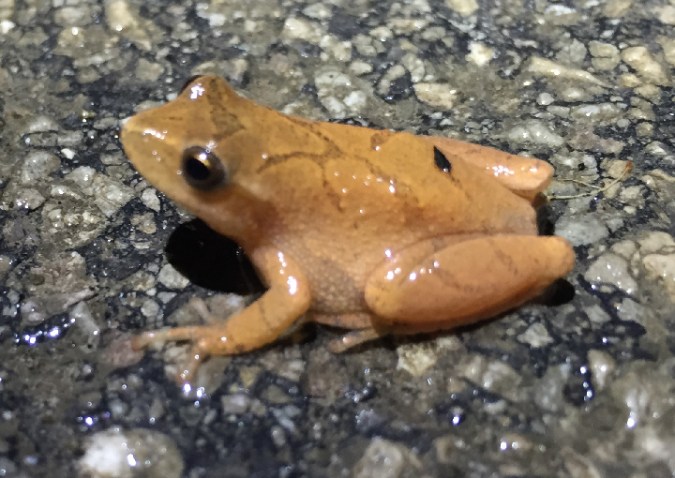
Spring Peeper

Spring Peeper making its way to the pond.

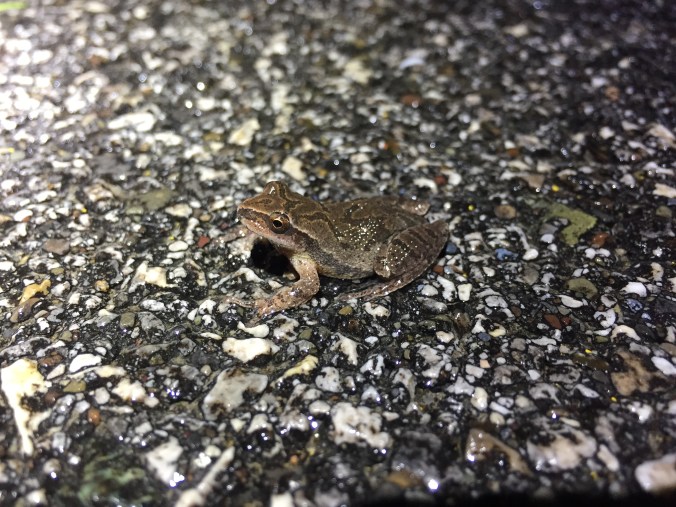
Spring Peeper

One of several peepers on Tuesday night.
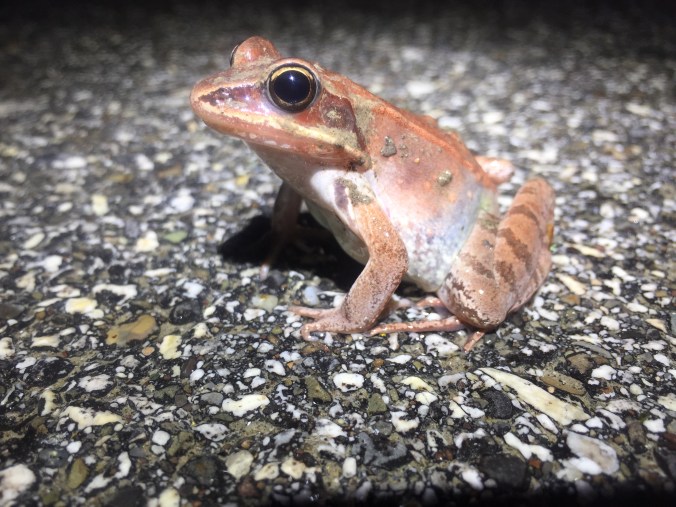
Wood frog

Wood frogs are one of the first frogs to be calling in the early Spring.
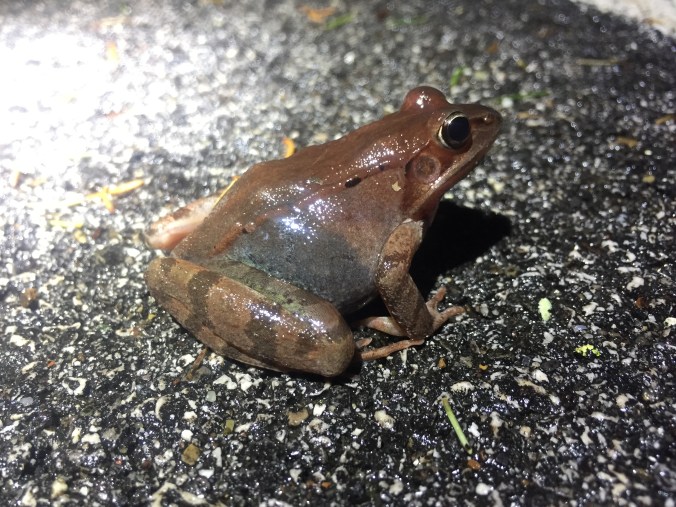
Wood frog

Looks like a gravid female. The male Wood Frogs tend to show up at the ponds first, begin calling and then the females follow.
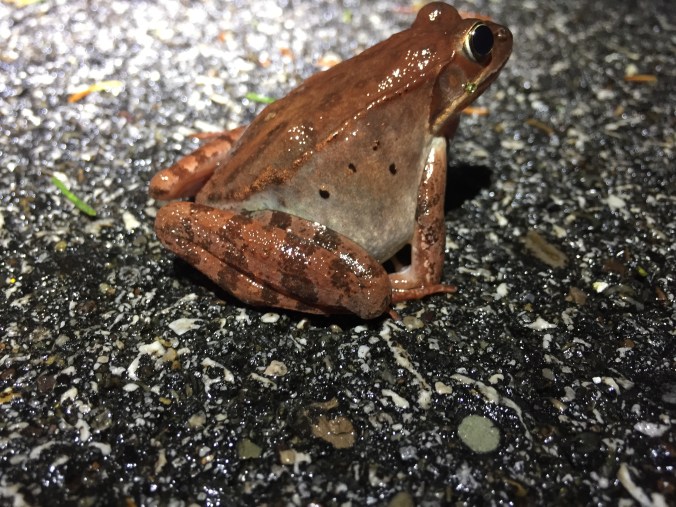
Wood frog

Wood frogs show a nice variety of colors and tones.

Spotted Salamander

This Spotted Salamander just crossed the road on its way to the pond.
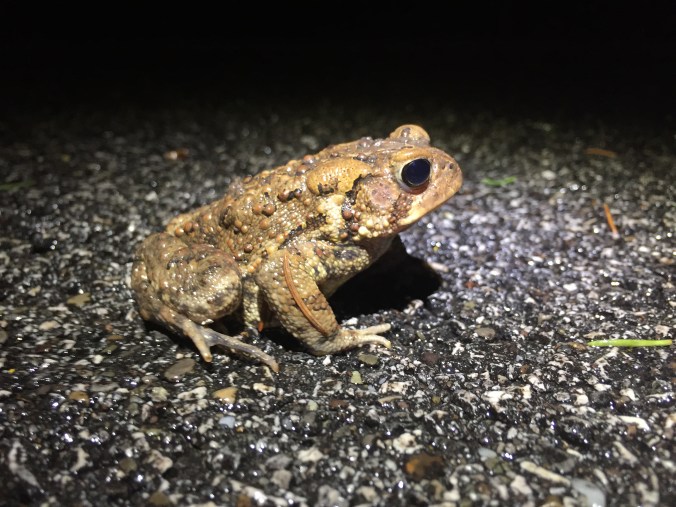
American Toad

Toads are unmistakable as they make their way to the ponds. They hop or crawl instead of jumping like frogs.

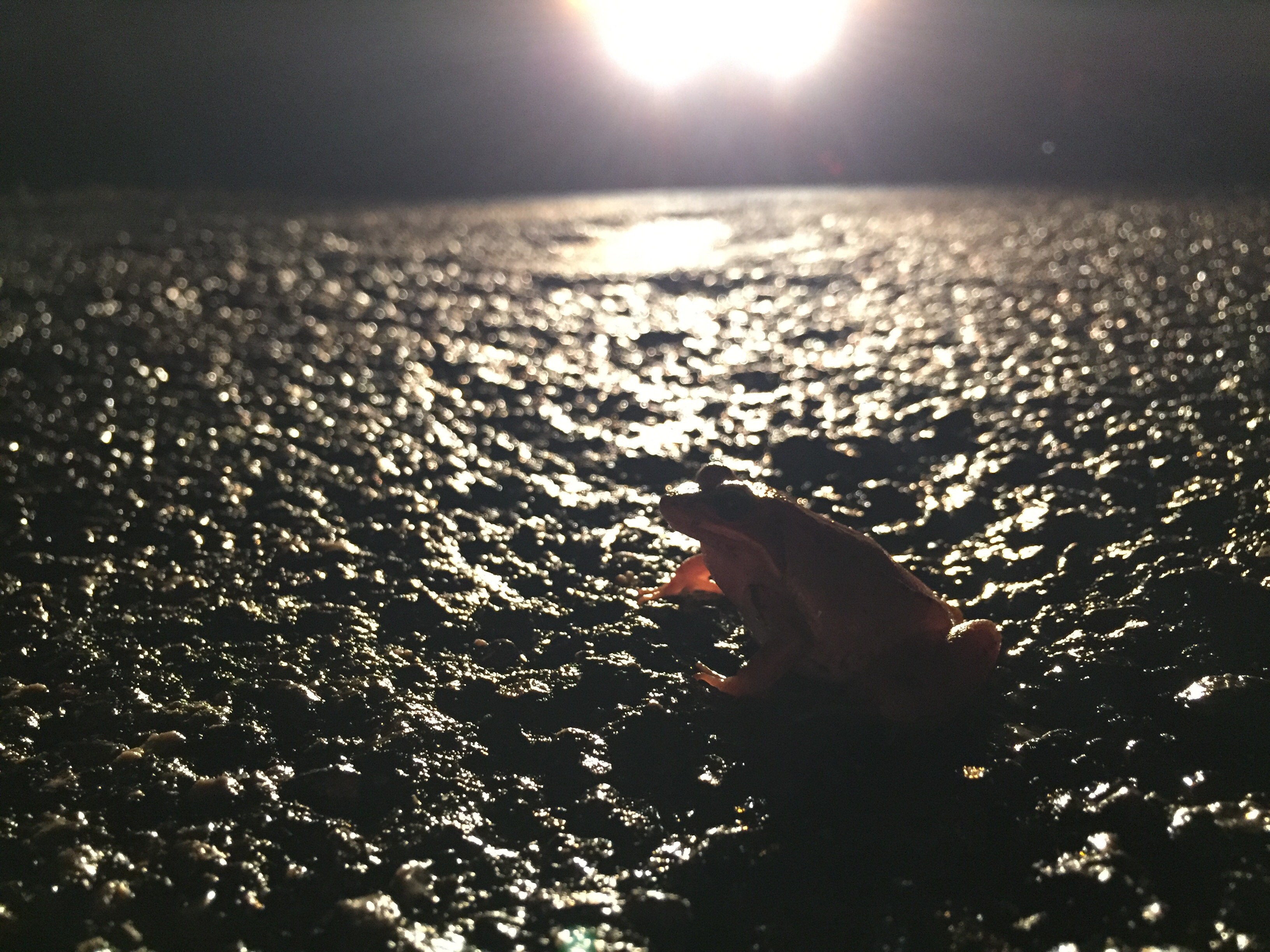
Spatted salamander

The frog lights helped illuminate this little one!

Vaughn Road

Sadly he Vaughn location in the National Park was quiet during my visit. This was once a hot spot for Western Chorus frogs, as was nearby Red Lock. Not a single Chorus Frog was heard at either location. A pond North of Red Lock, not an official survey site, had a strong chorus of Spring Peepers and Wood frogs. Here is a “find the frog” shot from my iPhone. A bit pixelated as I had to use the zoom. Some of the big boys (and girls) hang out in the actual Red Lock structure.
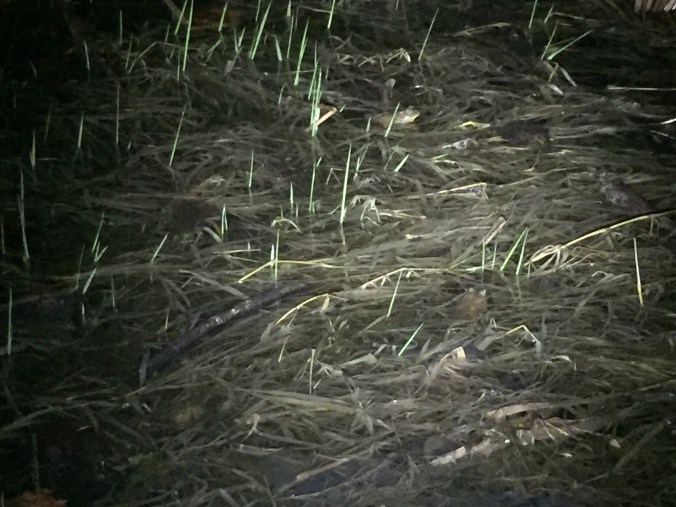
Bull frogs

Find the frog(s)

Station Road

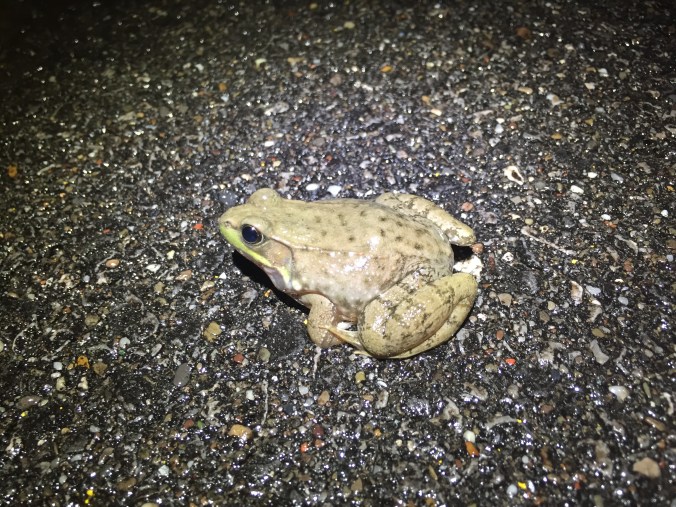
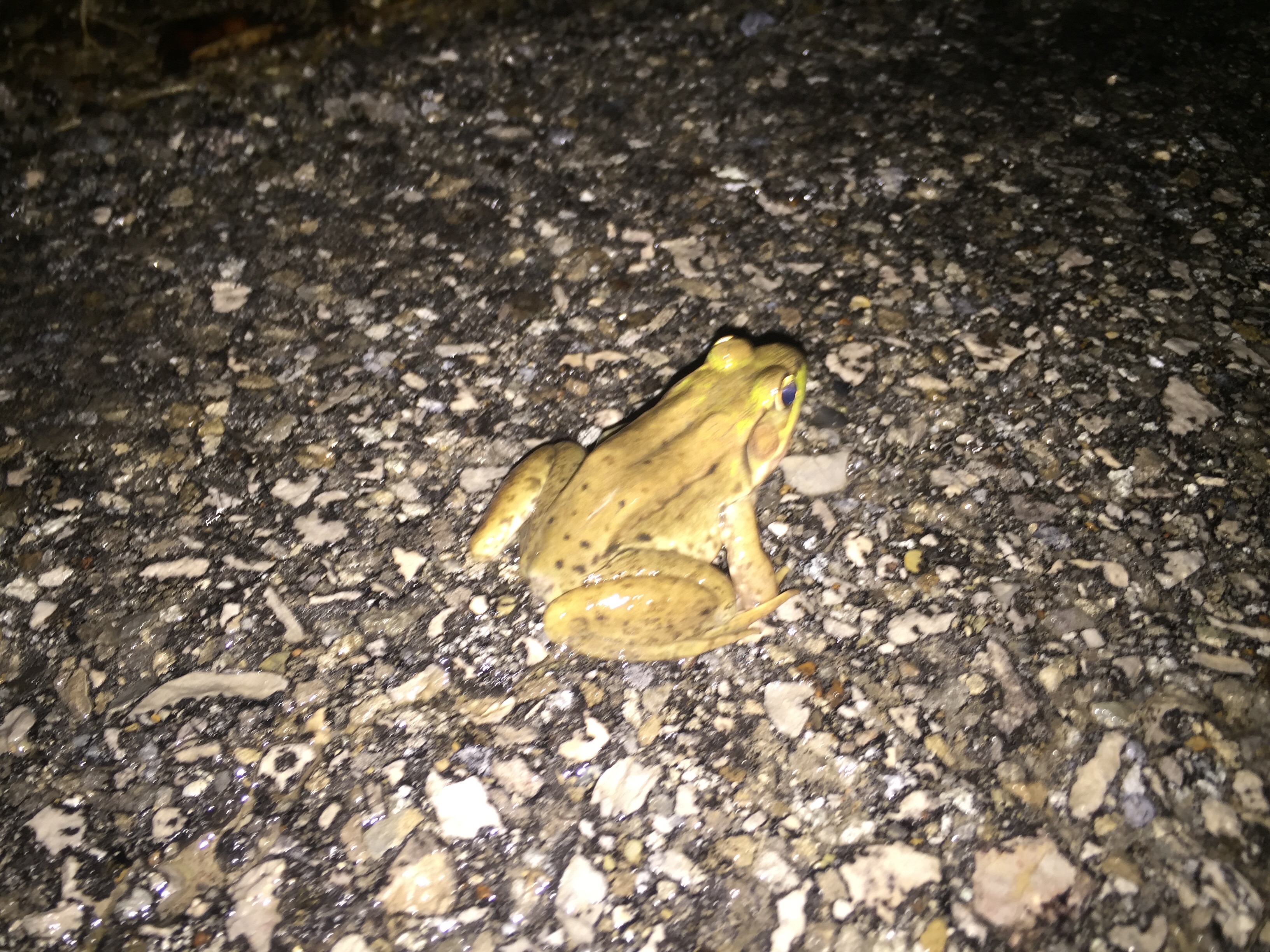
I came across some National Park employees studying the movements and traffic mortality rates along Riverview. Hopefully results will go to a solid plan of reducing the traffic at key migration routes. Good numbers of Peepers were calling at the Northern edge of the pond Station Road as well as the Southern pond. No wood frogs yet. Here is a good sized Green Frog I found leaving the parking lot. They will not be calling for a while.
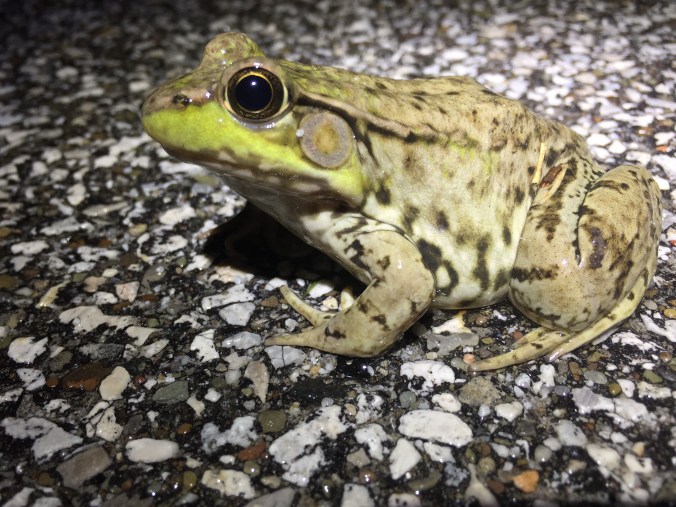
Green Frog

I saw this one as I was leaving the Station Road site.

Aukerman Park

This site is new to me, and looks like a great spot for mid season to end of season frogs and toads. The pond is fairly open with not much cover as of yet. My observations show that a reduced number of early Spring frogs will call from a location like this vs a vernal pool. Time will tell. I spotted a Spring Peeper in the walkway, so thats a great sign!
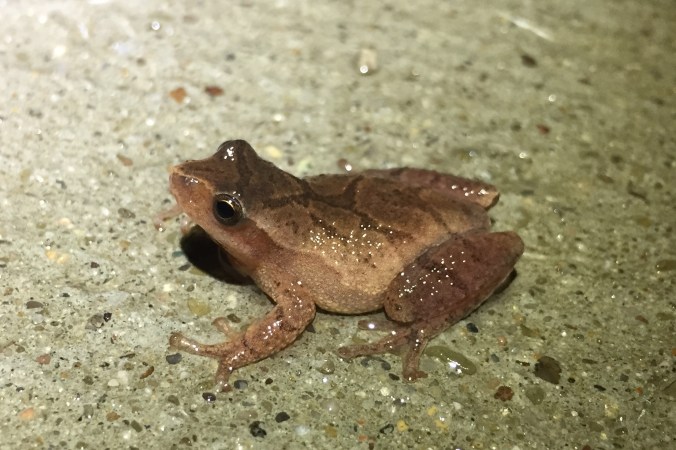
Spring Peeper

I saw this little one on the walkway leading to the pond.
The recap of the February recap!

The promise of showers and temps in the 50s made tonight a great night to head out and see what is moving. I wasn’t disappointed! Around 8:00 some rain developed, and that was all that was needed to get things going.


I did some exploring along the tree line and saw some more Redback Salamanders.

Than as the ground became a bit more saturated, a Two Lined salamander made its way across the road.

IMG_9276

Two Lined Salamander

Then the big boys came out!

These are Spotted Salamanders. They spend most of their time crawling around the leaf litter or burrowed underground.

To wrap things up, some Spring Peepers joined the migration!

Some pond predators and a glimpse of a fairy shrimp.

Last but not least, here’s a Green frog I found crossing the Parkway on the way home!

Green frog

Green frog


Great migration weather!

​​​
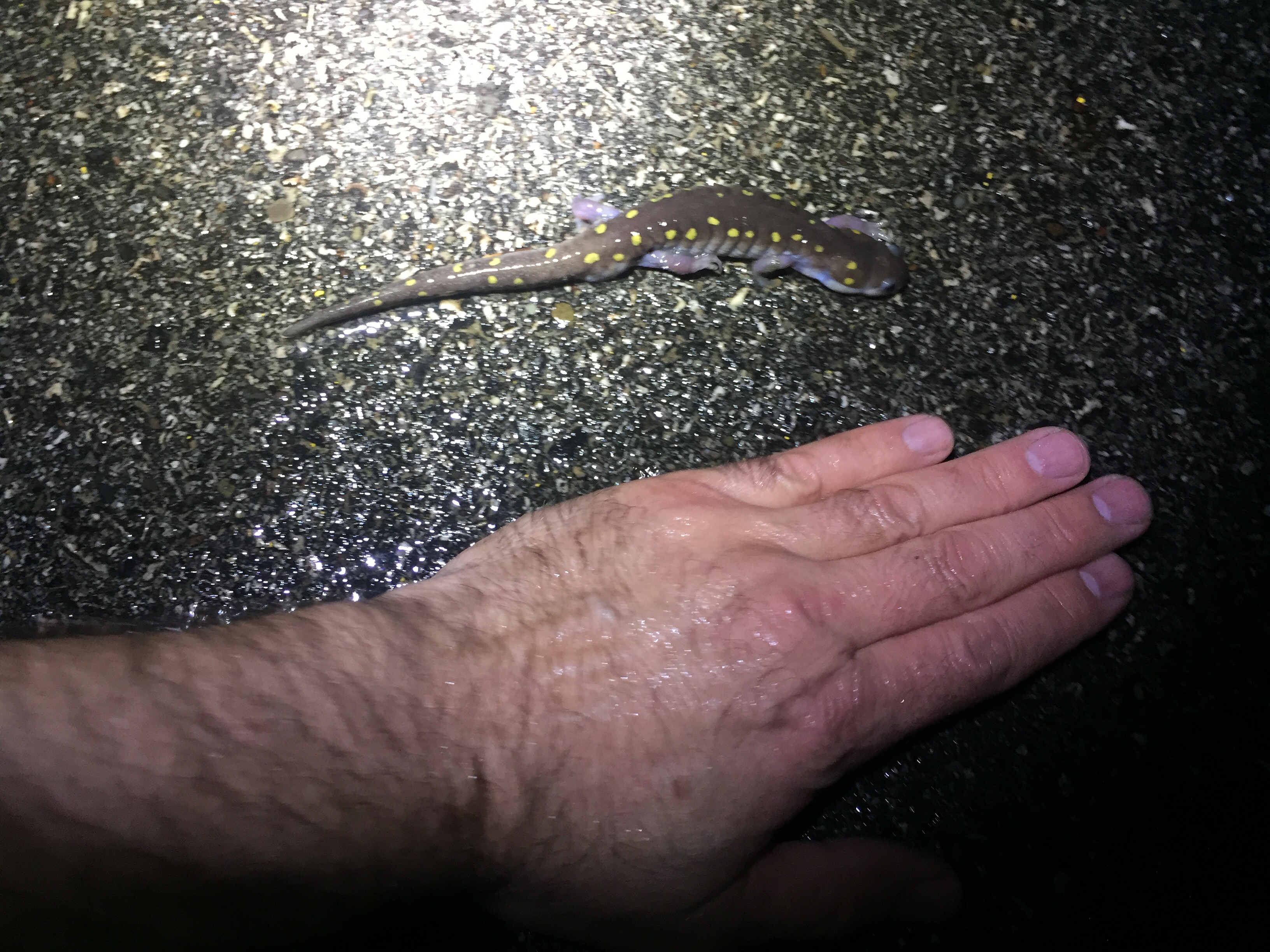
​Just waiting for Hinkley metroparks to open. I think the soak we are getting will wake things up! Around 9pm the rangers opened up the park after a noon shut down. There was about a 10 minute break in the showers when I was able to start looking around. In the background, I could hear the peep and trill of Spring Peepers breaking the quiet. As the rains started again, I could hear a small chorus of Wood frogs calling. Wood frogs sound similar to ducks carrying on. I saw a green frog outside the park on a back road going somewhere. Quite a contrast in size is the ubiquitous Spring peeper, about an inch or so. An identifying feature on these little ones is the cross pattern on their backs. It was quite a treat to see the Spotted salamanders on the move! I took a photo with my hand as a reference to their size. One video shows a Spotted salamander moving about the pond and one can see 2 egg masses attached to some submerged twigs. 6 inches of snow on Friday and by Monday, 50 degrees and rain trigger a migration. What a great night!
2017 Migration Start

The warm temps in the 60s and evening showers has triggered the start to the 2017 migration. Both the Wood frog and Spring Peepers shown are making their way to local breeding sites in the Cuyahoga Valley Park. The Wood frog has the ability to become totally frozen due to the release of sugars in its blood stream. It acts like an antifreeze, displacing water in its vital organs, which eliminates the damage done from the chrystalisation of water that would rupture the tissue bringing death to other animals. The Spring Peeper also shares this trait to a degree. When the next snow storm and freezing temps move through, they would burry down in the detris to ecscape the harsh conditions. I have witnessed Spring Perpers calling after 3 inches of snow covering the sites and a thin layer of ice on the ponds! They are perfectly adapted to the rapidly changing weather patterns we have here in Cleveland, and will do just fine. #Frogwatch

Leopard frogs!

The call of the Leopard frog marks the second wave of our local frog and toads breeding season. Spring Peepers, Wood frogs and Western Chorus are the first out, followed by the Leopard frog, American toad and Pickerel frog. This second wave does not have the same freeze tolerance of the first wave, even though they do begin migrating at the same time. Their defense against freezing is to either burrow below the frost line or submerge themselves in a body of water. Even though we have wildly fluctuating temperatures, we will not have a dip so drastic as to freeze a pond with several inches of ice.

Leopard frogs can be identified by their rounded, irregular rows of dark spots, strong dorsal lateral folds, banded legs and a pointed snout. Base color and spot patterns vary greatly among individuals. Some may have a bronze base color with large spots, some may have a brilliant green with small spots. Their call sounds like a descending snore followed by several soft grunts. A strong chorus will often have more of the grunting sounds as males work out their territory through posturing and positioning.

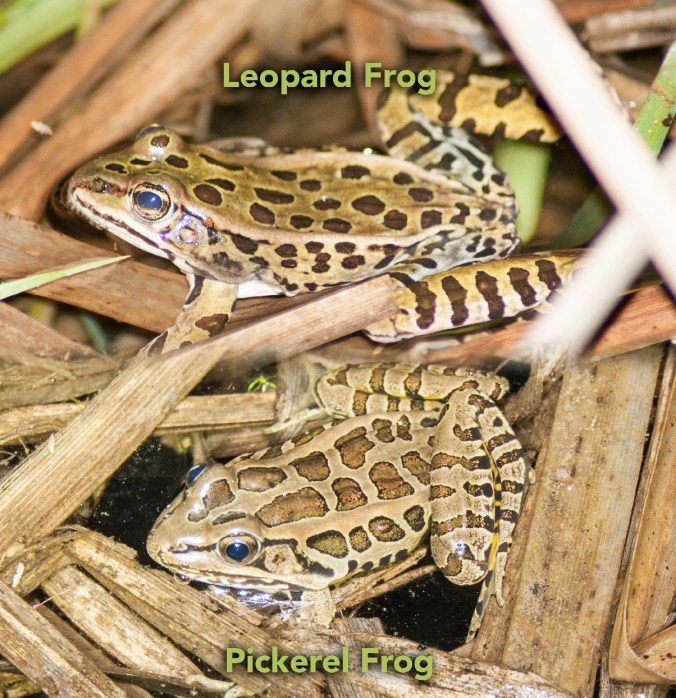
Leopard frogs are often confused with Pickerel frogs as both are spotted. The main difference is that Pickerel frogs have more squared off spots in parallel rows and Leopards are more rounded and random.

Leopard frog vs Pickerel frog

A comparison between a Leopard frog (top) and Pickerel frog (bottom)

Little Spring Peepers making a big sound!

I came across this male Spring Peeper calling when doing a survey in Hinckley, OH. He became accustomed to my light after a couple of minutes of me rooting around and I didn’t even see him until he began calling. The very first stuttered trill is an encounter call. Spring Peepers use this call when another male is in close proximity to their territory. A wrestling bout may take place if the other frog doesn’t move to another perch, though they tend to be more tolerant of another frogs presence when a full blown chorus is underway. Although they are simple creatures, frogs have a way of communicating with each other through visual cues and voice. The advertisement call follows the encounter call, and it is quite a piercing and explosive sound. They fill their lungs up with air, and run it back and forth through the vocal chords, and into the air sack located under their chin. Very powerful abdominal muscle contractions and elastic skin composing the air sack make this movement possible. One has to keep in mind that they have just emerged from hibernation a short time ago and are expending an enormous amount energy attracting a mate. The females arrive at the vernal pools soon after the males begin calling. Check out a Metropark migration route on a rainy spring evening, and the shear number of these creatures migrating is astounding.

Spring peepers have a very drawn out season and can be heard calling well into the late spring.  Just try and find one when they breeding season is finished! Included in their repertoire is a unique call given through the late summer during high humidity or when a storm is approaching called a rain call. It is a bit raspier then the broadcast call and is easy to confuse as a bird song. Below is Spring Peeper rain call from Cuyahoga Valley National Park’s Brecksville Station. This was recorded September 6th, 2014 during a 70 degree morning around 9am. One can hear a passing shower just after they start the rain call! Early spring in Northern Ohio has wildly fluctuating temperatures. We can have early 70s one day followed by 3-4 inches of lake effect snow the next. All of the early spring frogs have a tolerance to freezing through a chemical released by the liver at the onset of freezing temps. Wood frogs, Western Chorus, Spring Peepers and even Grey Treefrogs have this ability. Try to get out to the park system on a spring evening and experience this seasonal gift of sound!

Spring Peeper

This Spring Peeper was found at Breckville Station in the Cuyahoga Valley National Park. These small tree frogs make the very big PEEP sound, and are among the first 3 frogs that begin calling in the early spring.