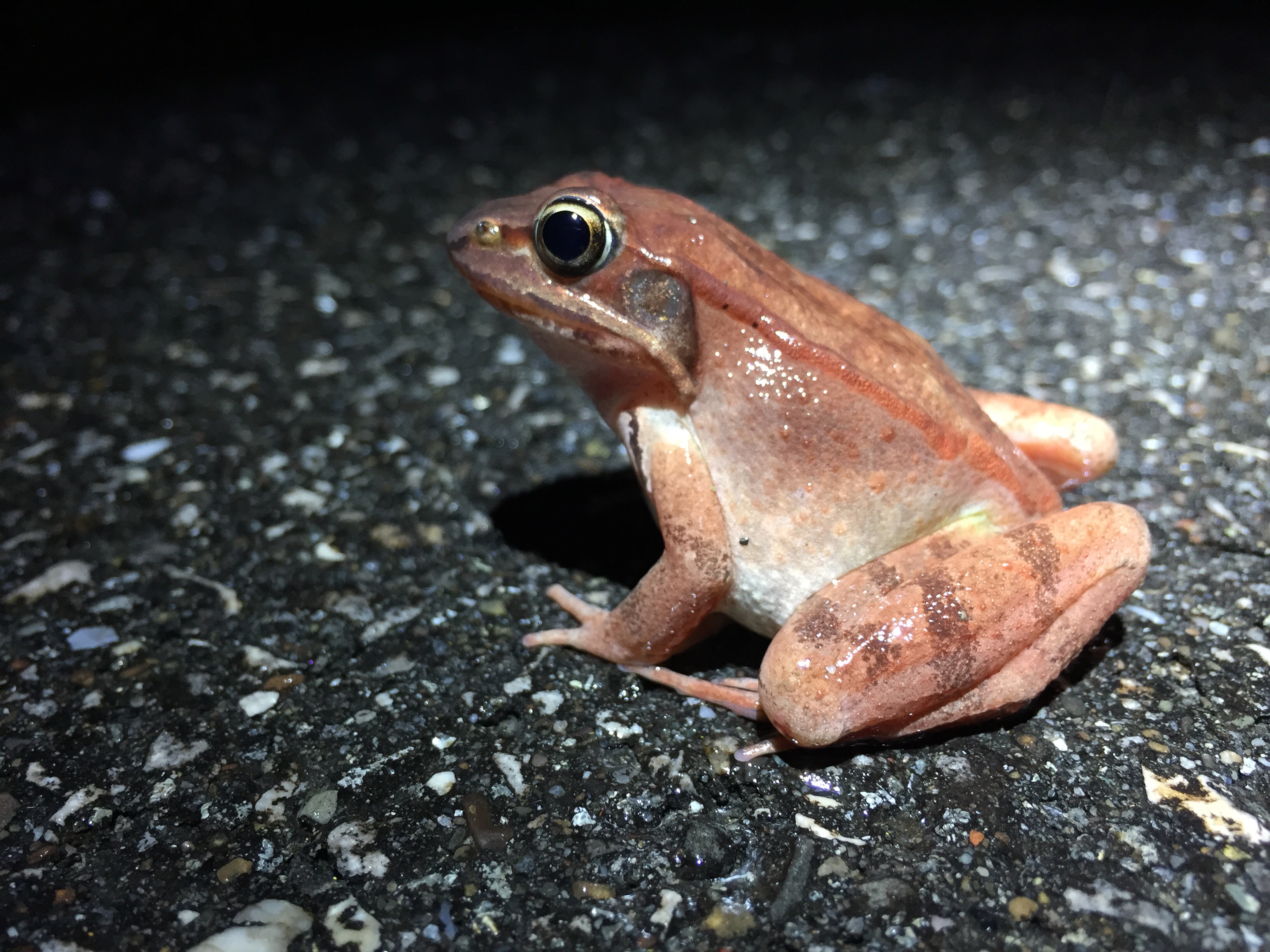
Spring peepers have sprung!

I visited 4 sites tonight figuring several days in the upper 50s and 60s would trigger a good start to the 2016 FrogWatch season, and I wasn’t disappointed! I started at Canal Way Metroparks and was teased by a single Spring Peeper making a single peep when I was there. Brecksville Station was next followed by Vaughn Road and Hinkley’s Whipps Ledges was my final stop. Brecksville and Hinkley had a strong Peeper count, Vaughn had 2-3 Chorus frogs joining the Peepers. Hinkley use to have a strong Chorus population, but I just don’t hear them there any more. I sure do hope they make a showing, because it would be sad to not hear them there this year. Their population is definatly on the decline in the Metroparks. Woodcocks are buzzing around Canal Way, Brecksville and Vaughn. They make a decending buzz like sound maybe a second in duration, and are very charming birds that call at night. Here’s a sample of tonight’s activity  from Brecksville Station. The IPhone doesn’t record well in low light settings, but the sound of the Peepers keeps it lively! The next recording shows a casualty at the end. It may have been left overs from a preditors interrupted meal. A closer look revealed that it was a female with developing eggs. If there are any snapping turtles active, it will not last long.


All day soak!

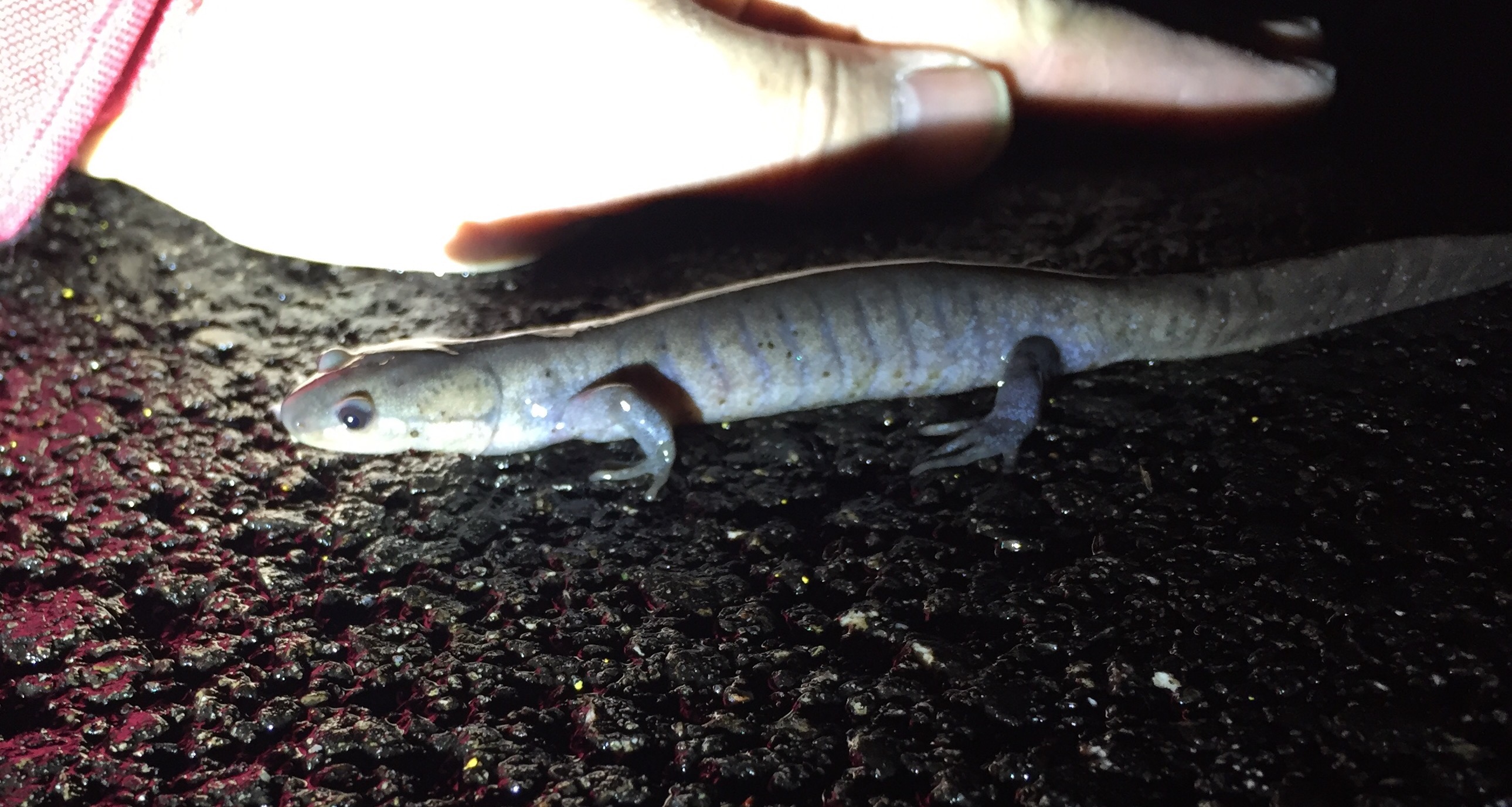
A good all day soak is sure to trigger a start to this springs migration! In general, the first wave is when mole salamanders, spring peepers, wood frogs and chorus frogs make their move to the vernal pools to get the party started. Jefferson salamanders usually lead the pack with Spotted salamanders following. The cold temps are not a deterrent for these early migratory species because the have strategies to counter the threat of ice and snow. The salamanders will simply burrow into the leaf litter, ground or under logs. The frogs have a similar game plan, but the first 3 species all have a tolerance to freezing! Their liver creates a chemical that displaces water in the major organ and muscle tissue areas, thus offsetting the damage that would kill them from ice crystal formation. Wood frogs can be frozen solid like a rock! Of course it will all come to a screeching halt when it all turns to 3-6 inches of snow overnight! The struggle is real. 


Vernal pool Fairy Shrimp

I visited a pond in Hinkley this evening, it was 35 degrees with a full moon. My experience has shown that when there is a full moon, any frogs that are calling, will be quite a bit more timid. I believe it is because any movement above them is more visible then when there are clouds breaking up a possible predators outline.  While I didn’t spot any salamanders or early spring frogs, I did see some Fairy Shrimp. These 1/2 inch long invertebrates  spend their time swimming around upside down eating algae and plankton. I’m sure they will be a welcome meal for the salamanders once a good rain triggers  the spring migration.

Nothing moving yet

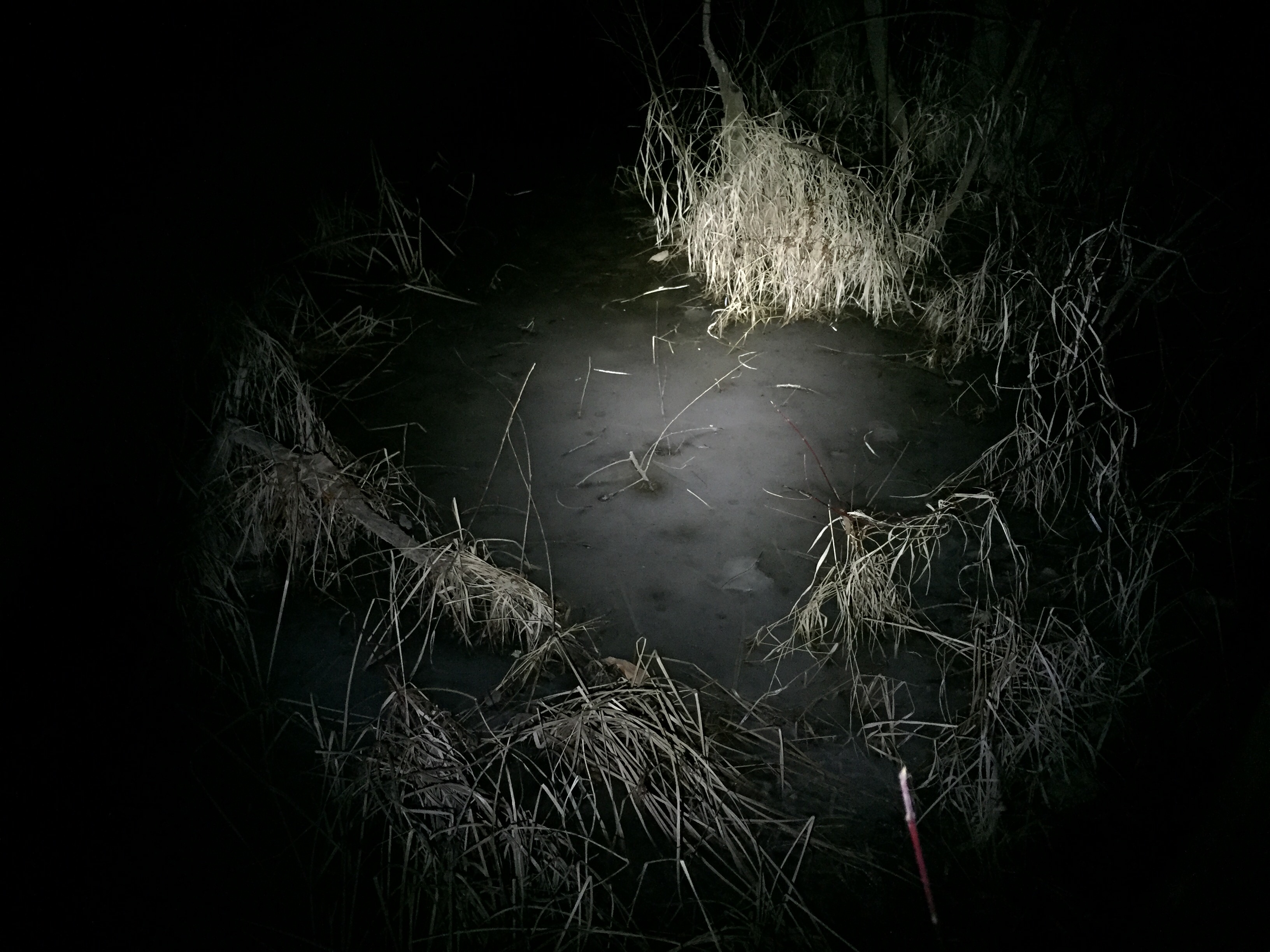
I went down to Canal way off 49th and the the ice has melted around the pond edge, but it is still substantial around the more open body of water. No sign of any amphibian movement there. The promise of rain and warm days made me hopeful I would see some sign of spring! Although a line of showers will come overnight, I think it isn’t going to do anything because temps now look like the are going to fall to just above freezing again. Hinckley did not show any signs either. There is a dismal amount of water in the pond I like to observe, and although the ice has also melted at the pond edge, there is a substantial amount in the center. This pond has a lot of surrounding and overhead cover which will slow the melt. The surrounding forest floor has thawed, but the tree shown in the photo is usually surrounded by a good 5 foot diameter of water, this year I can walk right up to it. On a positive note, I did see some leaves skipping about!


My guess is Sunday or Monday

My guess is Sunday or Monday will be the start of the 2016 amphibian migration. It is going to be an interesting start with no snow cover in the Cleveland area, so not much melt to fill up the vernal pools. I’ll be keeping an eye out for Jefferson and Spotted salamanders making their way to the breeding sites and the rain will assist in their journey. These creatures have a very delicate, permeable and moist skin, so a good soaking keeps them safe from toxins and drying out. If you see a Metropark road closed for the migration, grab a flashlight and look around after sunset. Watch your step, take some pictures but let them do their thing.

IMG_5170.PNG

What a unique December!

While in Hocking Hills the weekend of the 12th, Ohio’s early spring noise makers began tuning up. Throughout Ohio, temperatures have been above freezing and very little snow has fallen since late fall. This weekend, temps hit 70 during the day. Not an unusual occurrence, but this year it is the workings of a strong El Niño.

What was a surprise to me is the sound of Spring Peepers and Wood frogs tuning up! Never before have I witnessed a late December vocalization, so I consider it quite a treat!

The Peepers have been calling sporadically throughout the day from all areas of the forest near our location between Lancaster and Logan.  There has been no strong central location or chorus activity on the 12th. Nightfall seemed to have less activity then daylight. Before sunrise on the 13th I could hear 3 peepers chorusing from a single location. Peeps were consistent between the group, unlike those calling from the forest. 2 Wood frogs were heard introducing themselves with sporadic clucks. The fact that 2 species are vocalizing the broadcast call seems to imply they have been influenced by the warm spell. Past temperatures have dipped into the freezing range to mid 40s, so it looks like that cools cycle followed by exceedingly warm temps can trigger breeding activity. Fish and herpetologist breeders will often use temperature fluctuations, light cycles and water level changes to stimulate breeding activity. Chatter between 2 Great horned owls provided a beautiful backdrop!

Station Road FrogWatch, Green frog calls

Green frogs are plentiful this time of year. A good chorus sounds like a chaotic symphony of plucked loose banjos strings and rubber bands. It seems that when a smaller number of males are calling from a site, they give single note broadcast calls. When there is an abundance of space and a large number of males, they seem to give the multi-note calls, each note progressively diminished and lower in the scale. This call modification seems to be their way of increasing the chance of drawing in a mate so a series of notes can be followed vs one note lost in the surrounding sounds. There can be quite a bit of splashing about as the males defend their calling site from intruding males, both broadcasting and satellite. When a frog gets to close, an encounter call sounding like bubbles blown through a straw is given, often followed by a growling squeak, as one frog persuades the other to leave the area.

Brecksville Station and rain

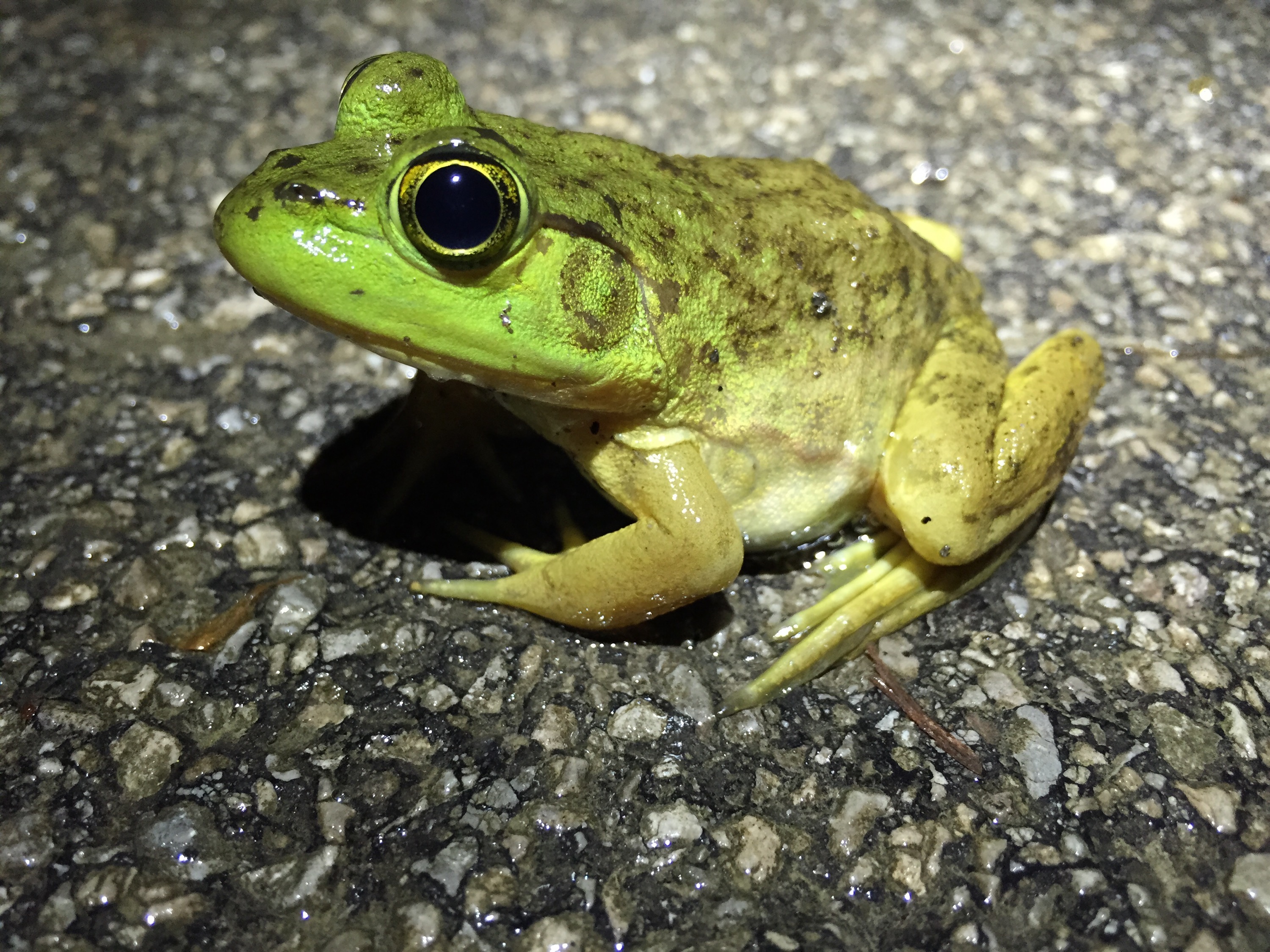
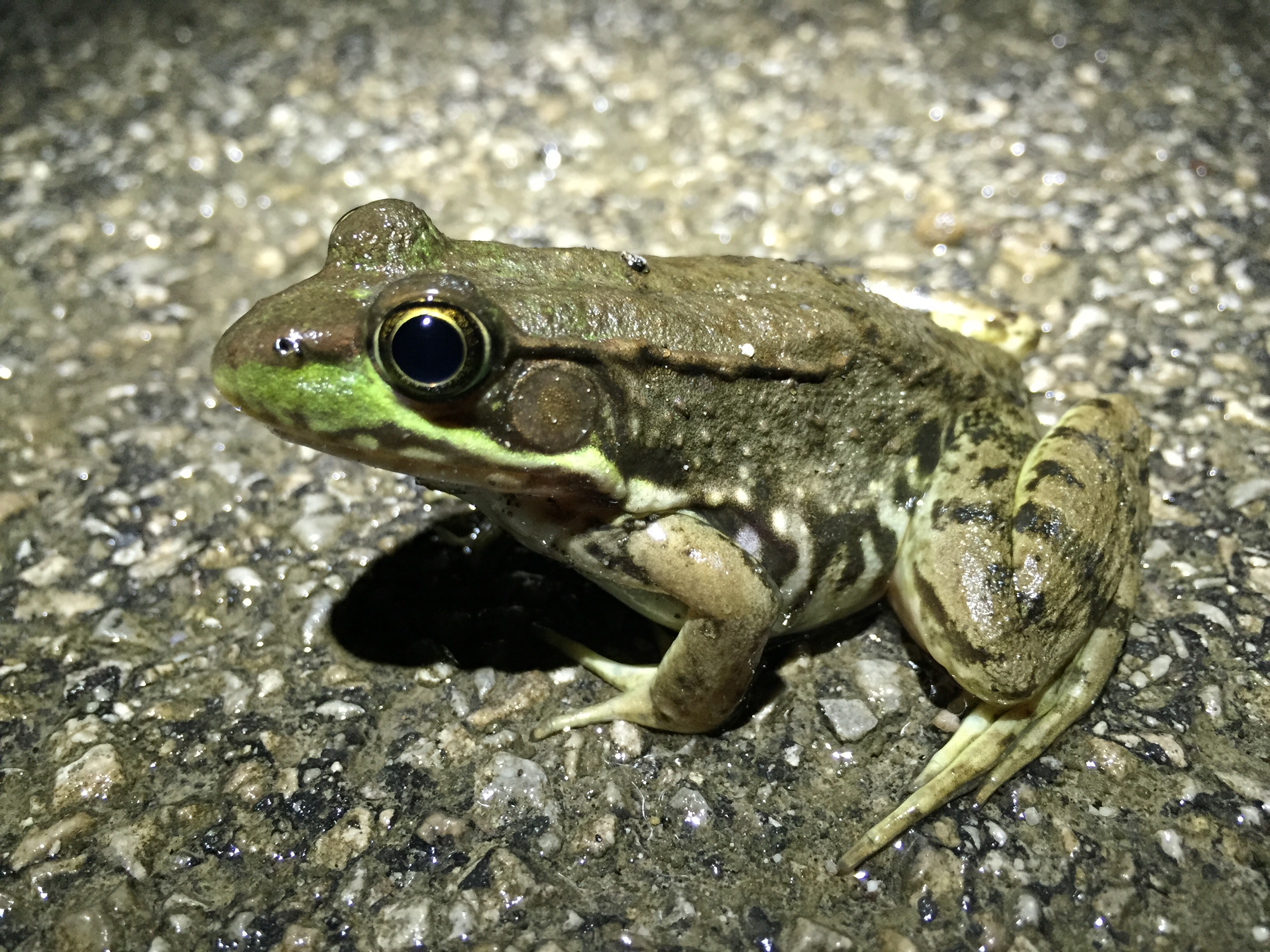
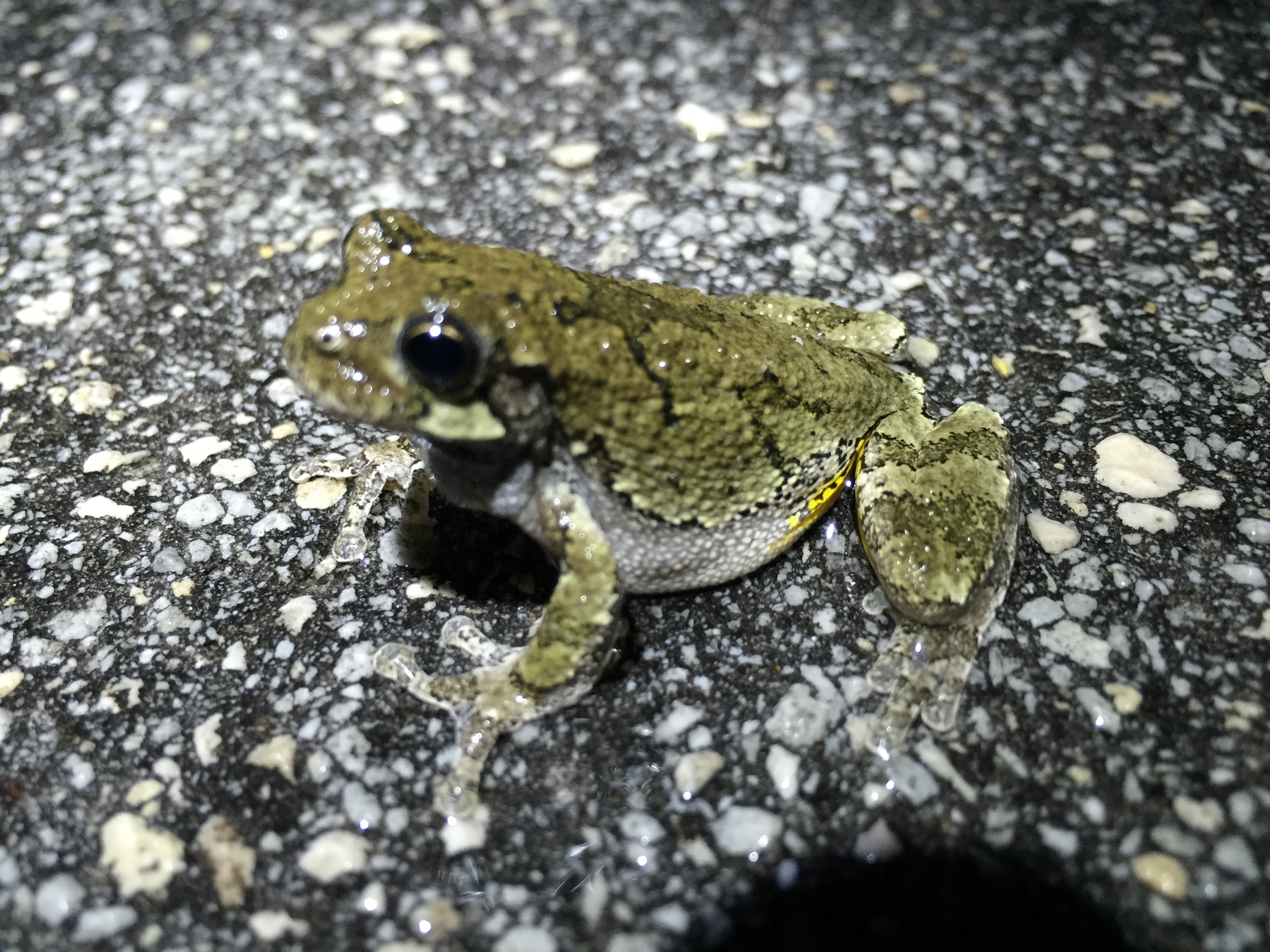
Spring peepers seem to be gone from this site as well as the toads. Green frogs and Bull frogs are out and about. The ones using the tow path are around 2.5 inches or so. Here’s a pic of a Gray tree frog that was calling from the parking lot!