Wooo Hoooo! First official sign of spring! I found this Jefferson’s
salamander by Whipps Ledges in Hinkley, Ohio on Tuesday, March 18th. The park system finally started closing down the road leading up to the
Ledges due to the populations migrating during the spring rails. I saw
12-15 Jefferson’s and then i think the temp dropped to low and they
stayed under the leaf litter. The pond they were heading to was about 80
% covered with ice! No frogs migrating that I saw, my guess now is at
least another week until anything is moving again due to sub freezing
temps… I’ve seen Jefferson’s and Spotted salamanders at this location.
I guess Jefferson’s are the first out.
Uncategorized
Feb 22, 2014
Looks like a drizzle is coming and then some flurries. I will find either:
A. a spotted salamander on a very early start to the 2014 migration
B. a salamandersicle
C. nothing at all
With lows hitting the single digits later in the week, tonight is the best chance for anything moving toward the vernal pool breeding sights. After tonight, my guess is that nothing will be moving for another 2 weeks. groundhogs…
And the answer is C. Nada. Under the leaf litter is still frozen, and the mole salamanders that are the first to migrate are more then likely well beneath the frost line. I turned a couple of logs and not even a worm. It is still fun to observe the conditions because one never knows what is out there unless one gets out there.
January 2014 frog pond pictures
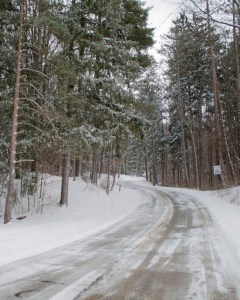 |
| Here’s the road leading up to Whipps Ledges. When the first warm rains begin, this road will be covered with dozens of Spotted Salamanders making their way from the woods to the breeding pond which is to the right. All but impossible to find during the summer months, the Spotted Salamanders are out in force. I can only imagine how many go unnoticed as they trek across the forest floor. This area is mainly pines and I’ve heard many Barred Owls calling in the early spring. |
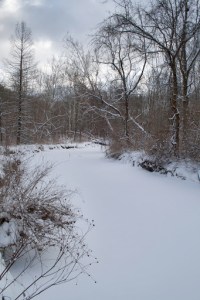 |
| This is the East Branch Rocky River feeder into Hinckley Lake. When the rivers freeze over, they become highways for the smaller woodland animals as evidenced by the tracks on the right. |
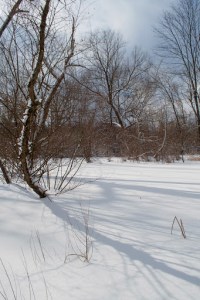 |
| This is a center of the pond view, I would be thigh deep and very cold if the ice wasn’t so thick! I mainly use this pond as my Wood Frog location. Although they are common, this pond is where I first heard a full chorus and got my best audio recording. Route 271 is very close to this area, and there is the constant rumble of traffic, but one evening there was a fog bank so thick, it muffled the traffic and made for an outstanding recording! |
 |
| Here is a vernal pool where I record Chorus, Leopard and Pickerel frogs. It has a nice mound to the right that makes a perfect location to place the recorder for an overview of the action. |
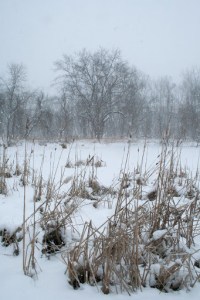 |
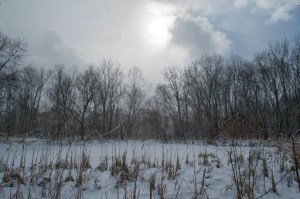
| This is my main pond by Red Lock. A storm is moving through dropping a couple inches of snow. It should be a good spring frog season because of the late snowfall filling up the ponds. |
 |
|
| Another view of the pond as a squall approaches. This section has most of the action due to the vegetative cover. So far I’ve seen Snapping turtles, Painted turtles and a Softshelled turtle lurking about. The larger frogs are more spread out and in the far side which is deeper. The only frogs that don’t use this pond in great numbers are the Chorus frogs. They seem to use the vernal pools that offer more cover. |
The big frogs are starting to call
Green frogs are calling in strong numbers as are the Grey tree frogs. Spring peepers are calling from more isolated areas now and in very small groups and are joined by a sporadic Pickerel frogs. I only hear a solitary Bull frog at this point, but expect them to ramp it up within a week or 2. There is a slight mound around one edge of the pond obstructing my view, and before I was in full view, the Green frogs were broadcasting their alarm call. As soon as I start wading through, they pretty much stop. They seem to do the call at the approach of danger, not when it is close enough to locate the frogs by sound. I saw the Soft Shelled turtle again and was able to get some good photos as it swam away from me. I estimate it is between 16-18″. The snapping turtles were laying low this night and grouped together. There were at least 5 in a 6′ area, of course I was in the center by the time I saw them… I don’t think the snapping turtle can bite down hard enough through the chest wader boots to hurt, abut I don’t want to test this theory either. I find the most activity after the sun goes down and use a very bright 600 lumin flashlight to see by. It is far easier to see any activity this way because the flashlight penetrates the water without dealing with any reflection from the sky. The frogs are usually calling strong and only get quiet when I am in close proximity or make waves. I am surprised that I didn’t see very many bat calls on the sonogram. Usually there are more flying overhead with a real strong sound signature, and with all the mosquito and bugs flying around. Hopefully this isn’t a bad sign…
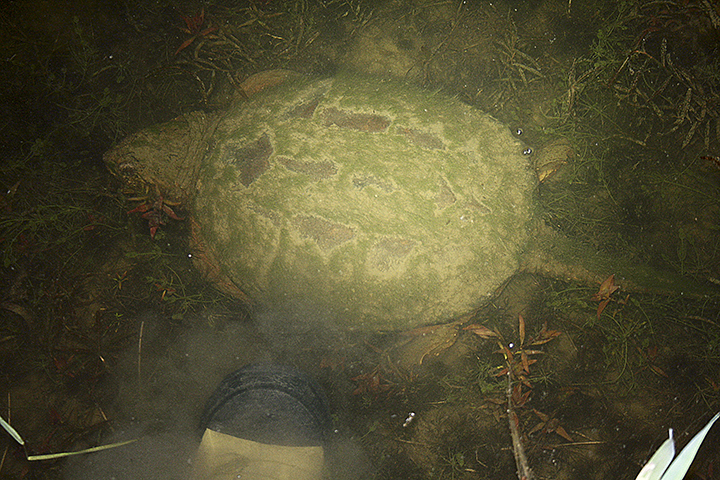 |
| Snapper with boot for scale. I am actually several inches above the turtle, not next to it, so the scale is misleading. |
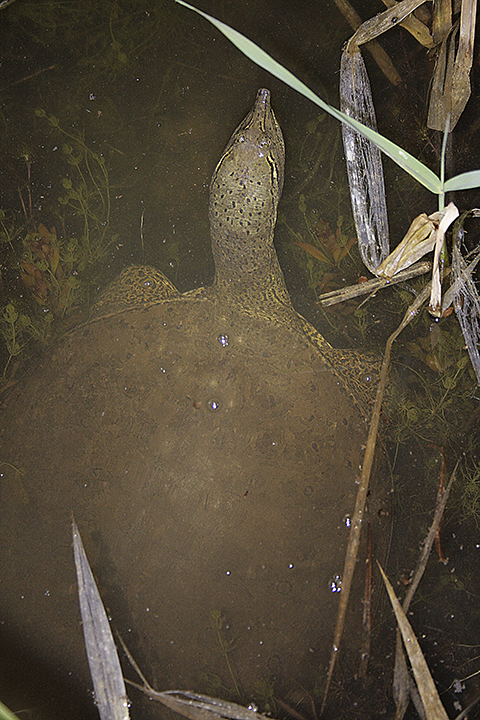 |
| A good view of the Soft Shelled turtle, uncommon in the Cuyahoga Valley National Park. |
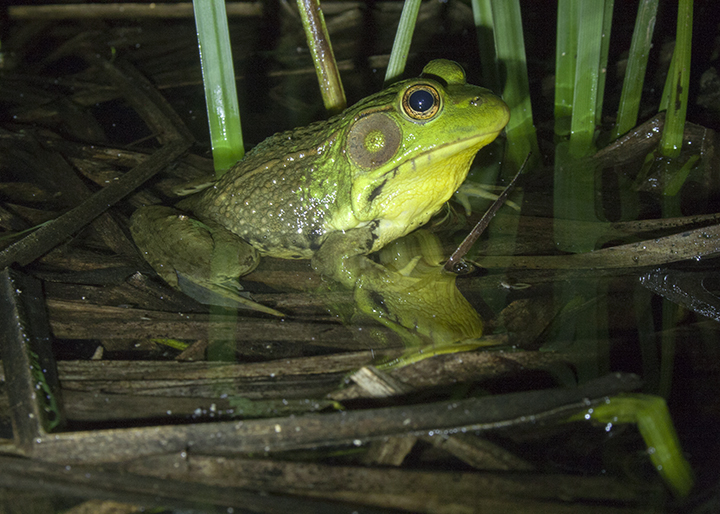 |
| A close view of a male Green frog showing off his bright yellow throat. |
Grey tree frogs are out in the Valley!
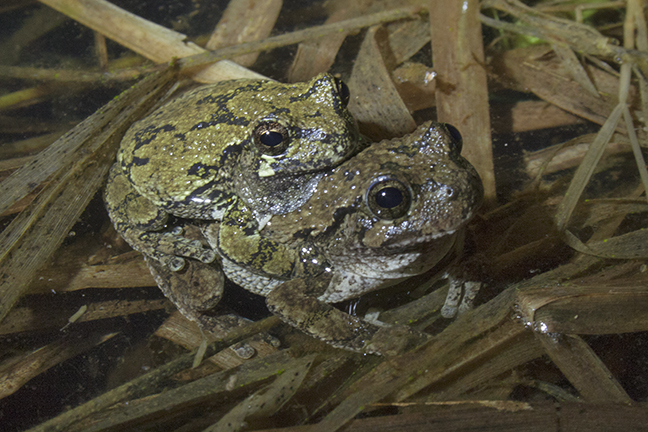
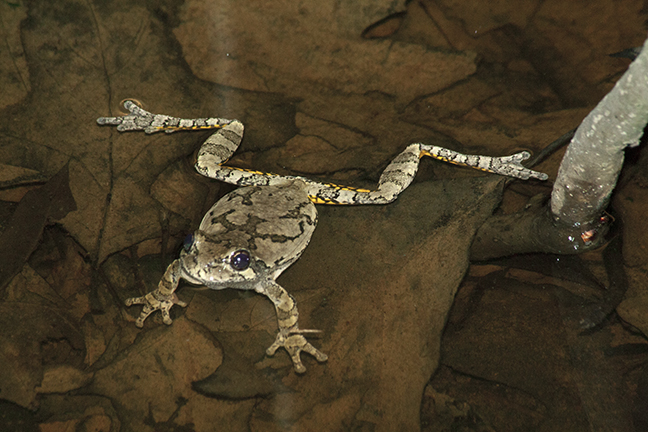
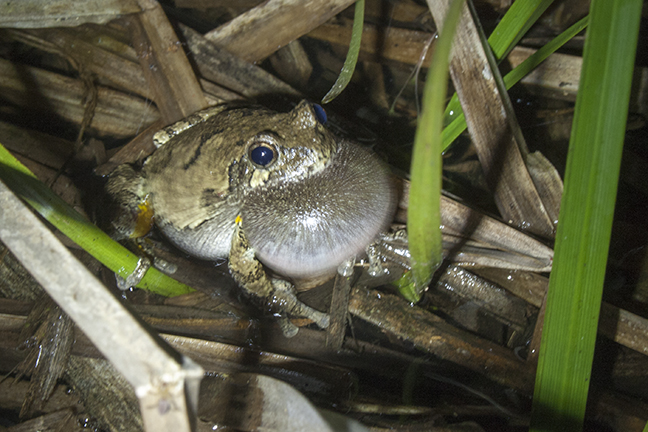
Temps have been in the 70s for the past 4 days bringing the Grey tree frogs out in mass! It looks like the American toads favor the warmer temps to because they were calling from several ponds and pools. The Pickerels are winding down, no Chorus or Leopard heard and the Peepers seem to be just starting to decline. In some locations the Green frog has begun to announce their presence, but not in any strong numbers. So far they are doing single plunks and not the characteristic multiple descending plunks.


 |
|
| He creates his distinct trill by passing air back and forth over his vocal chords, vibrating his whole body. |
My first Spiny softshell turtle sighting in the Cuyahoga Valley National Park!
Another great night! I’m so glad I bought the chest waders because I’ve been able to see so much diversity in this pond then if I was just walking around the perimeter. Temps were in the upper 60s during the day and went into the 50s at night. It was nice to get there before sundown for a change, but I found that it is much easier moving about when it is dark. When it is dark, I follow the deer trails which really stick out. For the most part they don’t go through pricker bushes. Frogs don’t seem to mind a flashlight at night but a whole pond will go silent if they see you walking close by. I cannot wait until the Green frogs start calling. I have recorded a pond full of them doing their aggressive or warning call when a raccoon was scrounging around, but shining a flash light on them just quiets them down until they get used to it. I finally saw some fish in the pond, looked like some small Crappies, maybe 4″ tops. The highlight of the night was the Spiny Softshell turtle that I almost stepped on! It was an adult with an 18″ or so shell. A little bigger then the 6 snapping turtles I saw sharing the pond. I immediately knew what it was because of the longer snout, smooth shell and color pattern. It was among the vegetation mat so the only good shot was of it’s head through a clearing. The Pickerels are still calling strong, though one Leopard frog missed the party and called sporadically. Peepers all over, a few Grey Tree frogs and a Green frog occasionally. Buy the vernal pool, I only heard one Midland Chorus frog. The American toads were calling stronger from the vernal pool in the old canal bed and from a vernal pool a little deeper in the woods. The were calling so strong from the pond when the weather broke 2 weeks ago, and I had to wonder if all of the snappers and softshell turtles picked them off. Unlike the Pickerels and Leopards, the toads would call from more open areas. With songs that can last 10 second or longer, I’m positive the snappers would be able to easily locate them. Toads also create a visible sound pressure wave on the surface of the water when they call. It has to be like a bright blinky advertising light to anything in the vicinity!
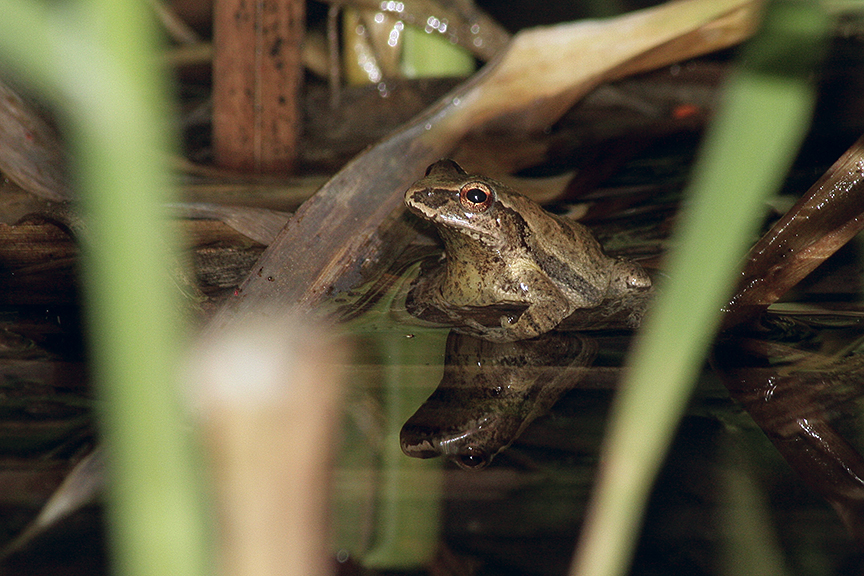 |
| Male Spring Peeper. This one stopped calling before I took the picture. You can tell because his air sac under his jaw is deflated. |
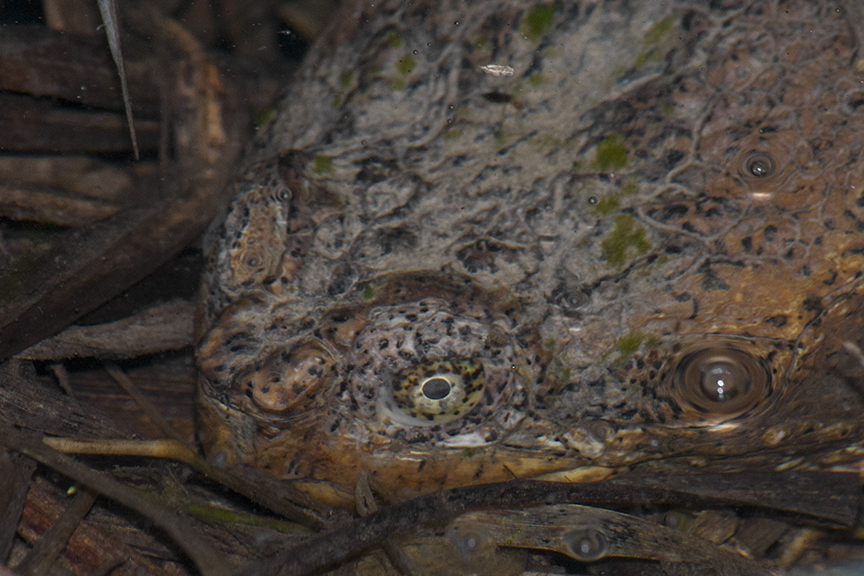 |
| One of 6 Snapping turtles hanging out in the pond. They were all found where the frogs were calling from. LIVE ACTION! |
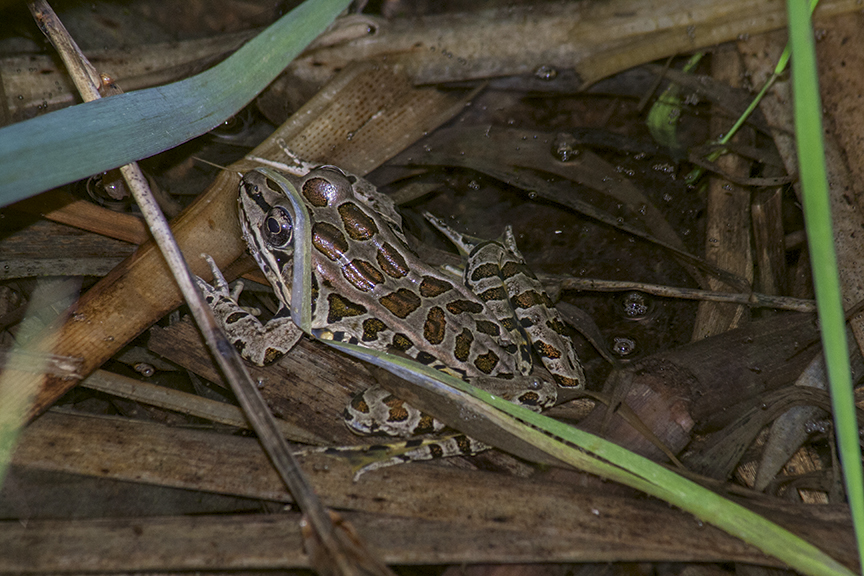 |
| Here’s a Pickerel frog calling from inside a canopy of cat tail leaves. |
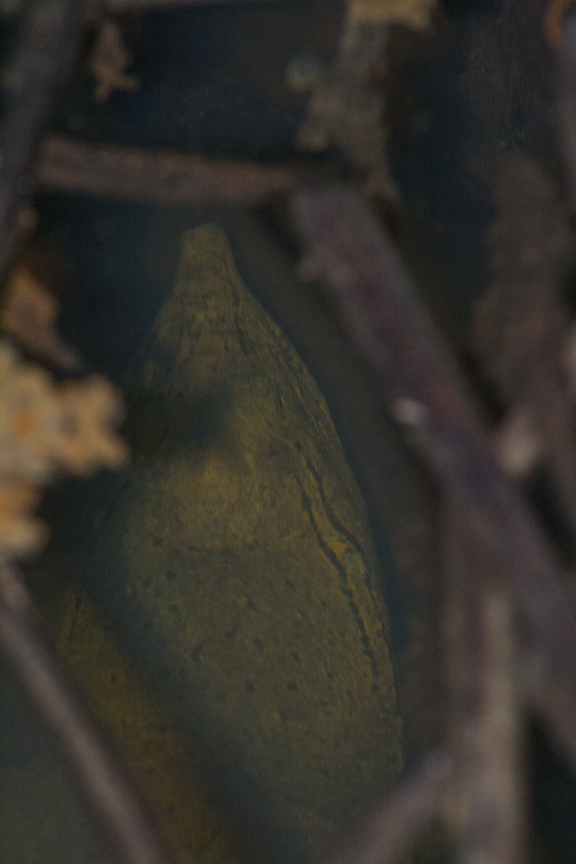 |
| This one is a Soft shell Turtle. It can be differentiated from the snapping pictures by the elongated head, yellow stripes and longer snout. It was a real good size and a complete surprise, as they are uncommon in this area. I have only seen them in the Hocking Hills area. |
 |
| Nose to nose with a Pickerel frog. |
 |
This one is a female Bull frog. The female’s ears are about the same size as their eyes. Good luck getting this close during the day! |
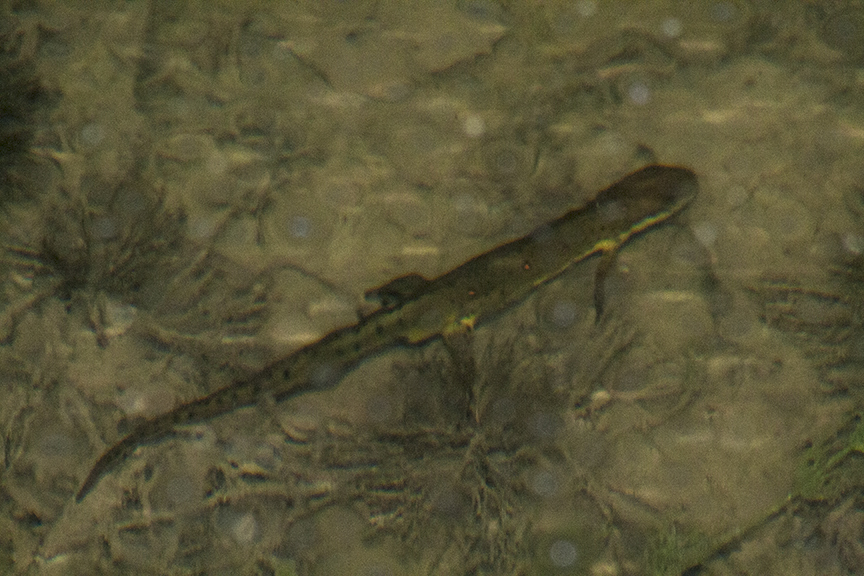 |
| I saw several Red Spotted Newts in the pond. |
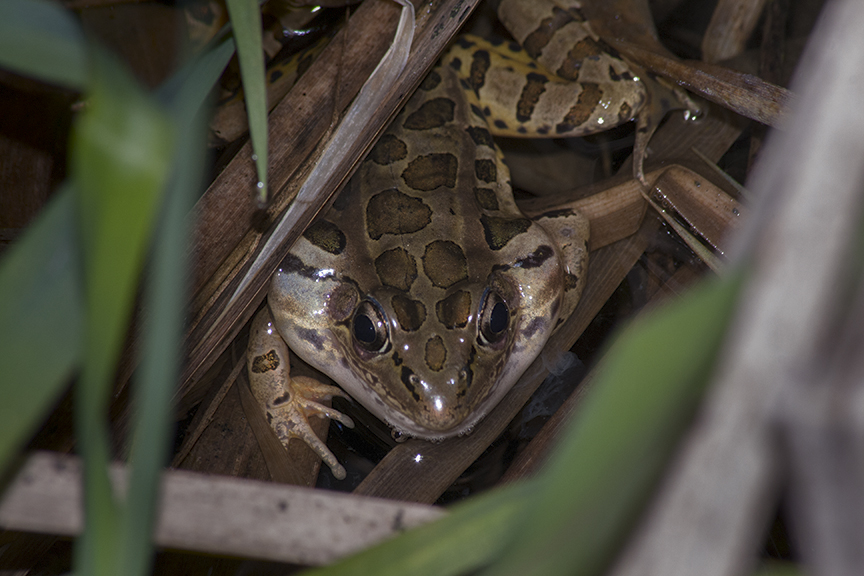 |
| The Pickerel frogs air sacs are by the cheeks, unlike a Spring Peeper or American Toad whose are under their jaw. |
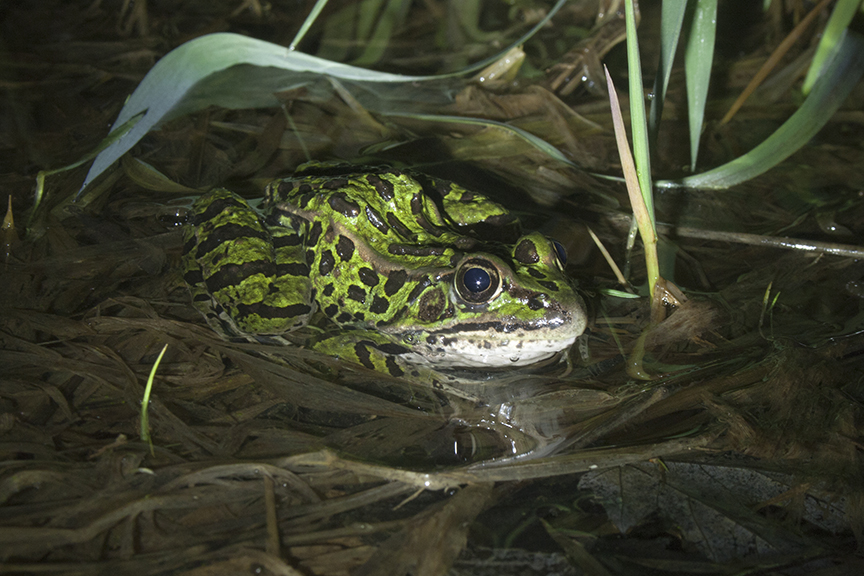 |
| A leopard frog with some bright green coloring. They are finished calling and the Pickerels are now going strong. Leopards have rounded random spots and Pickerel frogs have more squarish spots in rows down their backs. |
 |
| This snapping turtle came by to check me out. It would move closer when I would move. When it was about a foot away, it got spooked and went nose first into the vegetation and mud. I think this is why Turtle Man can catch them bare handed in the swamps, because he reaches under the tail where they can’t swing around and get him. I wasn’t about to try, I have enough problems with my feet working anymore, I don’t need to go loosing fingers! |
Interesting how the frog season is progressing
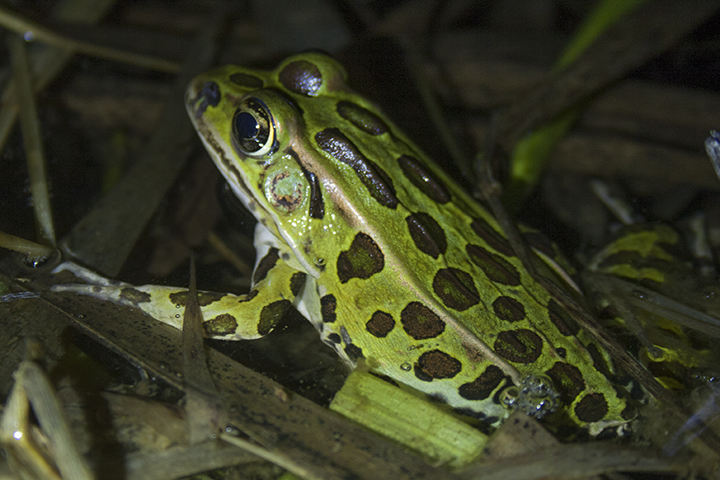 |
| A Leopard that’s still hanging around |
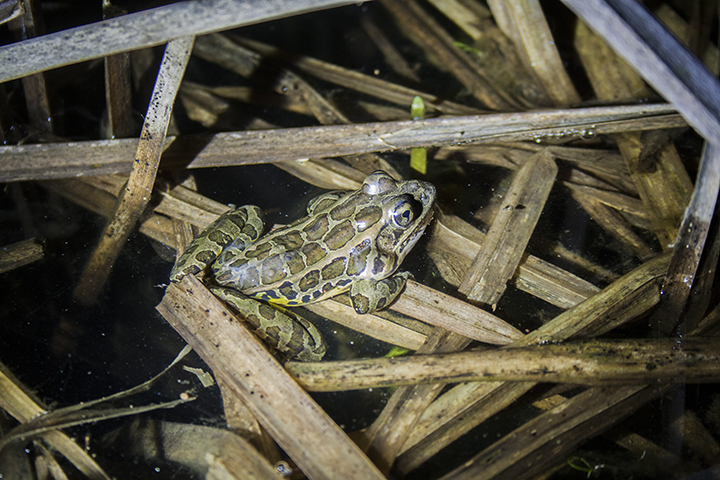 |
| A Pickerel that is calling, showing the cheek air sacs |
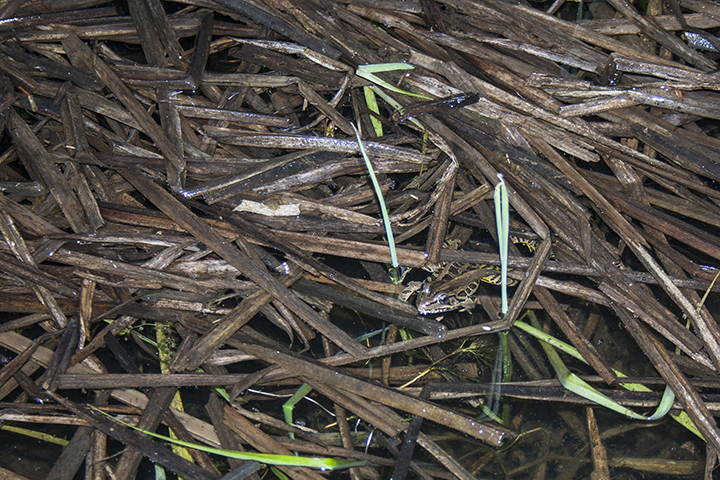
I’m fascinated with how each season unfolds and comparing it to previous years. I have been monitoring a small area this year comprising of 1 semi-permanent pond and 2 vernal pools. The pond has been a blast because I broke out the chest waders and I’m getting up close and personal! The Leopard frogs are finished and the Pickerels have taken their place, though still I see some Leopards chilling on the vegetation. They call from the same areas of floating cat-tail mats or coves created by vegetation leaves and surrounded by water. Peepers are ever present and Midland Chorus choruses are almost absent now. The American toads that were calling last week have all but disappeared and there is a group of 6-8 calling from an entirely different location. It seems they are on the prowl now and are hopping all over the towpath. Occasionally a solitary Grey Treefrog and a Green frog will make their presence known, but very sporadically. I haven’t seen any sign of fish in this larger pond and didn’t see the snapping turtle this time. Here’s some pics from last night.
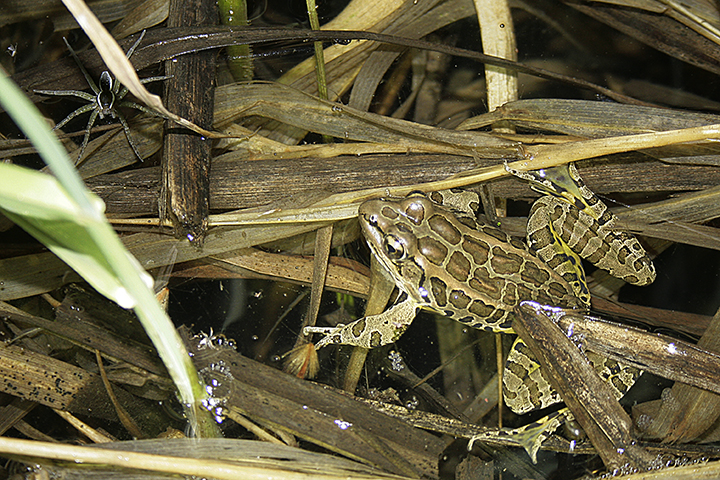 |
| A Pickerel and a potential meal |
 |
|
| Their camouflage works pretty well |
What a great night!
Wanted to get pics up from last night, will give explanations and sound clips this weekend! Heard 1 Grey Treefrog, some aggravated Green Frogs, American Toads are calling strong, Peepers everywhere, surprisingly not many Midland Chorus Frogs, Pickerels started and Leopard Frogs winding down.
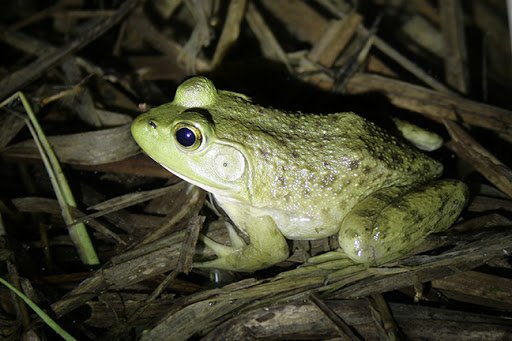 |
| Bull frog |
 |
| Leopard frog |
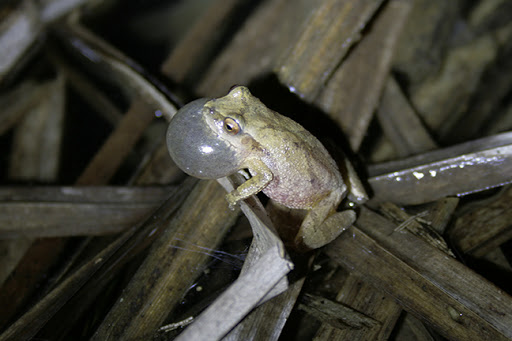 |
| Spring Peeper |
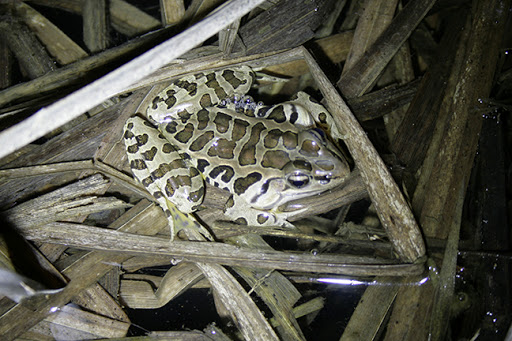 |
| Pickerel frog |
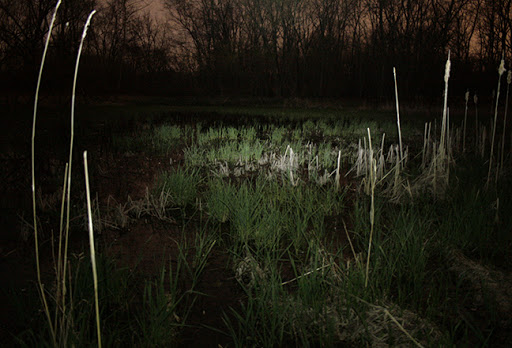 |
| The pond at nnight |
 |
| Snapping turtle I was stalking |
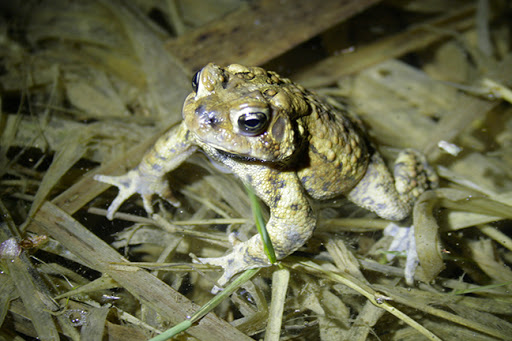 |
| American Toad |
 |
| Midland Painted Turtle stalking me! |
 |
|
| Another view |
Day following 2" of rain
I went out last night following a day that dropped 2″ of rain hoping to hear a Spadefoot toad in the Cuyahoga Valley National Park. I’m pretty sure I heard them calling 3 years ago at this time following a low that passed through, but no luck. Of course I didn’t have any recording equipment with me back then… It would be a significant find for CVNP as we are well out of their range and the watersheds they are found in are separate. Spadefoots are Ohio’s only endangered frog and do not follow a defined mating season like the rest of our frogs, but seem to be triggered by climate events. I was also surprised to only hear Peepers and Chorus frogs, though the Chorus frogs were far lower in number then my previous observation. The ponds and pools were much deeper of course. Many of the vernal pools were knee deep and where the ponds banks were previously defined are knee deep as well. No other frogs were calling, even the colony of leopard frogs I’ve been recording were silent. The place that had more activity was the pond just north of Red Lock. It has been drying out earlier then what I have seen in years past, filling in with vegetation and pretty much void of any strong chorusing. So the result, lots of rain and not many frog species calling… but always a rush to get out and observe!
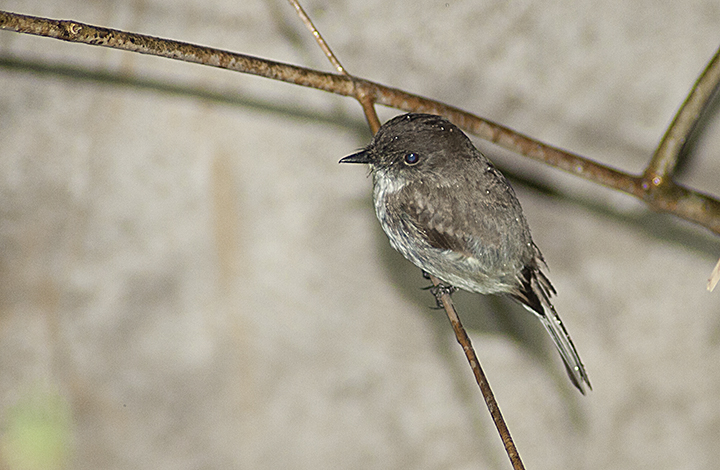 |
| I think it is a flycatcher of some sort and was sleeping near a small bridge. |
 |
| Juvi Bullfrog inside the lock. |
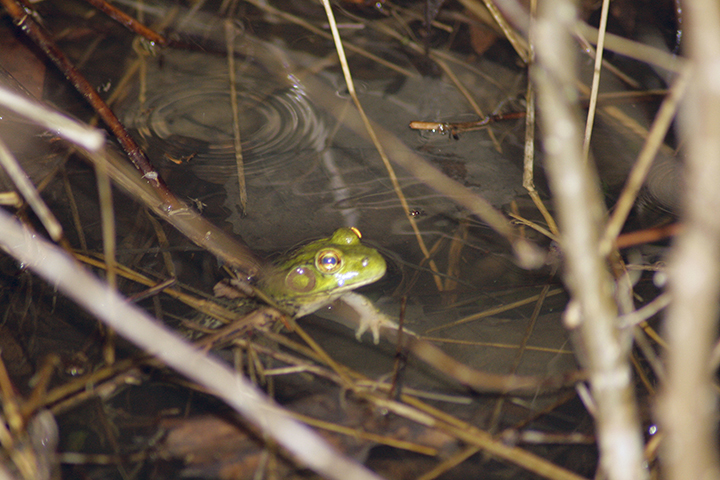 |
| Green frog in the lock. |
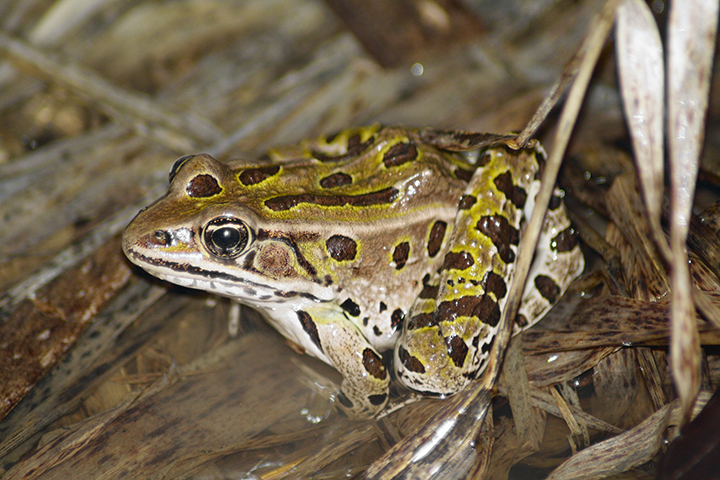 |
| Leopard frog in the pond North of Red Lock. |
04072013 Red Lock
Highs in the upper 60’s during the day made this evening a solid night for monitoring some local ponds. I came prepared with chest waders, so no more leaky boots like Sat. night! With Leopard frogs calling already, I thought I would focus on them tonight. Leopard frogs call while partially submerged and they have a unique growl followed by several grunts. Their call doesn’t carry as far as peepers and their vocal pouches run along their cheeks and extend beyond their shoulders similar to Wood frogs which are also calling now. The eggs are at the surface of the water and when first laid, appear as clumps vs. strings like the American toad.
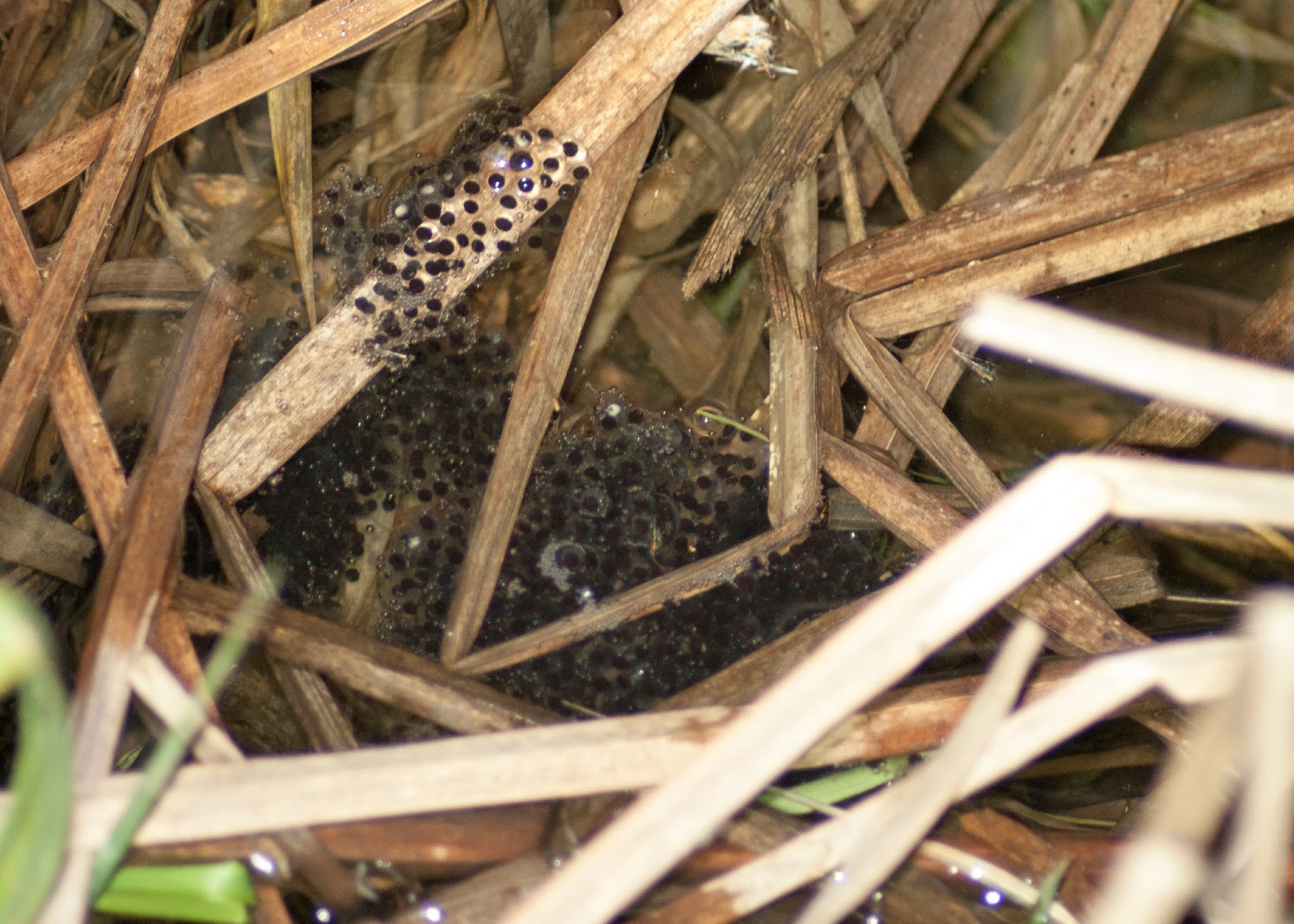 |
| Leopard frog egg mass. |
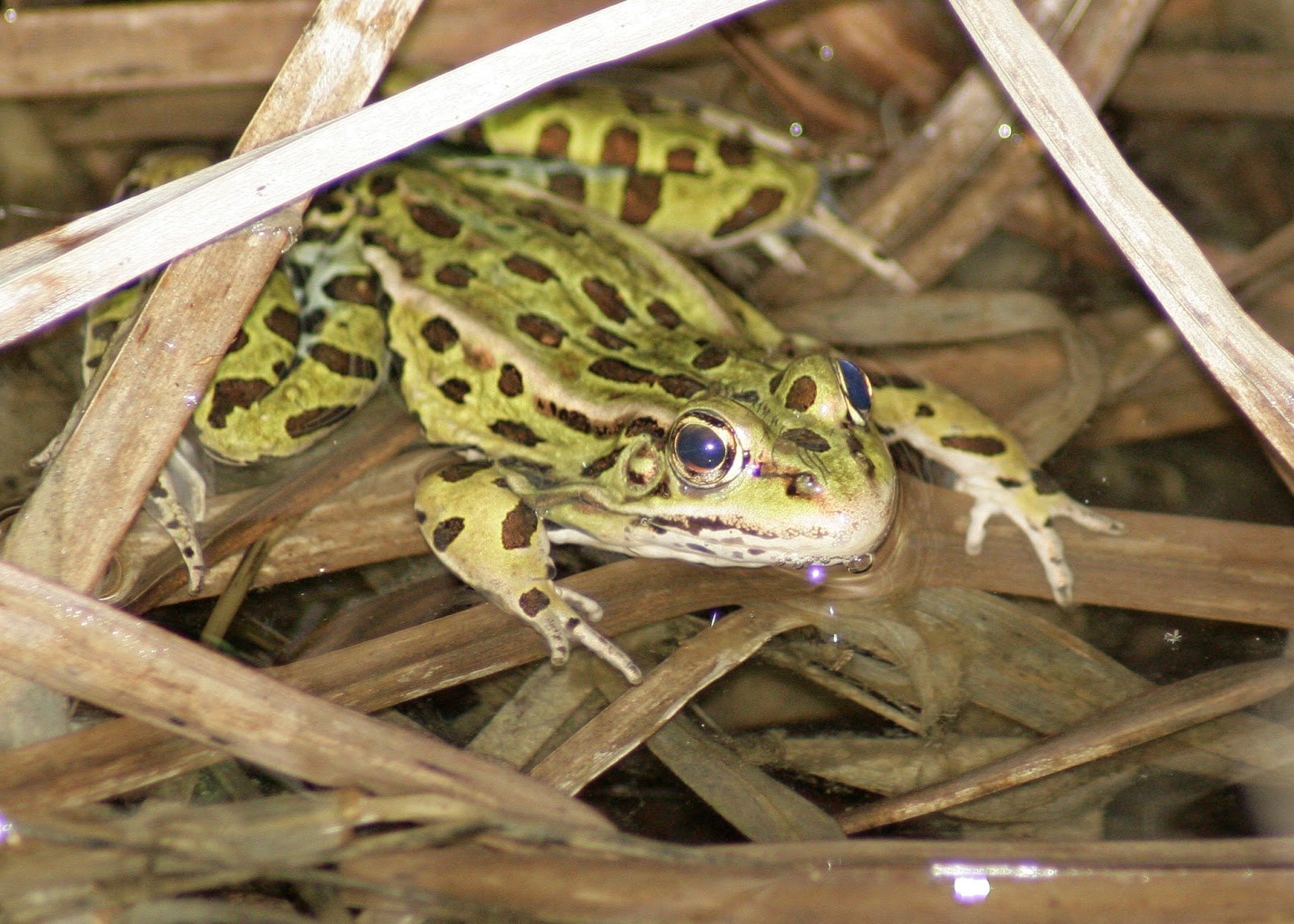 |
| The spots on the Leopard frog vary from individual to individual. |
 |
| Not sure what the bumps on this fellows vocal sack indicate. |
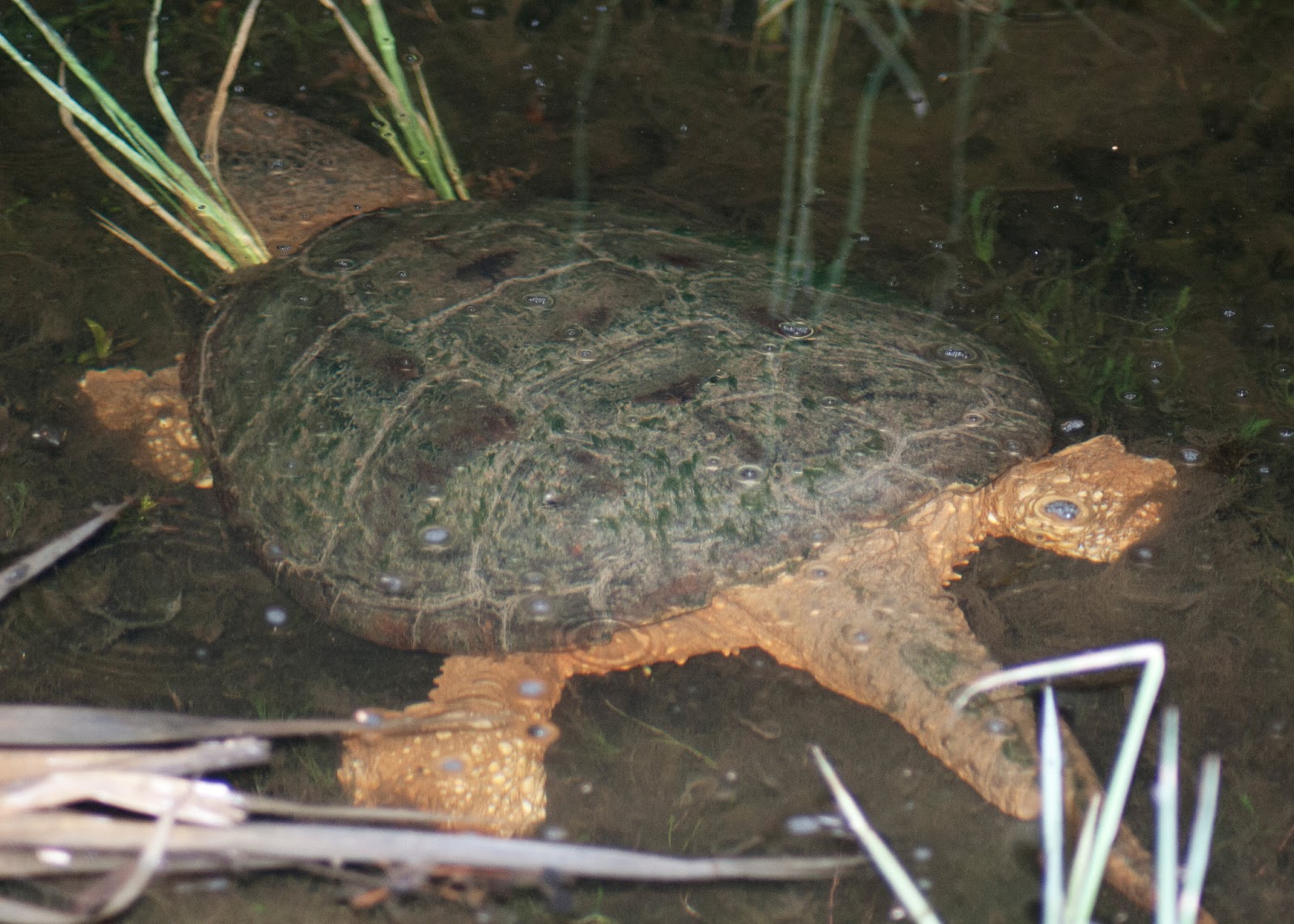 |
| Good thing the chest waders have built in boots with thick soles! |
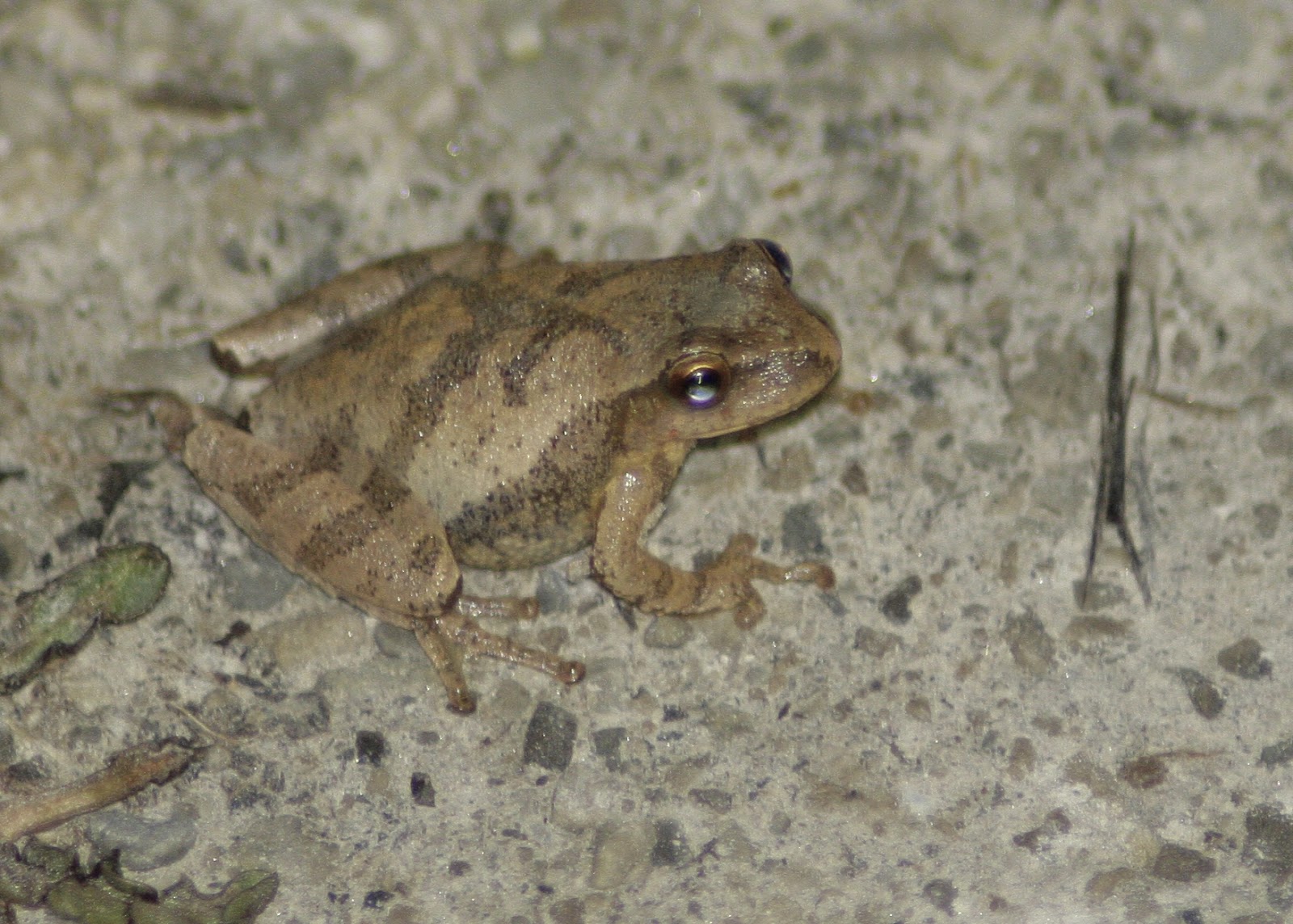 |
| This little one was making it’s way across the towpath. |
 |
| I believe this is a fishing spider, note the air bubble. It has a built in air tank! |
 Ohio Frog Blog