Sunday at Brecksville Station pond

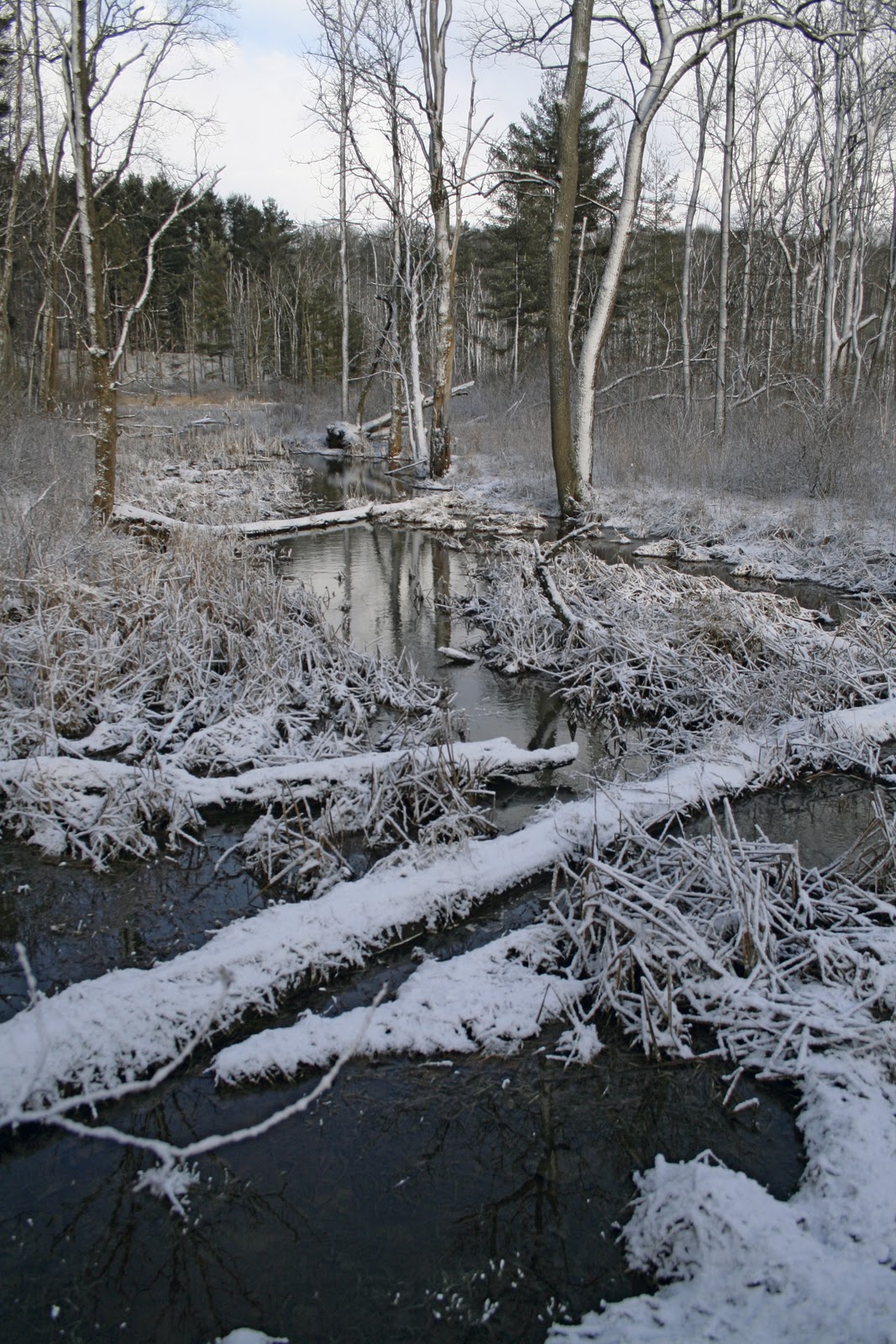
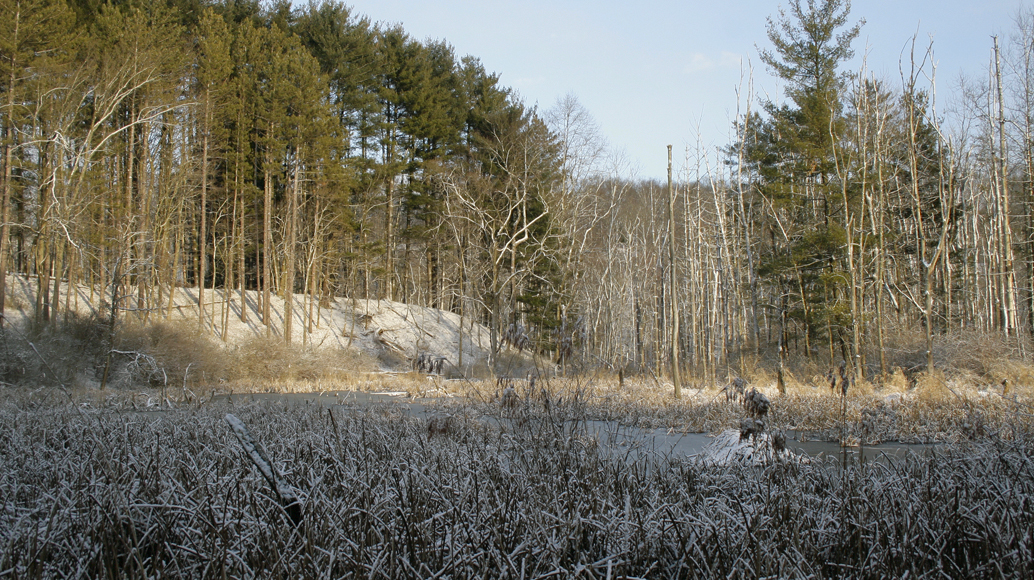
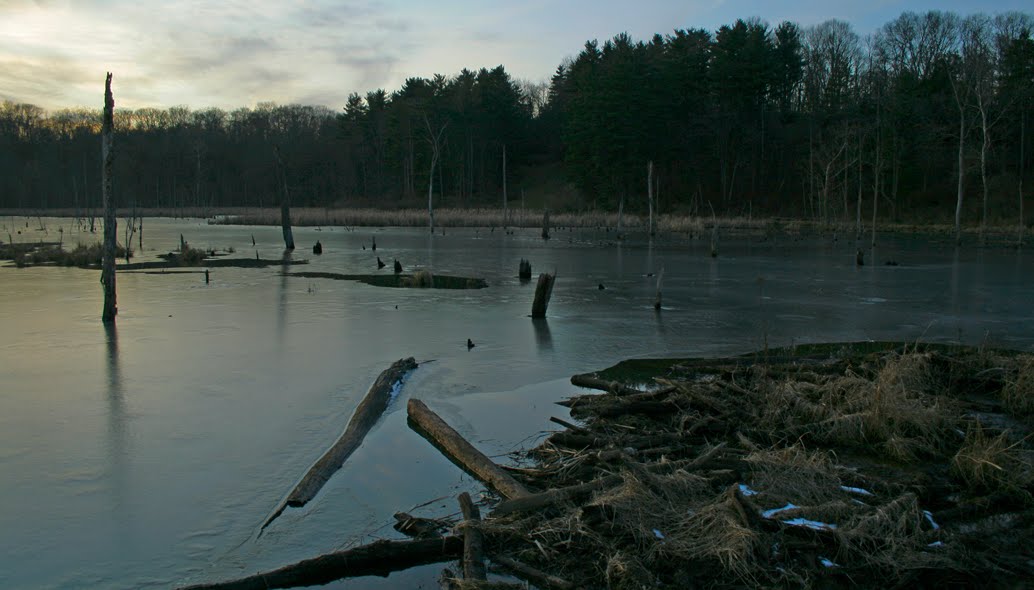
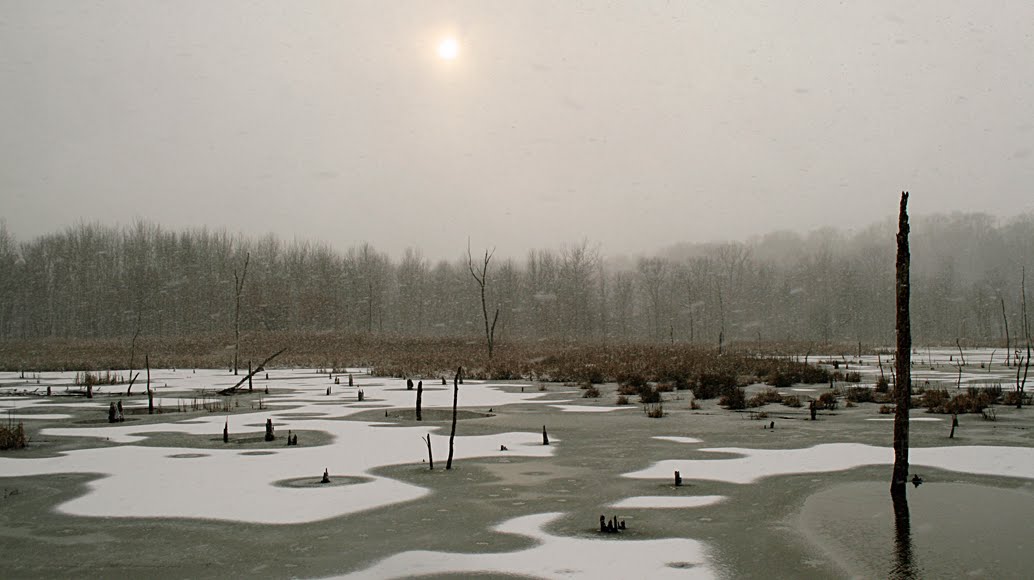
I got to the pond just as the snow storm passed by, but was able to get these pics as a second round of flurries passed through.

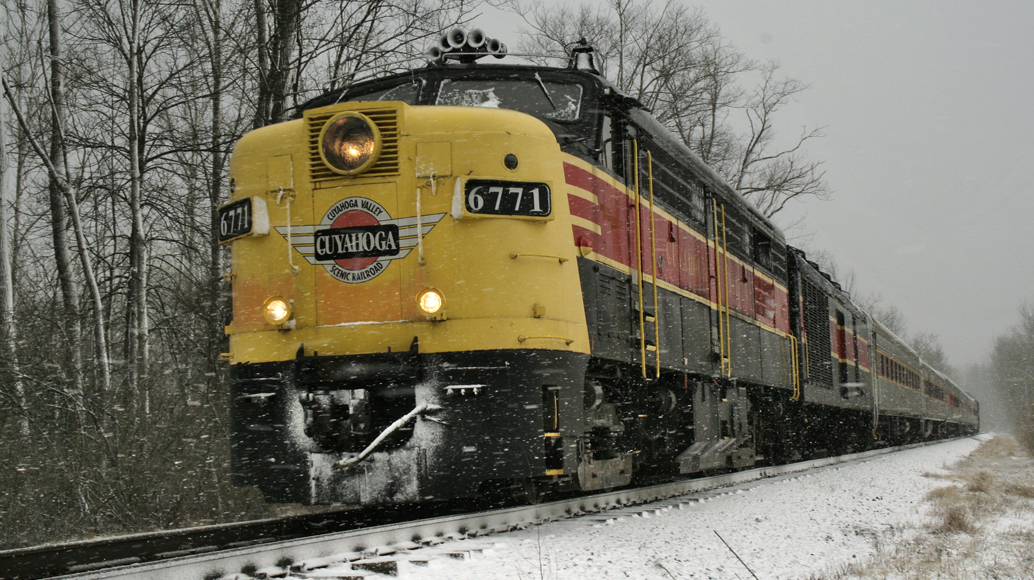
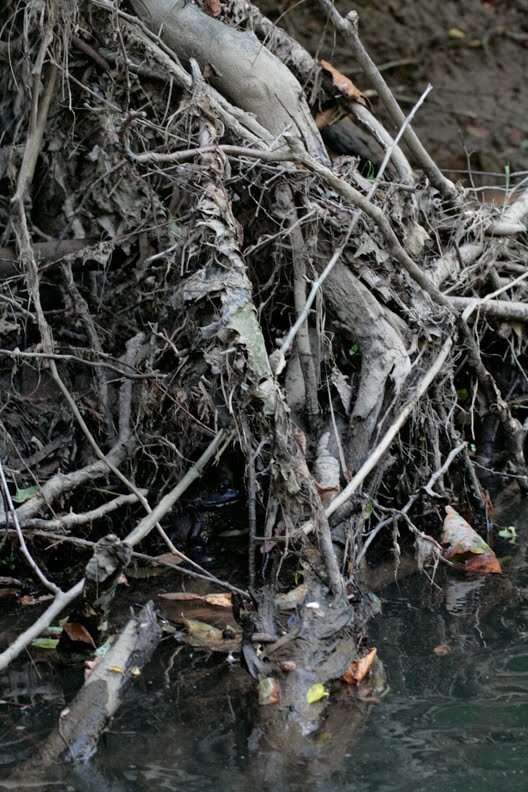
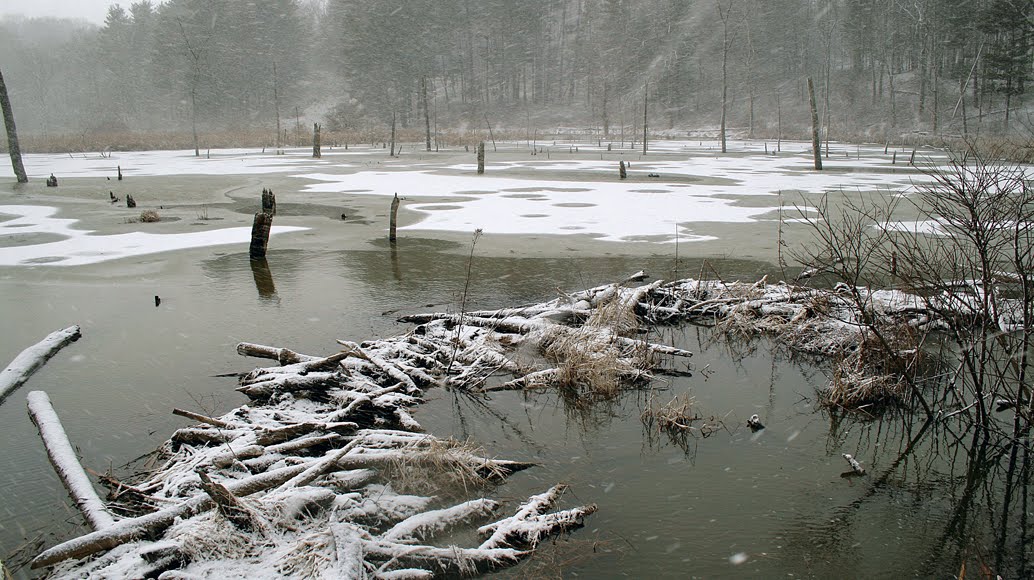
It looks like both the Western and Eastern ponds are kept full by the beavers. Separated by the Cuyahoga Valley Line, each is connected by an overflow from the Western pond, and there are small lodges in each.

Last time I was here, I thought I heard an owl in a grove of pines, and it looks like this could be the nest.

They tend to nest in the pines so they have permanent cover to hide from the crows. Scouting locations for the upcoming spring is one of my favorite things to do in the winter because the deer trails are very viable and the geography is easy to read.

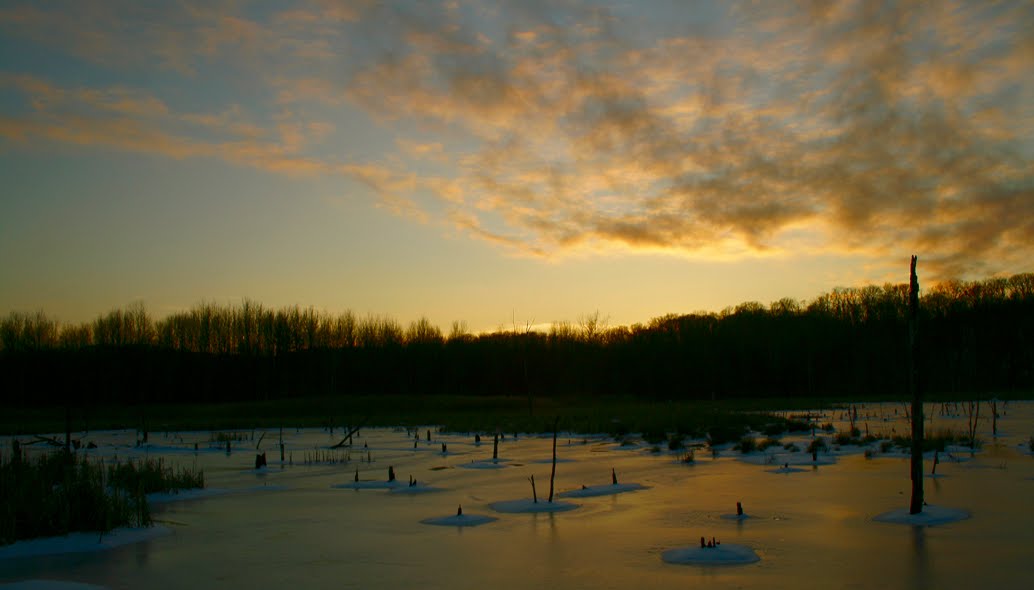
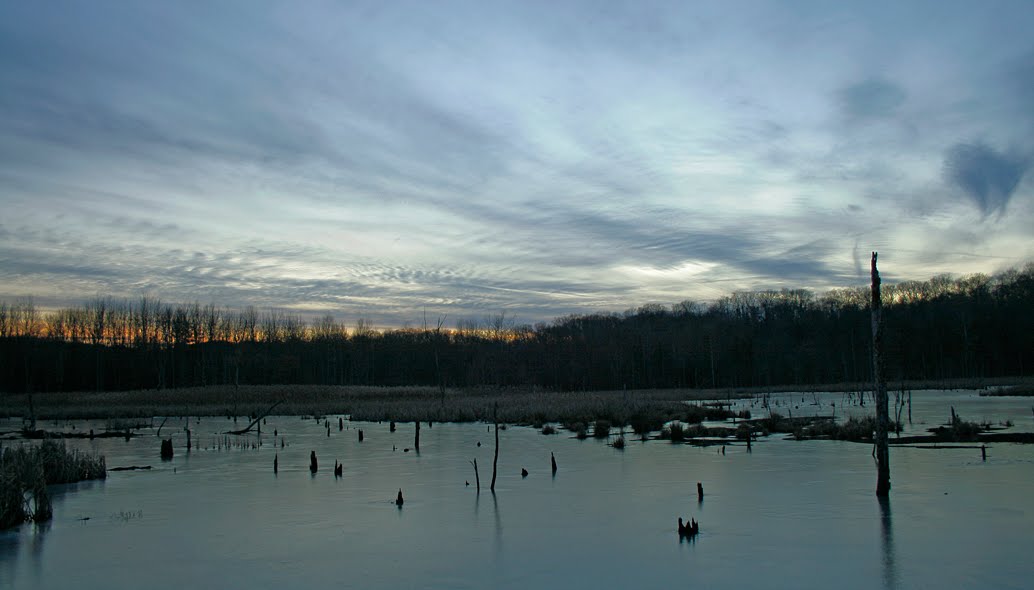
Sunset at Station Road pond

I went to the Station Road pond Sunday evening to look for good recording locations beyond the railroad bed. I didn’t really find anything new, but there is a hillside that may shield the mic from the road traffic coming from 77. I find that atmospheric conditions affect the sound, for example, if there is a heavy fog, ambient sound is diminished. If it is very still and the sky is clear, the sound from I77 is very noticeable. All in all, it is a good area to use as an overall indicator, but maybe not so much for recordings. There are areas along the towpath that are much more protected and quiet.

Checking out locations for recordings

I went to Brecksville Station today and think that I will do more recordings from this area.

I heard an owl calling from a stand of pines that you can listen to here on the Voices in the Valley YouTube channel. The call is very soft and wearing headphones is the best way to hear it. I’m still going to record along the towpath between Brecksville Station and Vaughn Road because different areas and environments have different groups calling. The season should be interesting because of the lack of snow means that much less water is available to fill the vernal pools. Right now this pond is covered with a thin layer of ice, but all of the snow from earlier in the week has melted away. This location should be good because it is more or less a permanent body of water, much like some of the canal ponds. I think some areas are fed by underground springs due to their permanence, while others are fed by run off or the Cuyahoga overflowing it’s banks. I’ve noticed that the ones fed by runoff or overflow have less stable chorus activity and the permanent ponds don’t generally have much activity until later in the spring. That being said, each area has it’s own variance in geography etc… so areas within a large pond will have activity not found elsewhere. The early spring frogs like Spring Peepers, Chorus Frogs and Wood frogs will call from the more shallow, less permanent, vegetation filled areas, and the larger Bullfrogs and Green Frogs call from the more permanent deeper areas. This pond is kept full by beaver activity. Right along the Northern edge, the culvert built to drain overflow and protect the train tracks from washouts has a dam built around it. That is the source of the running water which can be heard in the recording.

Recorded this last night

I recorded this passage last night. I took a look at the sonogram for a visual representation of the sound and found an interesting surprise.

http://www.voicesinthevalley.com/media/batcall/index.html

Included in it are a Bull Frog, Green Frogs and a Grey Tree Frog plus an inaudible bat that found a meal! The Bat’s call starts around 25,000Hz and is well above the average persons hearing level. Some younger persons can hear high frequencies like those from dog whistles etc…

I play the passage twice and then slow it down approximately 10x. This results in the high frequencies pitch being slowed down, so they are within the normal hearing range of humans.

If you listen closely, and haven’t damaged your hearing from to much Metallica, you can hear the chirp of the bat echo-locating bugs, then it explodes to a very fast trill of 20+ chirps where it is centering on it’s prey, then resumes the hunt. The trill is very soft, but if you listen close with headphones, you can hear it.

American Toad, (Bufo americanus)

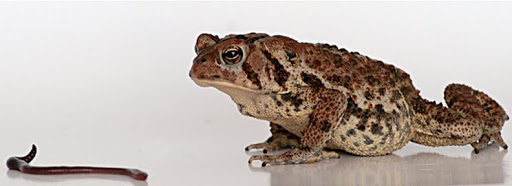
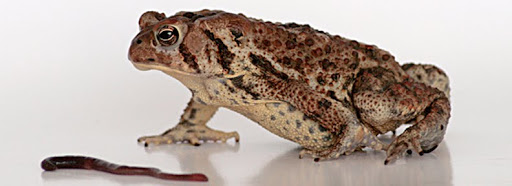
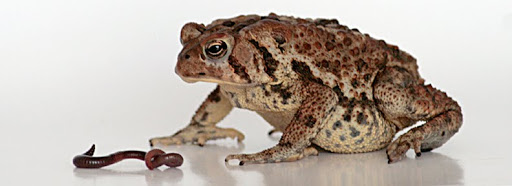
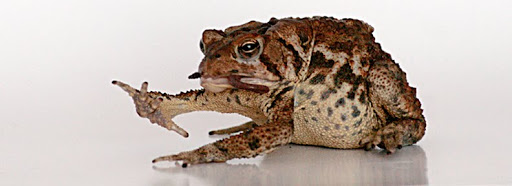
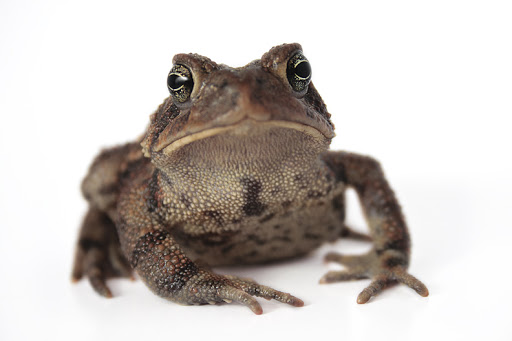
Here is my hands down favorite! The American toad started calling around April 10-11th, and has such a beautiful call. It is a harmonious trill lasting 10-15 seconds and when chorusing the drone is most pleasant. A close relative, the Fowler’s Toad (Bufo fowleri) doesn’t call until later in the season and has a much more nasally quality with a shorter duration. The American toad has 1-3 warts within the dark patches on its back where as the Fowler’s has more. Toads have a well developed heal that they use to dig with. A toad also hops rather then jumps, like a frog would. They stalk their prey on all fours creeping up until they are in striking range. One unique eating behavior is when they eat a worm, they look for the head as eating tail first would cause discomfort because worms have small spines aiding in their burrowing.

Creeps up on its prey

Determines what is the head and what is the tail

Takes a shot

Manipulates the worm to go down head first

What’s calling now

I wasn’t as attentive to this blog as I envisioned. Mainly because this one is more of a test to see what works with my schedules and availability to monitor sites for activity. One of the things I found most interesting, was how sporadic the end of the season frogs and toads are. Tthe toads stopped calling en-mass a while back, but there are several that were calling in Peninsula, OH last week. I missed out this season on my hope to get a Spadefoot toad on tape. I had heard them calling last year around April 17th and was pretty diligent about getting out after heavy rains and low/high pressure variations in the atmosphere, but to no avail. Their nature is to remain buried and only come out after heavy rains or at night to feed, so I would check out the site at night on foot and see if I would get lucky. What I found interesting is how much frogs respond to temperature later in the year. I have heard deafening choruses by the Grey treefrog on a 65 degree night, but have it drop to 55 and they are all but silent. Even over the course of an hour, the calls can be overwhelming, and then mostly silent after a couple of degree temp drop. In the early spring, I have heard sporadic peepers calling with 3-4 inches of FRESH snow FALLING and around 30 degrees out! Over all it was a great season and I have MANY pictures to post and recordings to link to.

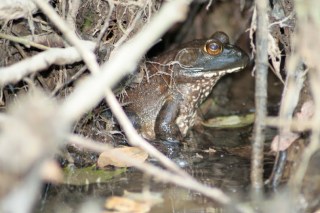
Here is a female bullfrog on the Hocking River. Bullfrogs are one of three still calling at this point. I was trying to catch a watersnake at the time, and she was big enough to eat it! The snake was maybe 18-20 inches, so I may have saved it from becoming lunch that day!

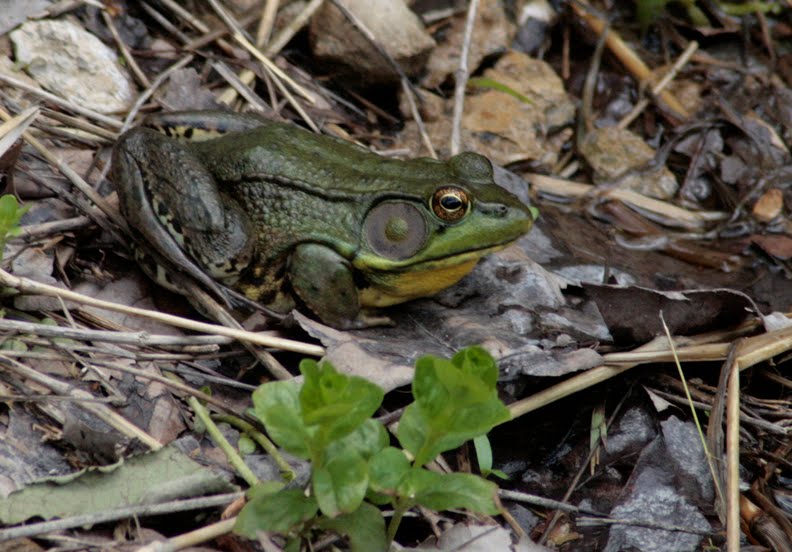
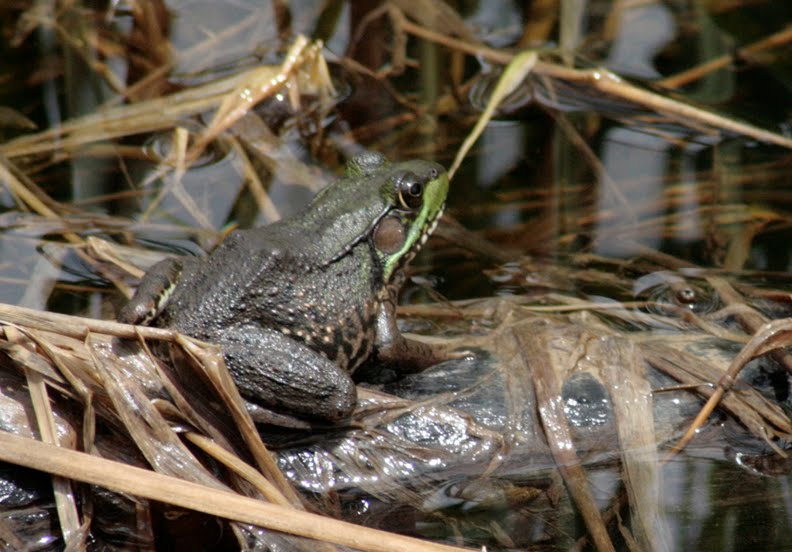
These two are Green frogs (Rana clamitans) the males can be distinguished by their bright yellow throats and their ear drums are at least 2x the size of their eyes. They make a sound that is similar to a plucked banjo string. The lateral fold running down their sides is one feature that helps distinguish the Green frog from the Bull frog (Rana catesbeiana) which shares their habitat.
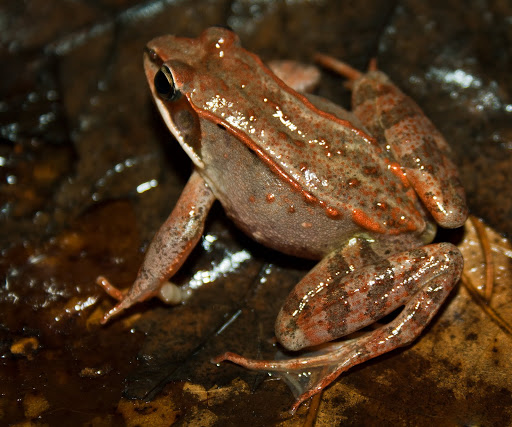
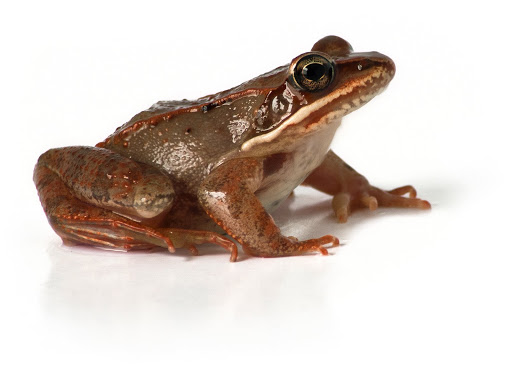
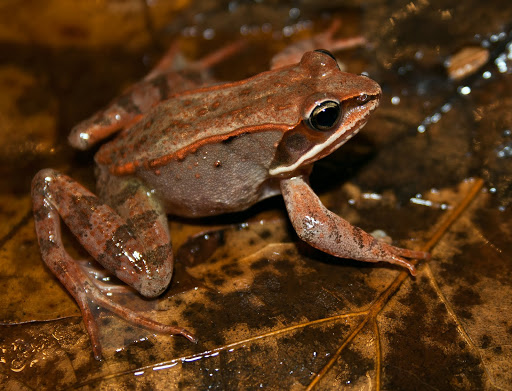
Wood Frog (Rana sylvatica)

This is one of the first frogs calling in the spring, along with the Spring Peeper Spring Peeper (Pseudacris crucifer) and Western Chorus frog (Pseudacris triseriata). All three along with the Gray Treefrog (Hyla versicolor), posses the ability to survive a partial freezing which is what makes them mother natures natural choice to be out first. The Grey Treefrog doesn’t call until later in the spring.

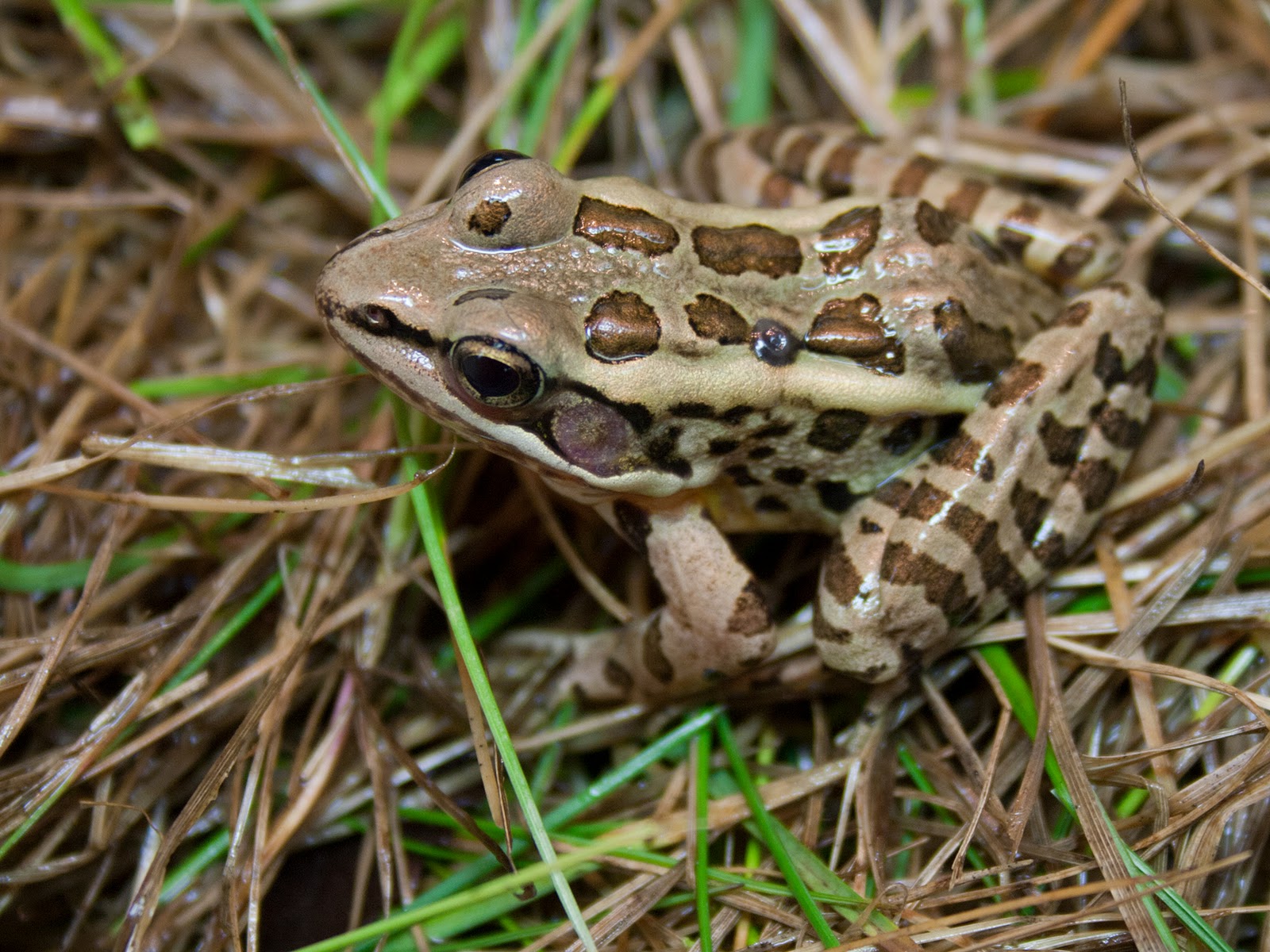
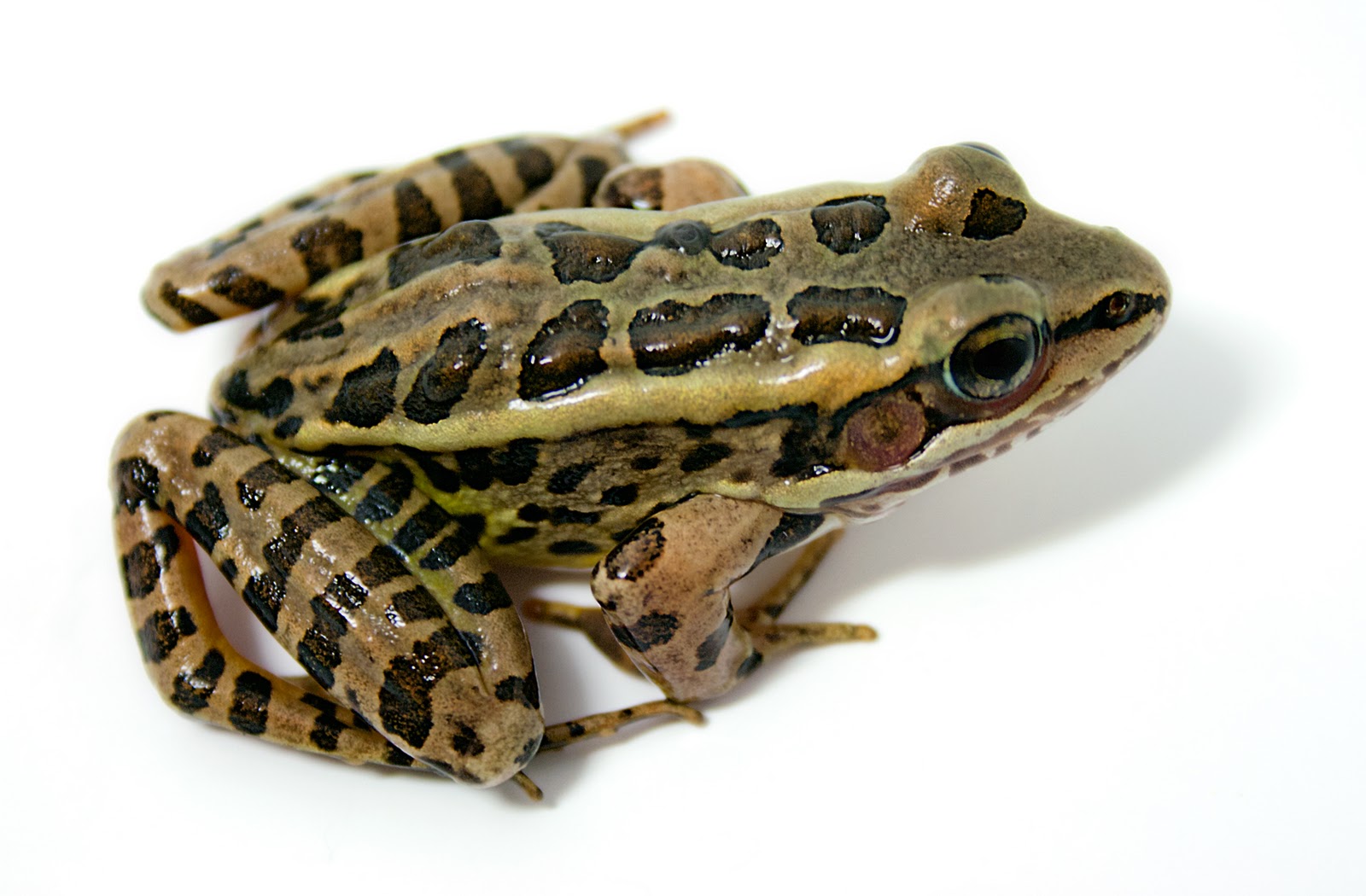
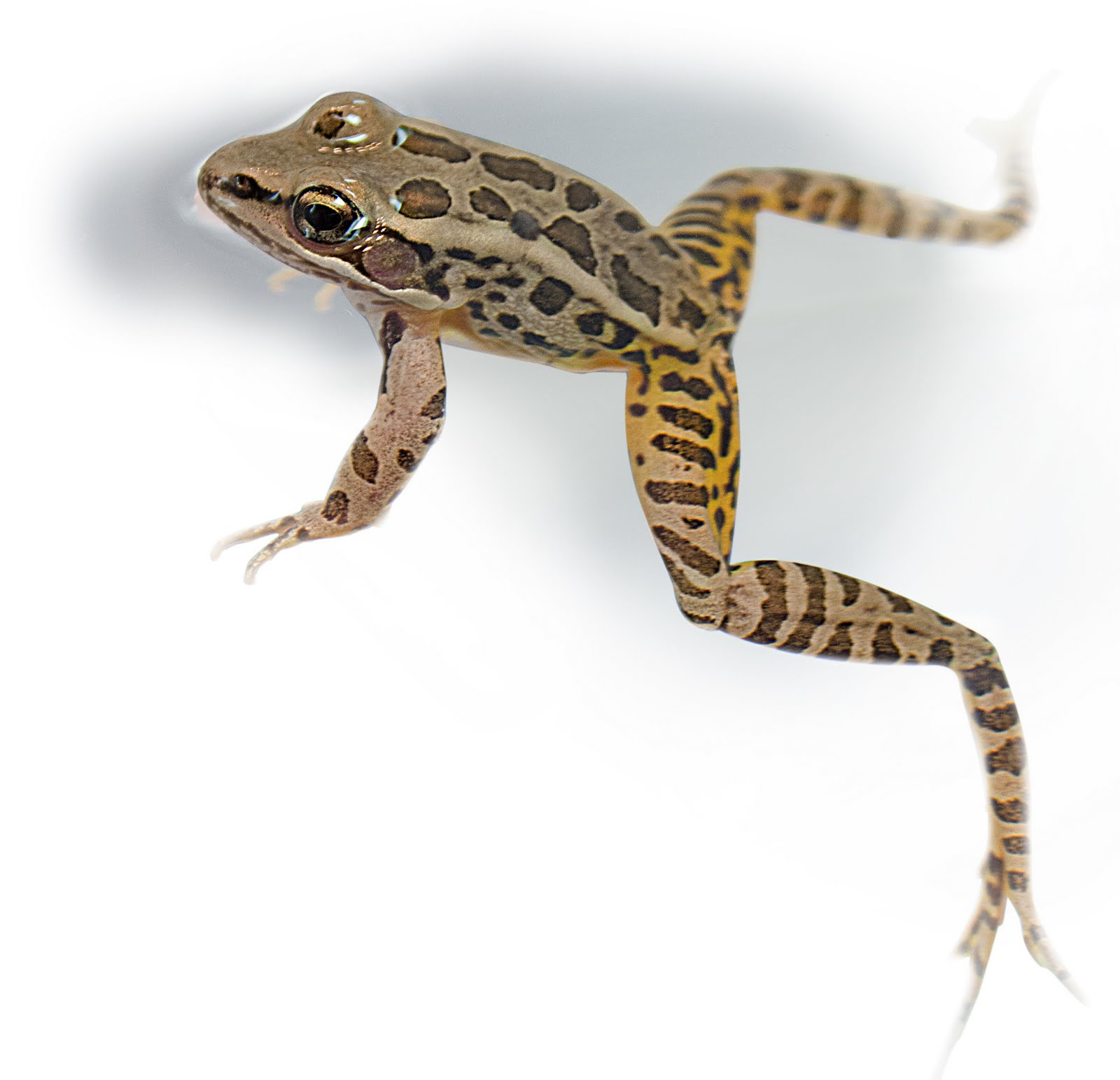
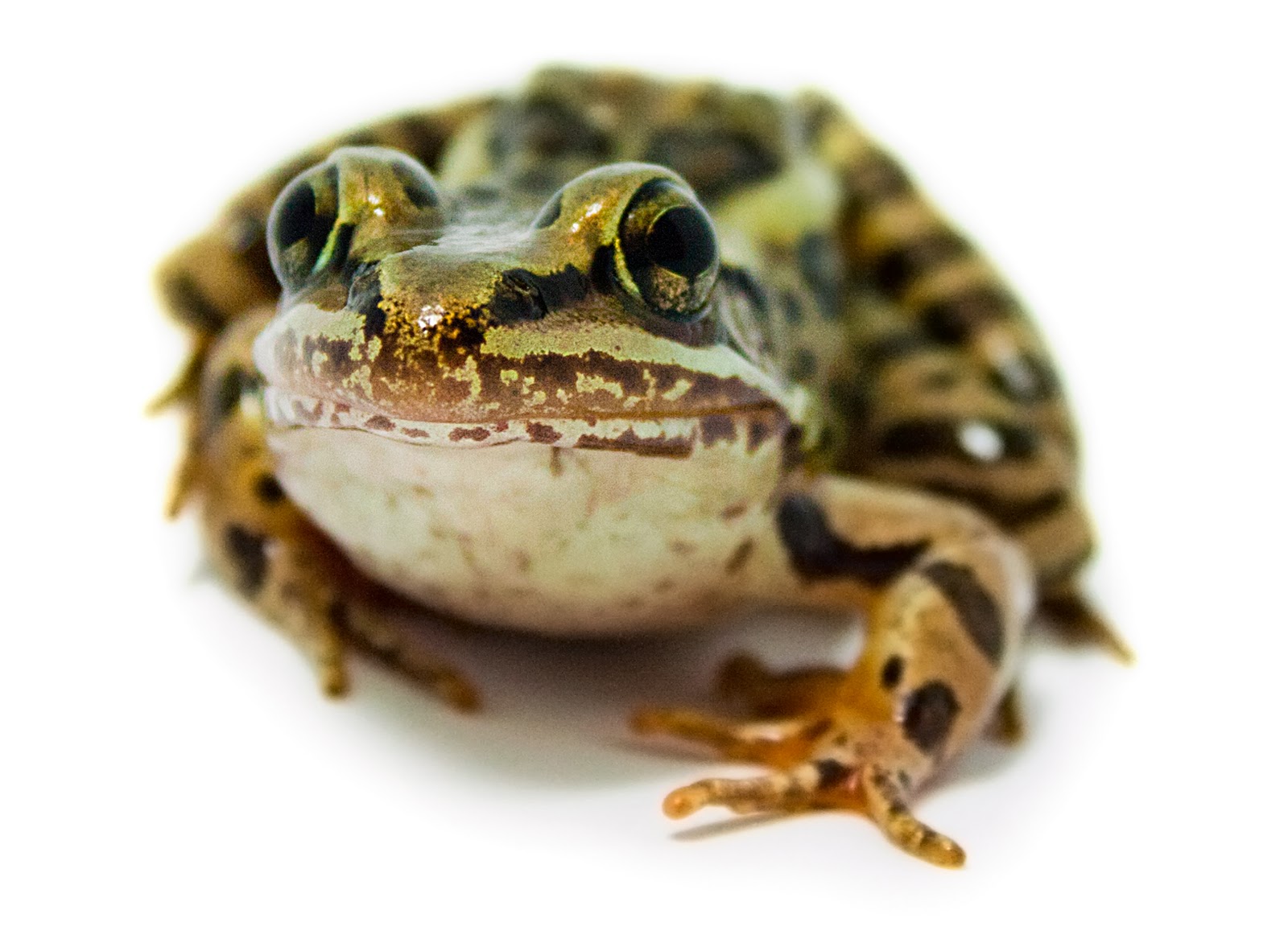
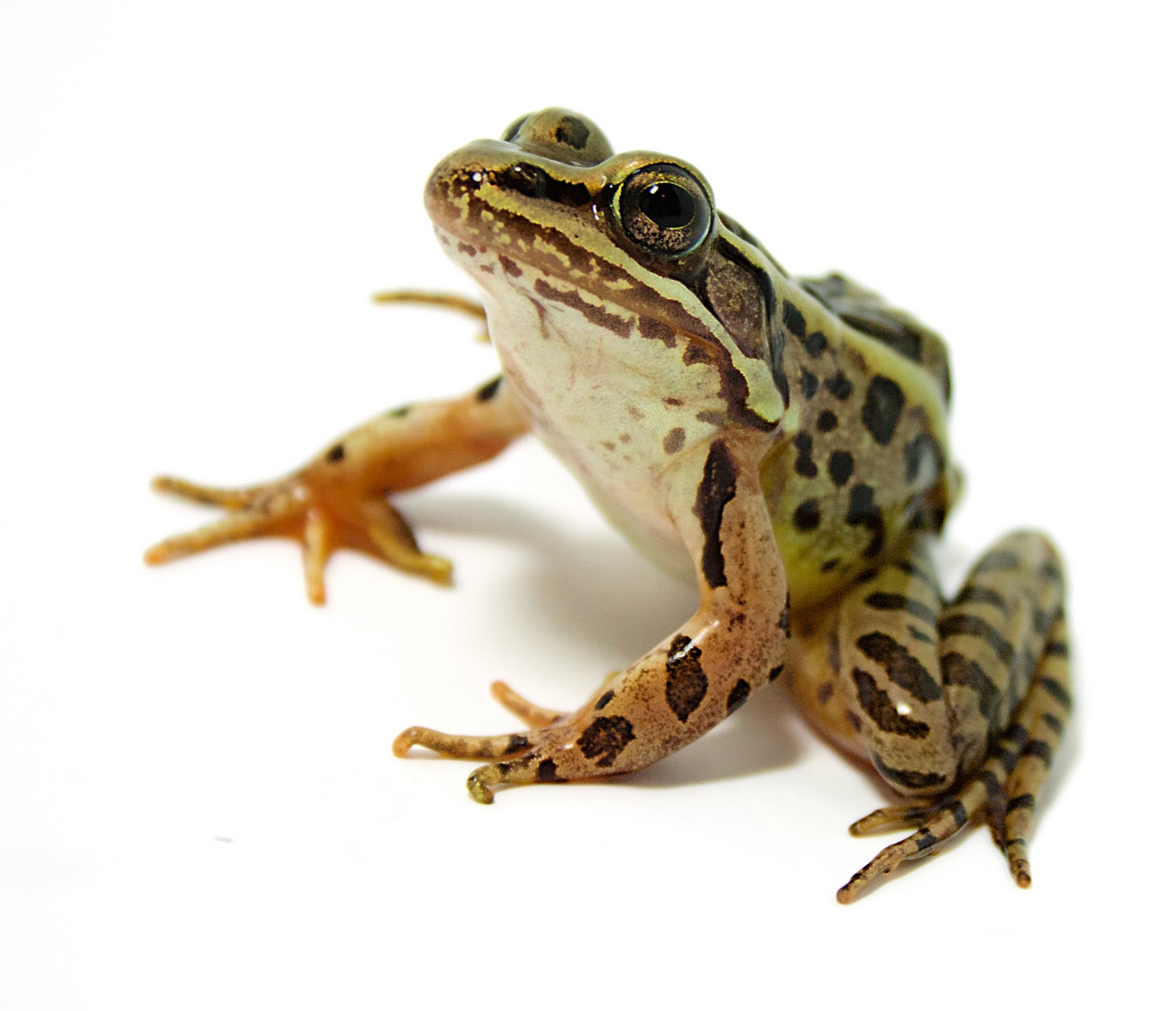
Pickerel Frog (Rana palustris) migrating, not chorusing yet

Dorsal view showing leg banding, dorsal fold and unfortunately a tumor.

This isolated view shows a hint of the yellow in groin along with the parallel squarish spots.

Thumb pads are visable in this submerged view.

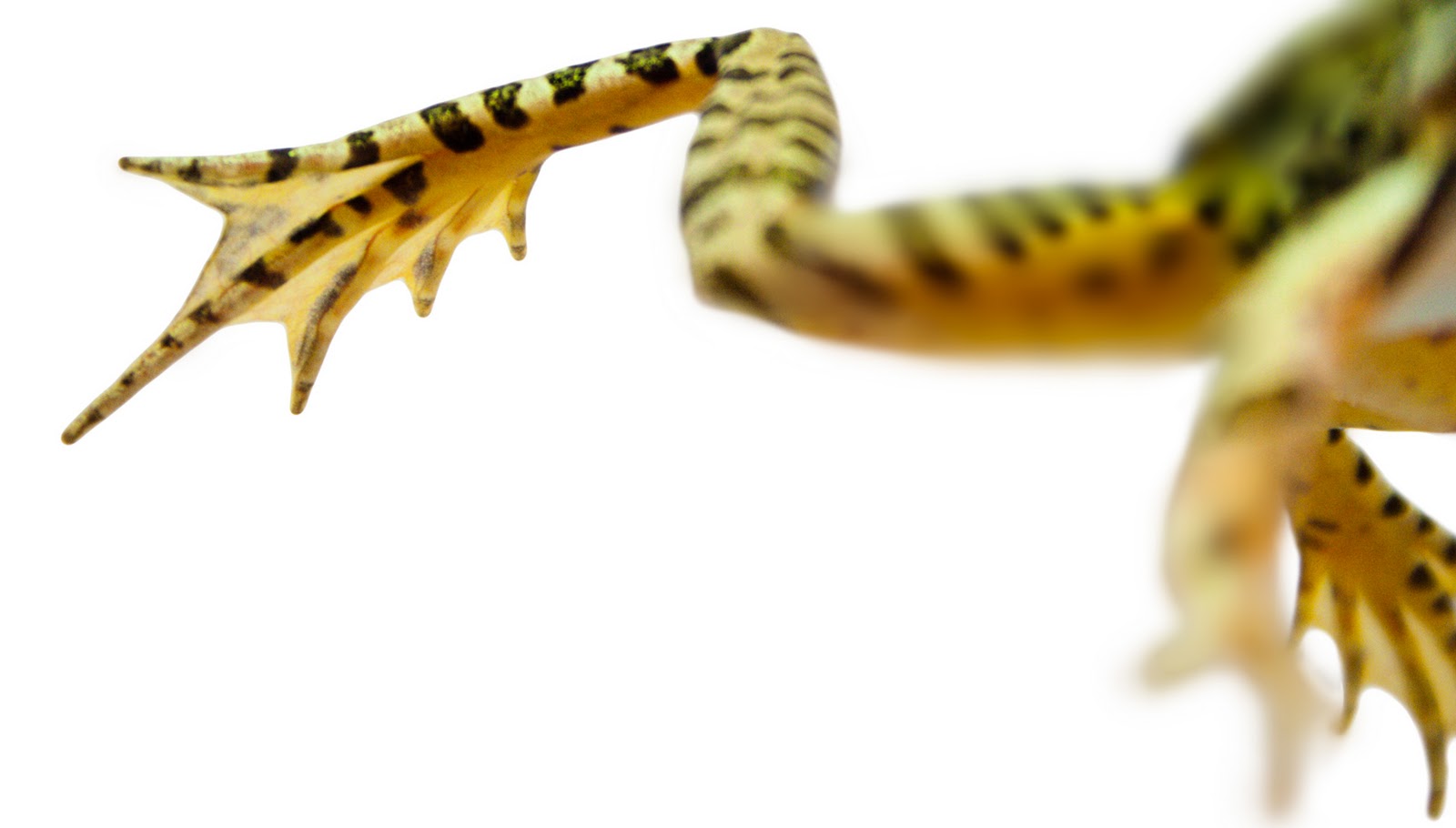
Webbing on hind legs along with yellow color splashes on legs.

Dorsal view with distinctive yellow coloration unique to this species.

Banding pattern on upper lip prevelant.
Another view showing thumb pads and hint of distinctive thigh color.

Notice solid ear (tympanic membrane) coloring and very distinct dorsal fold

I caught this one about a week ago and have been feeding him crickets until the temperature climbs up into the mid 40s. He was captured crossing Riverview Road across from the maintenance facility. Unfortunately there is a tumor on the dorsal surface. What distinguishes the Pickerel from the Leopard frog are the arrangement and shape of the spots, the shape of the snout and coloration of the upper thigh and abdomen. The spots on a Pickerel have a more distinct corner to them and are generally arranged in parallel rows down the dorsal surface. Base body coloration is more of a tan, camouflaging it within the grasses of environment where is is found. The dorsal fold is thicker and prominent resembling a blade of grass. The eardrum is a more or less solid brown where as the Leopard frog has a white spot in the center. The snout is more rounded with the Leopard being more pointed. The thigh has a bright yellow color that is hidden when the legs are in their resting position, along with bright yellow webbing on the rear feet. A pattern of bronze, dark brown and cream followed by a molted pattern above the mouth is different from the Leopards which has a solid strip before the mouth, though many color and pattern variations do occur. The legs have banding which helps break up the silhouette. This is a male showing the distinguishing thumb pads which are used in maintaining the clasp on the female during amplexus.

This posting was added on 4-3-2011 but depicts a Pickerel frog captured 3-20-2011.

Excellent side view showing skin texture and variation of spots along with leg banding.

Great conditions last night

Went to several locations last night starting at Hinckly by Rout 94 and Whipps Ledges. There is a Wood frog population at this location that I’ve recorded for many years, this being on of the most enjoyable. After sunset, the frogs are less skittish, and since conditions were perfect (if your a frog) they were loud! Males would swim across the water surface, at the edge of the pond bumping into each other, seemingly at random. Chorusing didn’t stop when the flashlight illuminated the area. Under the surface I saw a spotted salamander, the first I’ve ever seen. Peepers were abundant and almost deafening.: www.voicesinthevalley.com/sound_snapshots/wood_frogs_chorus.mp3. Afterwords, I went to Brecksville station to see what was calling in that area. To my surprise, I found 3 colony’s of Wood frogs calling, some with Chorus frogs, some with Peepers. After showers move through, migrations across the road become more frequent. I saw a dozen or so American toads, all medium sized adults, no smaller ones. Several Leopard frogs, many Peepers, 3 Green frogs, including one adult. At the vernal pools, I finally was able to spot many Chorus frogs, they’ve eluded me until now!

Last nights calls

Last night held several surprises. First, I hear a Leopard frog calling from a dry meadow nearby. The call is very subdued, and it isn’t the full mating call. The call was primarily the introduction and missing the several grunts that follow the full call. Second was the pack of coyotes that called during a recording of Chorus frogs. The Chorus frogs and Peepers are in full swing, and I suspect if it rains tonight, the choruses will be even stronger. These recordings are taken between Rout 82 and Vaughn road on the Towpath.

1. Coyote: www.voicesinthevalley.com/sound_snapshots/coyotes.mp3
2. Leopard frog: www.voicesinthevalley.com/sound_snapshots/leopard_frog.mp3

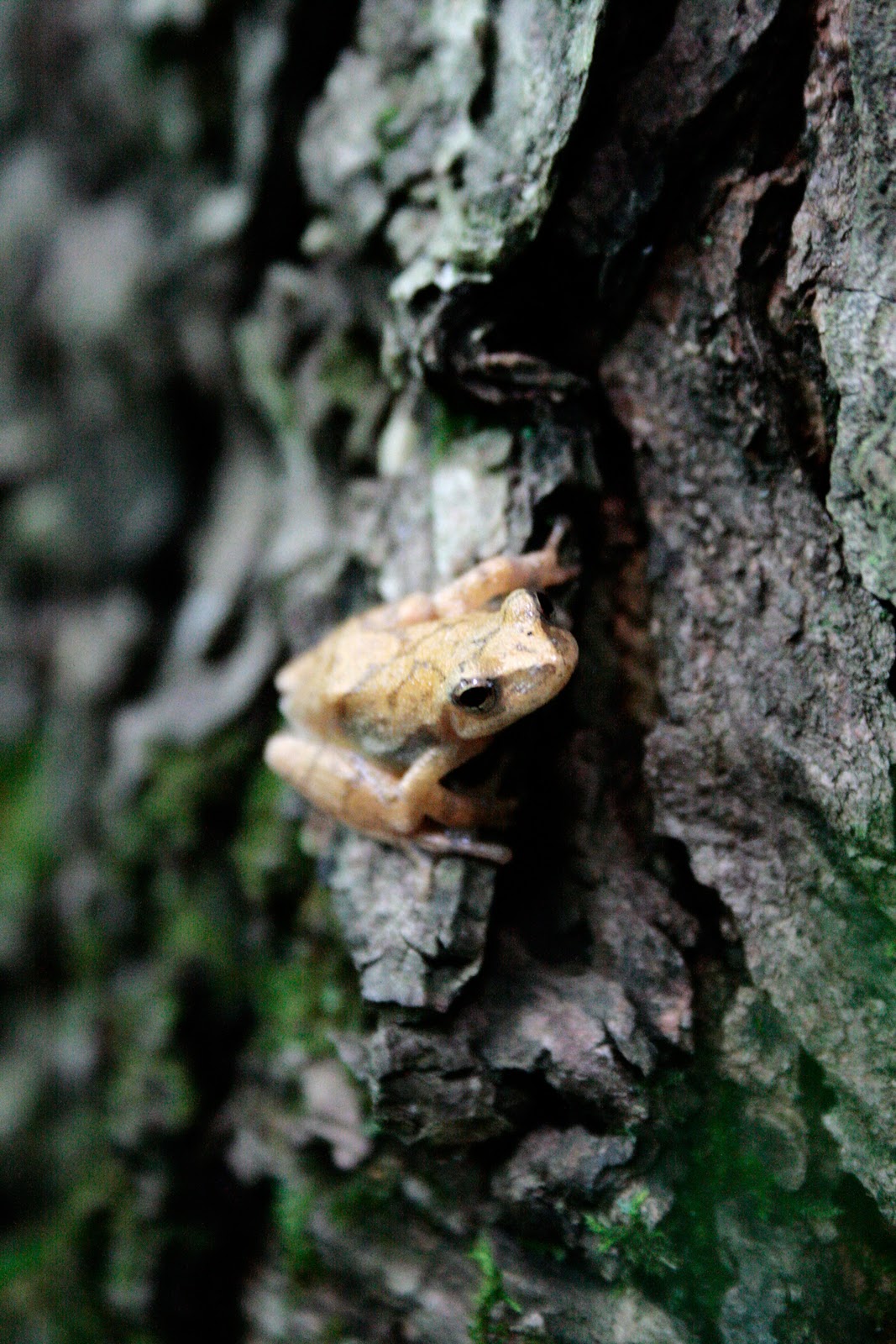
Spring Peeper